- Animals
- ›Arthropods
- ›Hexapods
- ›Insects
- ›Winged and Once-winged Insects
- ›Flies
- ›Nematoceran Flies
- ›Mosquitoes and Midges
- ›Culicoidea
- ›Mosquitoes
- ›Anopheline Mosquitoes
- ›Anopheles
- ›Anopheles
- ›Anopheles quadrimaculatus
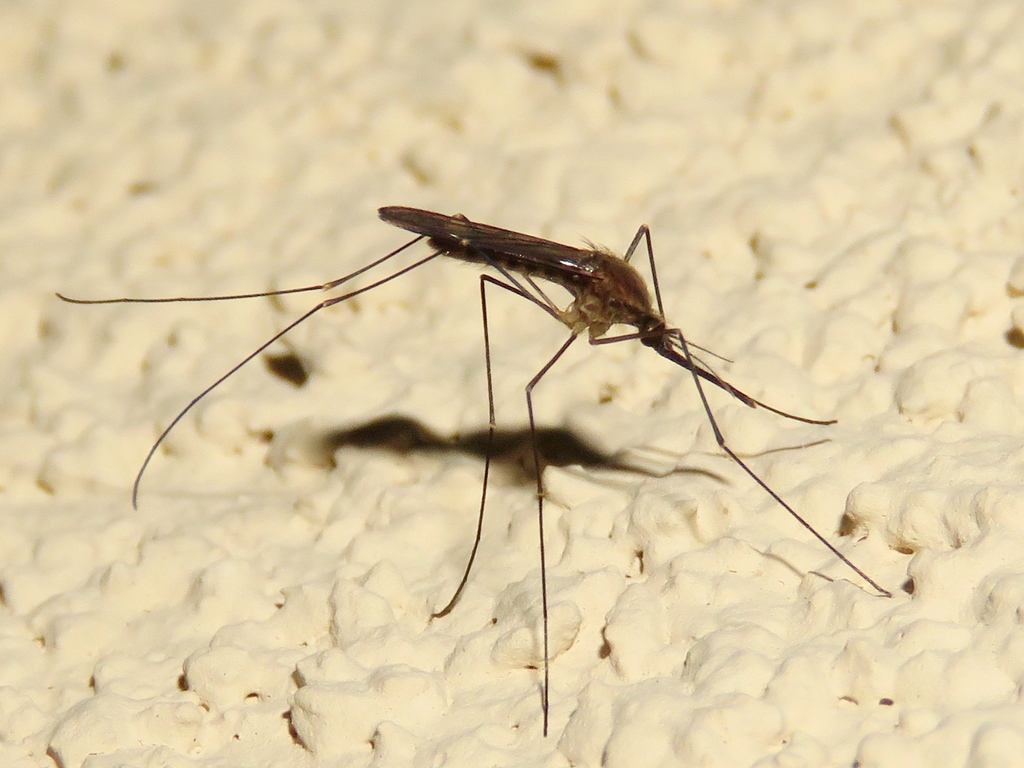
North American Malaria Mosquito
Anopheles quadrimaculatus
Anopheles (/əˈnɒfɪliːz/) is a genus of mosquito first described and named by J. W. Meigen in 1818. About 460 species are recognised; while over 100 can transmit human malaria, only 30–40 commonly transmit parasites of the genus Plasmodium, which cause malaria in humans in endemic areas. Anopheles gambiae is one of the best known, because of its predominant role in the transmission of the most dangerous malaria parasite species (to humans) – Plasmodium falciparum.
From the article Anopheles quadrimaculatus on Wikipedia (CC BY-SA), quoted section by section
Range & habitat
The common malaria mosquito is common across the southeastern United States, especially along the coast of the Gulf of Mexico.
Wikipedia: “Distribution”
What it does
Mosquitoes lay their eggs on still bodies of freshwater, where they float on the surface. Larvae take 2 to 3 days to hatch; these larvae lack breathing siphons, and so they rest parallel to the surface to breathe. The larvae take between 5 days and 2 weeks to mature depending on the environmental conditions. Adult mosquitoes typically live for approximately 2 weeks.
== References ==
Wikipedia: “Life cycle”
Listen
Looking for field recordings…
Where it lives
Recorded sightings
—
geo-referenced records in GBIF, from museums, herbaria and field observers.
Drag the globe to turn it. Dots are where records exist, not a range map; darker means more records.
In the stacks
Searching the stacks…
Every page naming Anopheles quadrimaculatus in the Biodiversity Heritage Library →
This page is assembled live from iNaturalist, GBIF, Wikipedia, the Source Library and the Internet Archive. It is not yet part of the hand-edited codex. iNaturalist taxon 259051.