- Animals
- ›Arthropods
- ›Hexapods
- ›Insects
- ›Winged and Once-winged Insects
- ›Flies
- ›Nematoceran Flies
- ›Mosquitoes and Midges
- ›Culicoidea
- ›Mosquitoes
- ›Culicine Mosquitoes
- ›Culicini
- ›Deinocerites
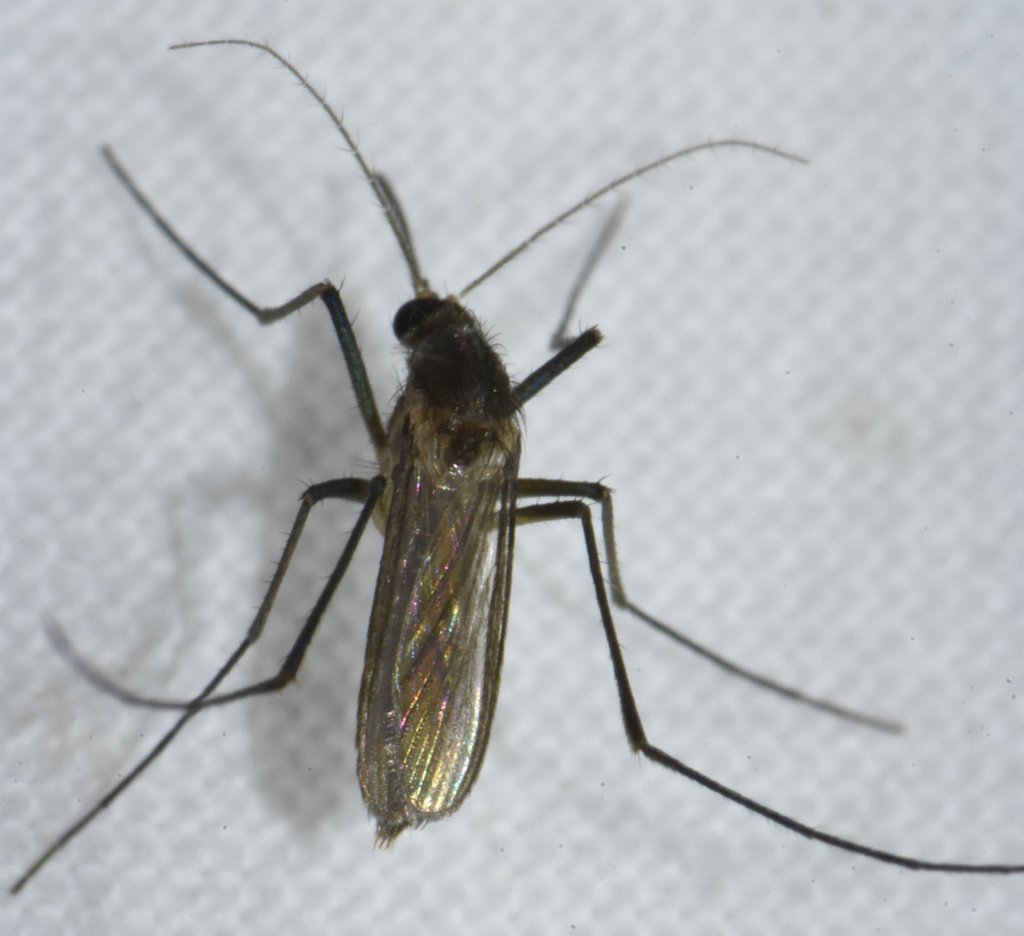
Crabhole Mosquito
Deinocerites cancer
Deinocerites cancer, the crabhole mosquito, is a species of mosquito in the family Culicidae. It was first described by the scientist Frederick Vincent Theobald in 1901.
From the article Deinocerites cancer on Wikipedia (CC BY-SA), quoted section by section
Range & habitat
These mosquitoes are often found amongst mangrove swamps and grassy salt marshes. They exhibit a unique form of species interaction, as they inhabit the holes created by land crabs. Females of the species lay their eggs into the water that accumulates in the lower portions of these craboles. Immature mosquitoes grow up in the accumulated water, and adults rest in the dry, upper portion of the crabholes during the day.
Wikipedia: “Habitat”
What it does
The feeding pattern of the female D. cancer was observed to compromise about 75% avian hosts and 25% mammals. The avian hosts were almost all wading birds and the mammals tended to be rabbits.
Wikipedia: “Feeding”
Listen
Looking for field recordings…
Where it lives
Recorded sightings
—
geo-referenced records in GBIF, from museums, herbaria and field observers.
Drag the globe to turn it. Dots are where records exist, not a range map; darker means more records.
In the stacks
Searching the stacks…
Every page naming Deinocerites cancer in the Biodiversity Heritage Library →
This page is assembled live from iNaturalist, GBIF, Wikipedia, the Source Library and the Internet Archive. It is not yet part of the hand-edited codex. iNaturalist taxon 259110.