- Animals
- ›Arthropods
- ›Hexapods
- ›Insects
- ›Winged and Once-winged Insects
- ›Ants, Bees, Wasps, and Sawflies
- ›Narrow-waisted Wasps, Ants, and Bees
- ›Ants, Bees, and Stinging Wasps
- ›Bees and Apoid Wasps
- ›Bees
- ›Miner, Fairy, Allied Panurgine, and Oxaeine Bees
- ›Panurginae
- ›Panurgini
- ›Fairy Bees, Goblin Bees, and False Goblin Bees
- ›Perdita
- ›Perdita
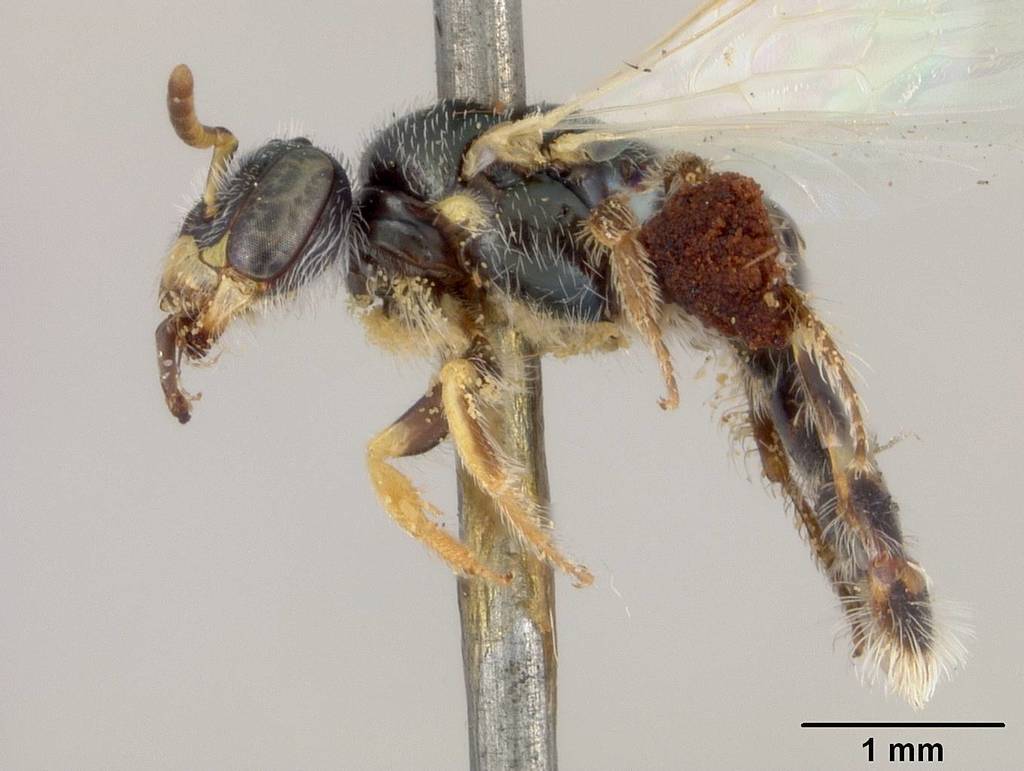
Rhus Fairy Bee
Perdita rhois
Perdita rhois is a species of mining bee in the family Andrenidae. It is found in Central America and North America.
From the article Perdita rhois on Wikipedia (CC BY-SA), quoted section by section
Description
Like other members of genus Perdita, Rhus fairy bees are very small and often mistaken for gnats. Adult bees range from 2–10 mm (0.08–0.39 in) in body length. Male and female adult bees differ in coloration: female bees are mostly black with black eyes, while males are yellow with black markings and green eyes. Both have translucent white wings.
What it does
Unlike a substantial proportion of fairy bees, P. rhois visits flowers of many plant species. Preferred inflorescences often resemble those of laurel sumac, bearing clusters of small, white flowers. P. rhois builds nests in the soil as is typical of mining bees.
Wikipedia: “Behavior”
Listen
Looking for field recordings…
Where it lives
Recorded sightings
—
geo-referenced records in GBIF, from museums, herbaria and field observers.
Drag the globe to turn it. Dots are where records exist, not a range map; darker means more records.
In the stacks
Searching the stacks…
Every page naming Perdita rhois in the Biodiversity Heritage Library →
This page is assembled live from iNaturalist, GBIF, Wikipedia, the Source Library and the Internet Archive. It is not yet part of the hand-edited codex. iNaturalist taxon 271716.