- Animals
- ›Arthropods
- ›Hexapods
- ›Insects
- ›Winged and Once-winged Insects
- ›Butterflies and Moths
- ›Hawk, Sphinx, Silk, Emperor, and Allied Moths
- ›Emperor and Giant Silk Moths
- ›Emperor Moths
- ›Saturniini
- ›Actias
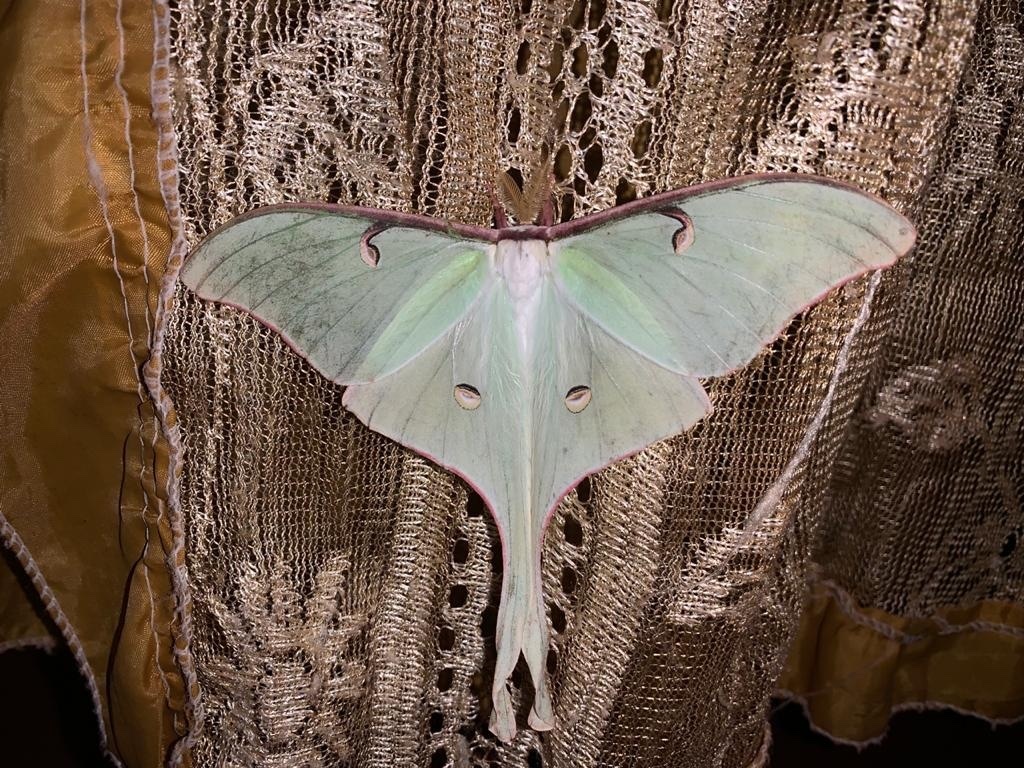
Mexican Moon Moth
Actias truncatipennis
Actias truncatipennis is also known as the Mexican Moon Moth. It is an uncommon moth of the family Saturniidae, potentially the only species of the genus that is found in Mexico. The species was first described by Léon Sonthonnax in 1899.
It resembles the Luna moth but is considerably larger, and the bottom of its forewings are more curved. Larvae appear also almost identical to A. Luna, but are presumably larger.
From the article Actias truncatipennis on Wikipedia (CC BY-SA), quoted section by section
Range & habitat
Larvae and adults are found between March to October in the wild. After this time, winter is spent in diapause in the pupal stage. Development is divided into 5 instars, meaning the larvae shed their skins 4 times, excluding hatching from the egg. This takes remarkably little time, with some reared examples of the species only taking 18 days from hatching to spinning cocoon. Granted, these individuals were reduced in size. Development was possibly sped up due to extreme heat. The cocoon hatch time is typical, with some examples taking around 27 days. Habitat is concentrated around the higher elevation, cloud forested regions in the south-east of Mexico, in the states of:
Hidalgo Puebla Veracruz Querétaro San Luis Potosí Tlaxcala Estado de México Possibly parts of Morelos and northern Oaxaca Their population in the wild seems rather stable, although their range is slowly being threatened by logging. Just as with A. Luna, A. Truncatipennis is able to hybridize with other species of the Genus, and even with Graellsia. This is due to these two's shared evolution on the American continent, and migration there via the Bering Ice Bridge.
Wikipedia: “Development and habitat”
Listen
Looking for field recordings…
Where it lives
Recorded sightings
—
geo-referenced records in GBIF, from museums, herbaria and field observers.
Drag the globe to turn it. Dots are where records exist, not a range map; darker means more records.
In the stacks
Searching the stacks…
Every page naming Actias truncatipennis in the Biodiversity Heritage Library →
This page is assembled live from iNaturalist, GBIF, Wikipedia, the Source Library and the Internet Archive. It is not yet part of the hand-edited codex. iNaturalist taxon 293814.