- Animals
- ›Arthropods
- ›Hexapods
- ›Insects
- ›Winged and Once-winged Insects
- ›Flies
- ›Nematoceran Flies
- ›Mosquitoes and Midges
- ›Culicoidea
- ›Mosquitoes
- ›Anopheline Mosquitoes
- ›Anopheles
- ›Anopheles
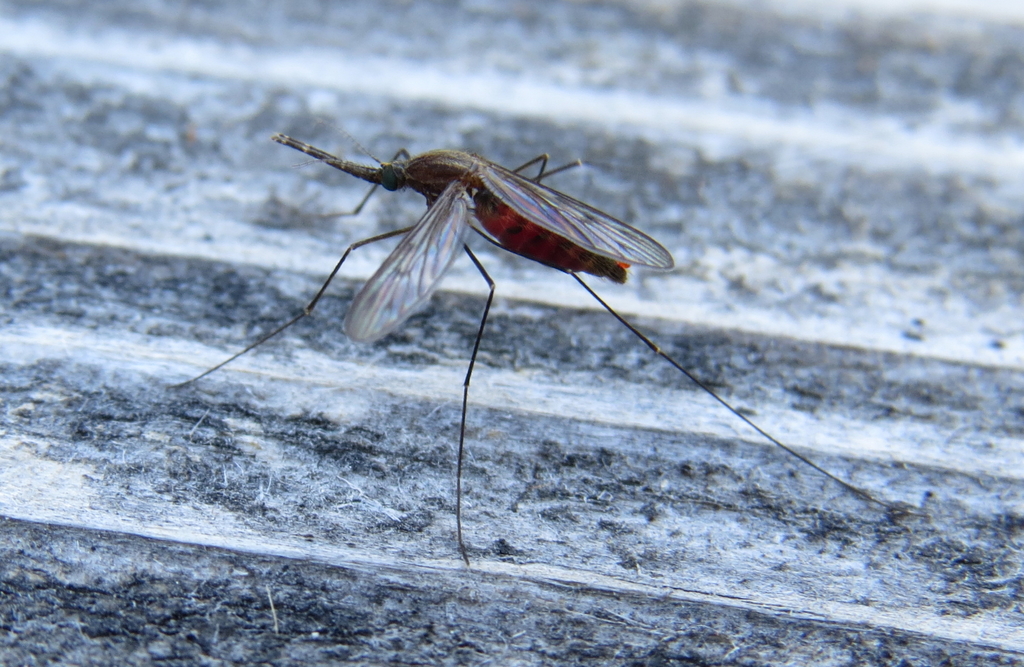
Walker's Anopheles
Anopheles walkeri
Anopheles walkeri is a species of mosquito found predominantly throughout the Mississippi River Valley, with its habitat ranging as far north as southern Quebec, Canada. The eggs of A. walkeri are laid directly on the water surface in freshwater swamp habitats. Since its eggs are not resistant to desiccation, this species is restricted to swampy regions with plenty of water. Anopheles walkeri, as with many other anophelines, begins to become active later in the evening than most other mosquito species in its range. This species becomes especially active late at night when in search of a blood meal. Feeding activity is affected greatly by environmental conditions within its microclimate. Wind, low humidity and cool temperatures (around 10 °C or 50 °F and below), are all negatively correlated with feeding aggression.
From the article Anopheles walkeri on Wikipedia (CC BY-SA), quoted section by section
What it does
Anopheles walkeri has a multivoltine life cycle. It produces a hardy winter egg which differs morphologically from the more vulnerable summer eggs by having enlarged floats on the dorsal side. By overwintering in egg form, this species is able to mature through one full larval generation before hibernating adults of other species are able to become active. The multivoltine life cycle means this species is active during both the swampy, open water conditions of early spring, as well as later in the year after the swampland has become thickened with plant growth. It takes about 10 days to mature through the larval stages and pupate, dependent on temperature and water conditions. Adults will typically mate within a few hours of emergence from their pupated form. The females then begin to seek out a blood meal to provide necessary protein to facilitate egg development. The female will then rest while the eggs develop. Once mature, the eggs are oviposited and the female begins the process all over again, feeding and laying for the 40 days or so that it lives for.
Wikipedia: “Life cycle”
Listen
Looking for field recordings…
Where it lives
Recorded sightings
—
geo-referenced records in GBIF, from museums, herbaria and field observers.
Drag the globe to turn it. Dots are where records exist, not a range map; darker means more records.
In the stacks
Searching the stacks…
Every page naming Anopheles walkeri in the Biodiversity Heritage Library →
This page is assembled live from iNaturalist, GBIF, Wikipedia, the Source Library and the Internet Archive. It is not yet part of the hand-edited codex. iNaturalist taxon 294257.