- Animals
- ›Arthropods
- ›Hexapods
- ›Insects
- ›Winged and Once-winged Insects
- ›Ants, Bees, Wasps, and Sawflies
- ›Narrow-waisted Wasps, Ants, and Bees
- ›Ants, Bees, and Stinging Wasps
- ›Formicoidea
- ›Ants
- ›Myrmicine Ants
- ›Higher Myrmicine Ants
- ›Cephalotes
- ›Cephalotes wheeleri
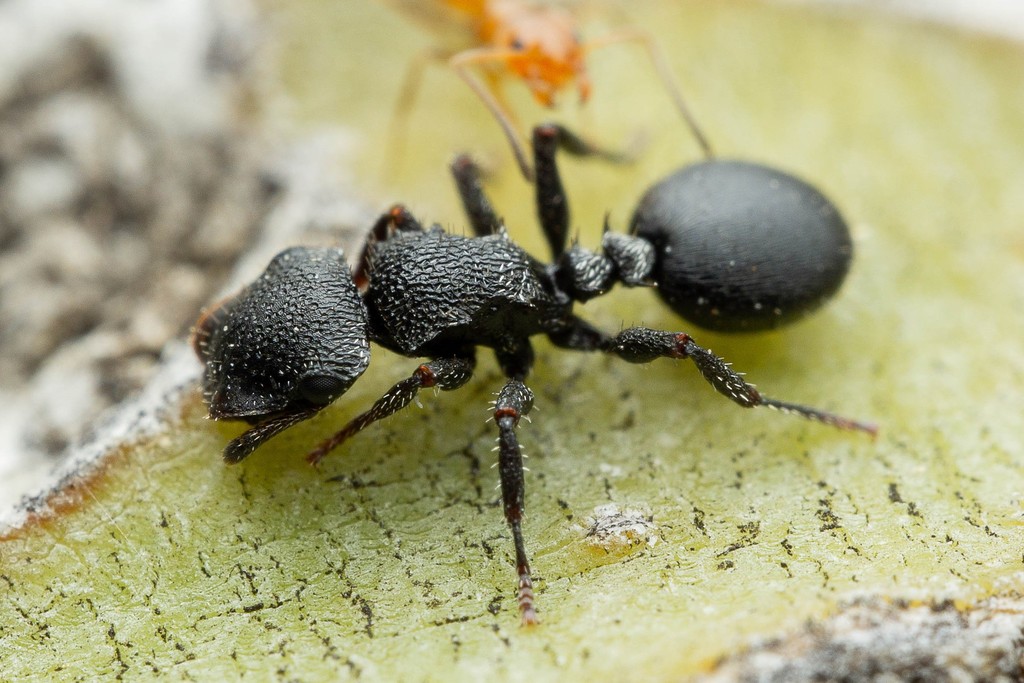
Sonoran Turtle Ant
Cephalotes rohweri
Cephalotes rohweri is a species of arboreal ant of the genus Cephalotes, characterized by an odd shaped head, and the ability to "parachute" by steering their fall if they drop off of the tree they're on. Giving their name also as gliding ants.
From the article Cephalotes rohweri on Wikipedia (CC BY-SA), quoted section by section
Description
Cephalotes rohweri is most commonly found in the Sonoran Desert, where it establishes nests in abandoned beetle cavities in Palo Verde trees (Parkinsonia florida or Cercidium floridum). They feed primarily on the pollen of these trees, and thus have little or no need to venture to the ground. However, they are capable of consuming other foods, and it has even been suggested that they may occasionally forage on the ground to do so. Colonies range in size between ~50-200/300 individuals, and frequently have multiple reproductive queens. Because brood require several months to mature into adults, queens cannot adjust the ratio of soldiers to workers quickly enough to adapt to changing threats. Therefore, an effective strategy of soldier (major) deployment has evolved to maximize survival.
Wikipedia: “Characteristics”
Listen
Looking for field recordings…
Where it lives
Recorded sightings
—
geo-referenced records in GBIF, from museums, herbaria and field observers.
Drag the globe to turn it. Dots are where records exist, not a range map; darker means more records.
In the stacks
Searching the stacks…
Every page naming Cephalotes rohweri in the Biodiversity Heritage Library →
This page is assembled live from iNaturalist, GBIF, Wikipedia, the Source Library and the Internet Archive. It is not yet part of the hand-edited codex. iNaturalist taxon 300385.