- Animals
- ›Arthropods
- ›Hexapods
- ›Insects
- ›Winged and Once-winged Insects
- ›Fleas
- ›Pulicoidea
- ›Common Fleas
- ›Ctenocephalides
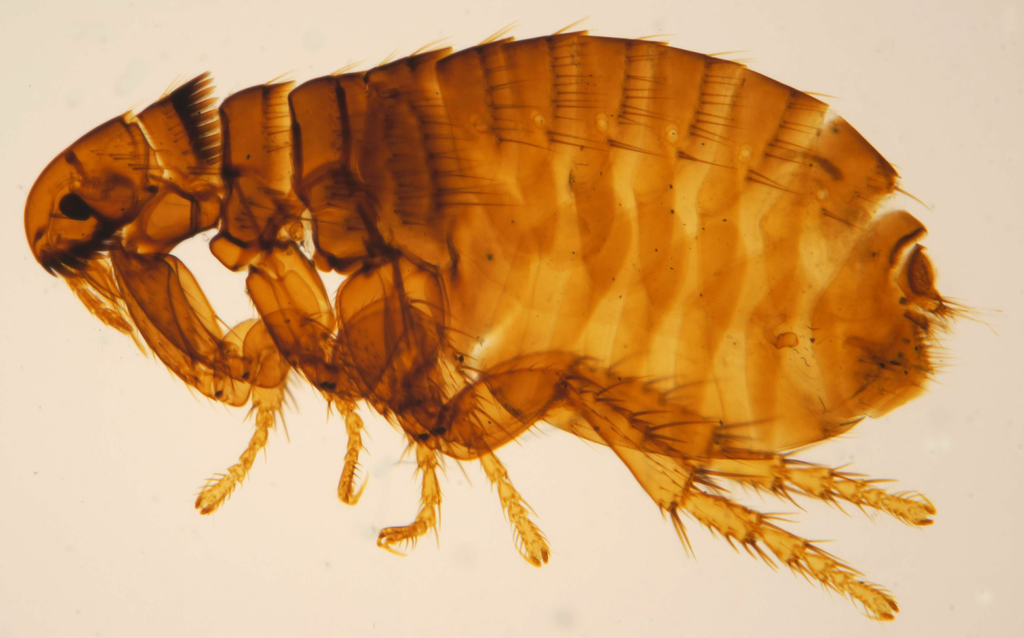
Dog Flea
Ctenocephalides canis
The dog flea (Ctenocephalides canis) is a species of flea that lives as an ectoparasite on a wide variety of mammals, particularly the domestic dog and cat. It closely resembles the cat flea (Ctenocephalides felis), which can live on a wider range of animals and is generally more prevalent worldwide.
The dog flea is of veterinary importance because it can spread Dipylidium caninum.
From the article Dog flea on Wikipedia (CC BY-SA), quoted section by section
Description
The dog flea's mouthparts are adapted for piercing skin and sucking blood. Dog fleas are external parasites, living by hematophagy off the blood of dogs. The dog often experiences severe itching in all areas where the fleas may reside. Fleas do not have wings and their hard bodies are compressed laterally and have hairs and spines, which makes it easy for them to travel through hair. They have relatively long hind legs for jumping. The dog flea can be distinguished from the very similar cat flea by its head, which is anteriorly rounded rather than elongate, and the tibiae of its hind legs, which exhibit eight setae-bearing notches rather than six.
Wikipedia: “Anatomy”
Listen
Looking for field recordings…
Where it lives
Recorded sightings
—
geo-referenced records in GBIF, from museums, herbaria and field observers.
Drag the globe to turn it. Dots are where records exist, not a range map; darker means more records.
In the stacks
Searching the stacks…
Every page naming Ctenocephalides canis in the Biodiversity Heritage Library →
This page is assembled live from iNaturalist, GBIF, Wikipedia, the Source Library and the Internet Archive. It is not yet part of the hand-edited codex. iNaturalist taxon 307364.