- Animals
- ›Arthropods
- ›Hexapods
- ›Insects
- ›Winged and Once-winged Insects
- ›Butterflies and Moths
- ›Owlet Moths and Allies
- ›Cutworm Moths and Allies
- ›Cutworms and Dart Moths
- ›Noctuini
- ›Noctuina
- ›Diarsia
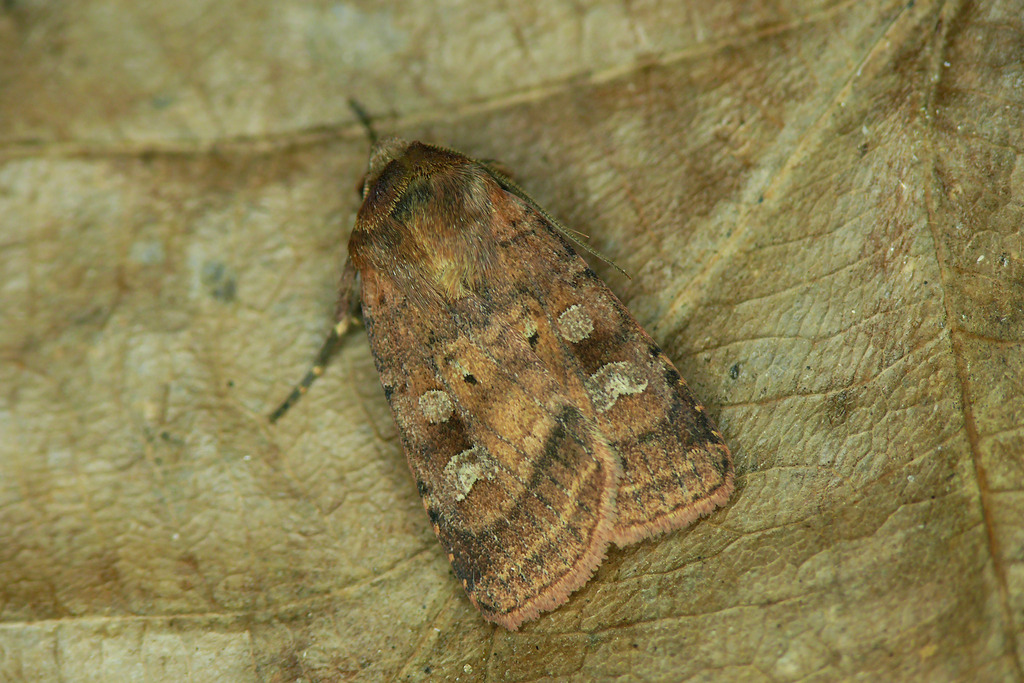
Small Square-spot
Diarsia rubi
The small square-spot (Diarsia rubi) is a moth of the family Noctuidae. The species was first described by Karl Friedrich Vieweg in 1790. It is found in Europe apart from the far south-east then east through the Caucasus, Transcaucasia, Central Asia, Siberia, the Russian Far East and Kamchatka.
From the article Small square-spot on Wikipedia (CC BY-SA), quoted section by section
Description
This is a quite a small species (wingspan 30–38 mm) with dull greyish-pink forewings, varying to red brown, marked with a pale angular mark which gives the species its common name. Forewing with the crosslines and shades olive; the cell brown; reniform with whitish outline; claviform with a dark speck at its end; marginal area dark. The hindwings are pale luteous grey with a pink fringe.
Listen
Looking for field recordings…
Where it lives
Recorded sightings
—
geo-referenced records in GBIF, from museums, herbaria and field observers.
Drag the globe to turn it. Dots are where records exist, not a range map; darker means more records.
In the stacks
Searching the stacks…
Every page naming Diarsia rubi in the Biodiversity Heritage Library →
This page is assembled live from iNaturalist, GBIF, Wikipedia, the Source Library and the Internet Archive. It is not yet part of the hand-edited codex. iNaturalist taxon 320192.