Horseshoe Crabs
Limulidae
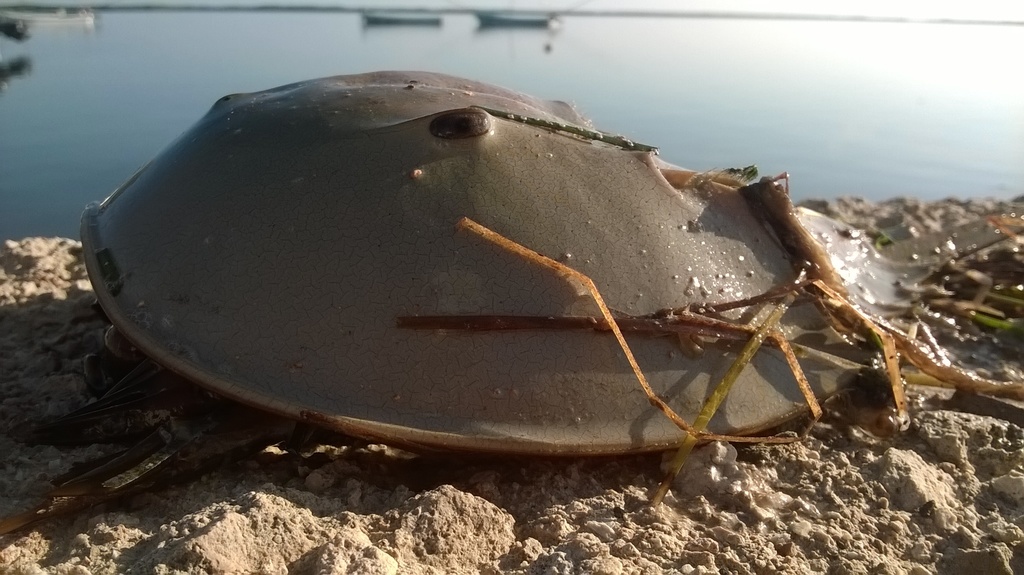
Horseshoe crabs are arthropods of the family Limulidae and the only surviving xiphosurans. Despite their name, they are not crabs or even crustaceans; they are chelicerates, more closely related to arachnids like spiders, ticks, and scorpions. The body of a horseshoe crab is divided into three main parts: the cephalothorax, abdomen, and telson. The largest of these, the cephalothorax, houses most of the animal's eyes, limbs, and internal organs. It is also where the animal gets its name, as its shape somewhat resembles that of a horseshoe. Horseshoe crabs have been described as "living fossils", having changed little since they first appeared in the Triassic around 250 million years ago, and similar-looking fossil xiphosurans extend back to the Ordovician around 445 million years ago.
Only four species of horseshoe crab are extant today, the Atlantic horseshoe crab (Limulus polyphemus), native to the eastern coasts of Mexico and the United States, as well as the mangrove horseshoe crab (Carcinoscorpius rotundicauda), tri-spine horseshoe crab (Tachypleus tridentatus) and Indo-Pacific horseshoe crab (Tachypleus gigas), which are native to South, South East, and East Asia.
2 branches of this family, most-observed first · about 4 known species
See this branch on the Wheel of Life →

Where it lives
Recorded sightings
—
geo-referenced records in GBIF, from museums, herbaria and field observers.
Drag the globe to turn it. Dots are where records exist, not a range map; darker means more records.
In the stacks
Searching the stacks…
Every page naming Limulidae in the Biodiversity Heritage Library →
This page is assembled live from iNaturalist, GBIF, Wikipedia, the Source Library and the Internet Archive. It is not yet part of the hand-edited codex. iNaturalist taxon 326110.