- Fungi Including Lichens
- ›Ascomycete Fungi
- ›Sac Fungi and Lichens
- ›Sordariomycetes
- ›Hypocreomycetidae
- ›Hypocreales
- ›Cordycipitaceae

Beauveria
Beauveria is a genus of asexually-reproducing fungi allied with the ascomycete family Cordycipitaceae. Its several species are typically insect pathogens. The sexual states (teleomorphs) of Beauveria species, where known, are species of Cordyceps sensu stricto.
Beauveria species are white entomopathogenic fungi. They form unicellular conidia that are typically hydrophobic and very small. The conidia are formed holoblastically from basally inflated conidiogenous cells. After conidium production, the conidiogenous cell elongates before producing another conidium atop a small denticle (a narrow projection bearing a conidium or sporangium). The result is the formation of a distinctive, slender, zig-zag rachis. Colonies of Beauveria species are typically white or off-white on artificial culture media.
22 branches of this genus, most-observed first
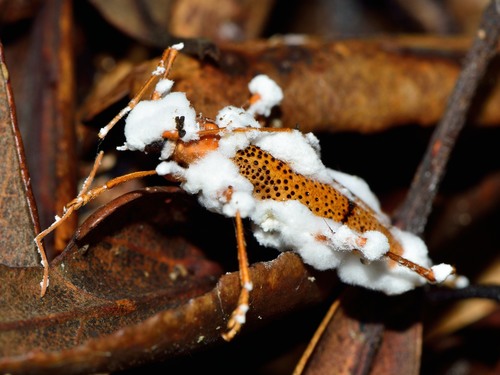
Icing sugar fungus
speciesBeauveria bassiana
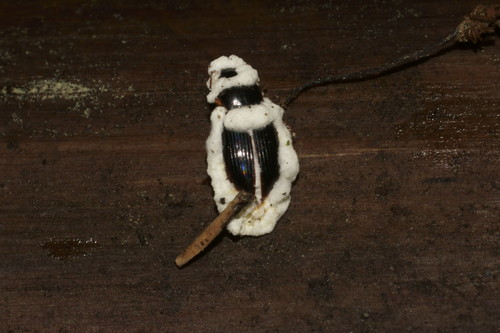
Beauveria brongniartii
speciesBeauveria brongniartii

Beauveria locustiphila
speciesBeauveria locustiphila

Beauveria pseudobassiana
speciesBeauveria pseudobassiana

Beauveria diapheromeriphila
speciesBeauveria diapheromeriphila

Beauveria acridophila
speciesBeauveria acridophila
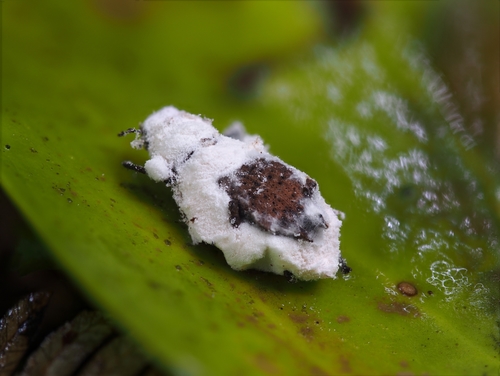
Beauveria malawiensis
speciesBeauveria malawiensis
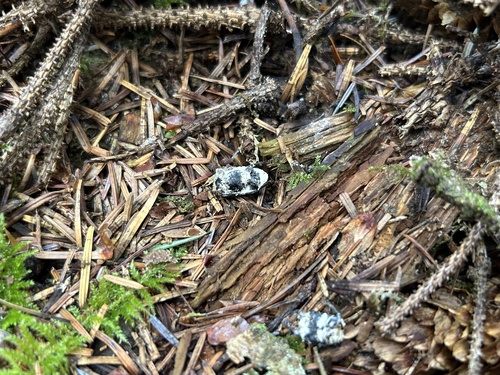
Beauveria sp. 'caledonica-CA02'
speciesBeauveria sp. 'caledonica-CA02'
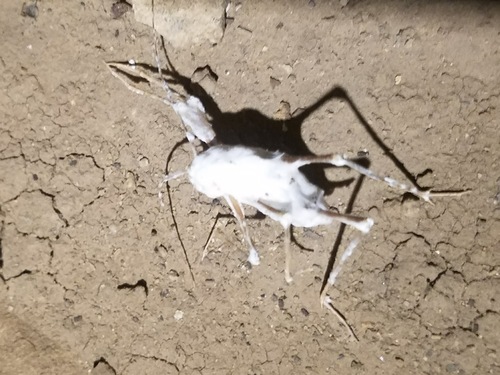
Beauveria amorpha
speciesBeauveria amorpha
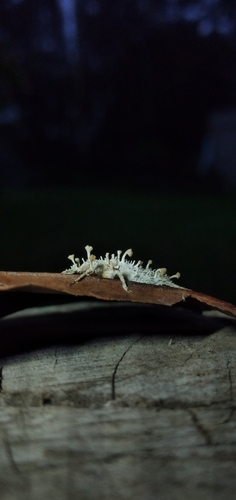
Beauveria loeiensis
speciesBeauveria loeiensis
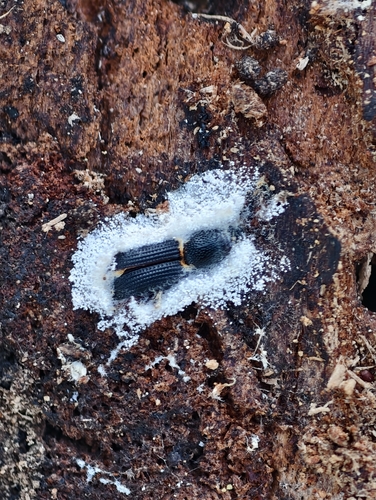
Beauveria caledonica
speciesBeauveria caledonica
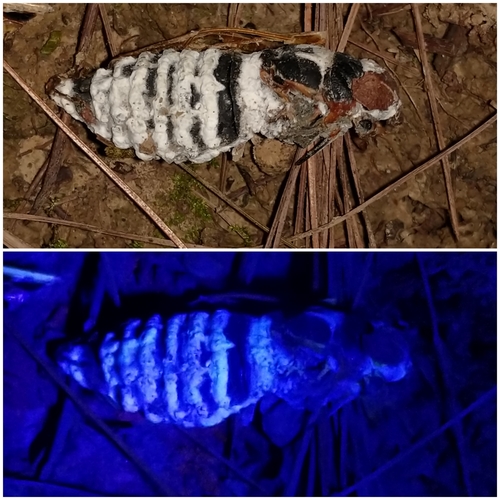
Beauveria sp. 'OH01'
speciesBeauveria sp. 'OH01'
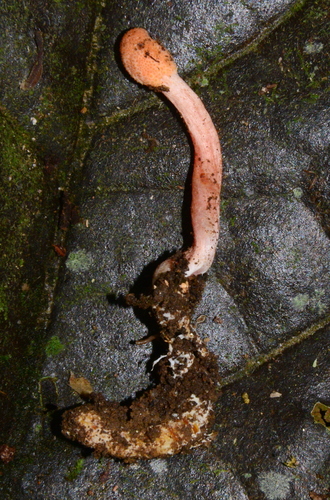
Beauveria sp. 'MDG01'
speciesBeauveria sp. 'MDG01'
Beauveria sinensis
speciesBeauveria sinensis
Beauveria australis
speciesBeauveria australis
Beauveria lii
speciesBeauveria lii
Beauveria kipukae
speciesBeauveria kipukae
Beauveria hoplocheli
speciesBeauveria hoplocheli
Beauveria kirkii
speciesBeauveria kirkii
Beauveria medogensis
speciesBeauveria medogensis
Beauveria sp. 'ECUA01'
speciesBeauveria sp. 'ECUA01'
Beauveria sp. 'CA01'
speciesBeauveria sp. 'CA01'
Where it lives
Recorded sightings
—
geo-referenced records in GBIF, from museums, herbaria and field observers.
Drag the globe to turn it. Dots are where records exist, not a range map; darker means more records.
In the stacks
Searching the stacks…
Every page naming Beauveria in the Biodiversity Heritage Library →
This page is assembled live from iNaturalist, GBIF, Wikipedia, the Source Library and the Internet Archive. It is not yet part of the hand-edited codex. iNaturalist taxon 328139.