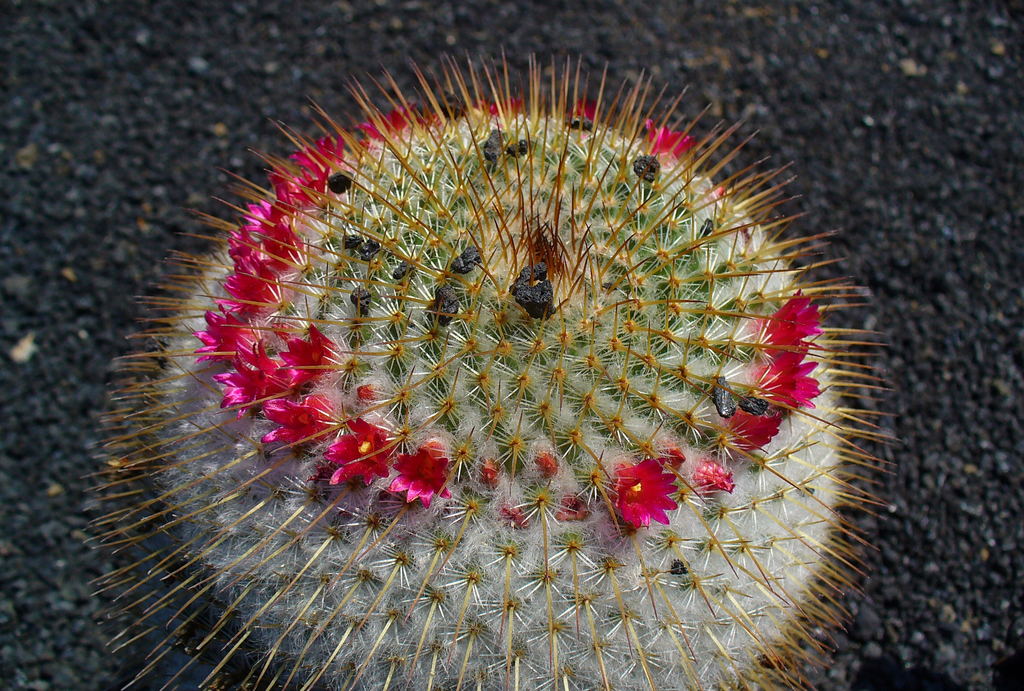
globular cacti, moonlight cacti, torch cacti, and allies
Cactoideae
The Cactoideae are the largest subfamily of the cactus family, Cactaceae, and are widely distributed throughout the Americas. Cactaceae is the 5th most endangered plant or animal family evaluated globally by the International Union for Conservation of Nature. Around 80% of cactus species belong to this subfamily. The genera of the Cactoideae are characterized by microscopic foliage leaves. All photosynthesis occurs in shoot cortex cells covered by a persistent epidermis and stomata. Another important characteristic of this subfamily is ribbed stems, which enable the inner cortex to expand radially without breaking the shoot surface to absorb large quantities of water.
As of August 2018, the internal classification of the family Cactaceae remained uncertain and subject to change. A classification incorporating many of the insights from the molecular studies was produced by Nyffeler and Eggli in 2010. Various revisions have been published since, e.g. to the tribes Hylocereeae and Echinocereeae, and the tribe Cereeae. Classifications remained uncertain as of December 2024.
10 branches of this subfamily, most-observed first

Globular Cactuses
tribeCacteae

Pachycereae
tribePachycereae

Trichocereeae
tribeTrichocereeae
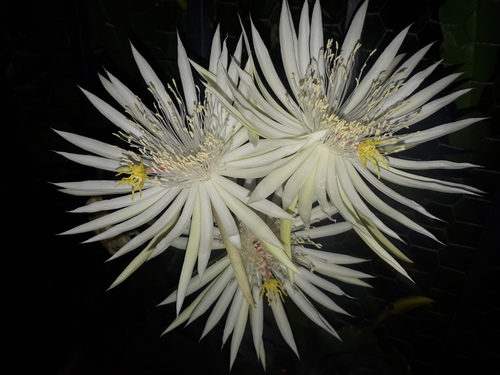
moonlight cacti
tribeHylocereeae

Cereeae
tribeCereeae

Rhipsalideae
tribeRhipsalideae

Notocacteae
tribeNotocacteae

Phyllocacteae
tribePhyllocacteae
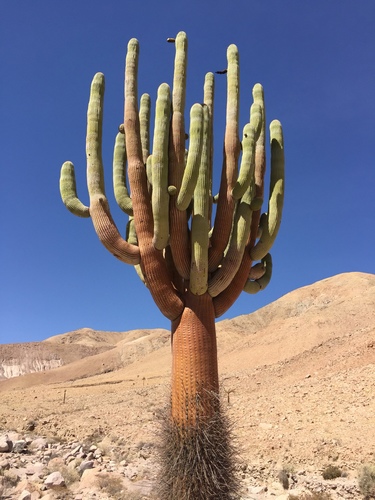
Browningieae
tribeBrowningieae
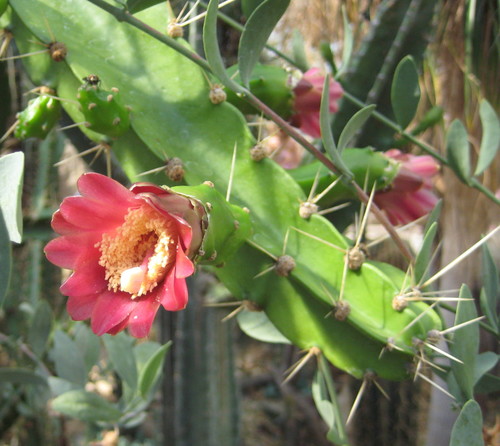
Calymmantheae
tribeCalymmantheae
Where it lives
Recorded sightings
—
geo-referenced records in GBIF, from museums, herbaria and field observers.
Drag the globe to turn it. Dots are where records exist, not a range map; darker means more records.
In the stacks
Searching the stacks…
Every page naming Cactoideae in the Biodiversity Heritage Library →
This page is assembled live from iNaturalist, GBIF, Wikipedia, the Source Library and the Internet Archive. It is not yet part of the hand-edited codex. iNaturalist taxon 335455.