- Animals
- ›Arthropods
- ›Chelicerates
- ›Arachnids
- ›Mites and Ticks
- ›Acariformes
- ›Sarcoptiformes
- ›Endeostigmatan Mites
- ›Eriophyoidea
- ›Gall and Rust Mites
- ›Eriophyinae
- ›Aceriini
- ›Aceria
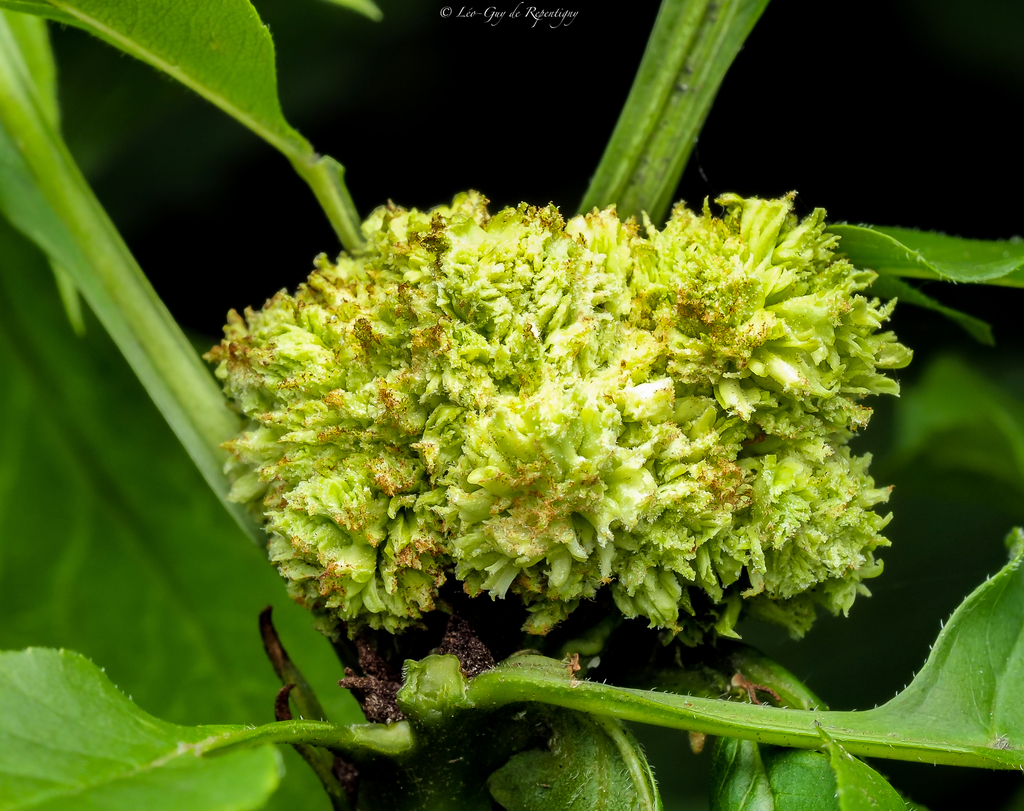
Ash Flower Gall Mite
Aceria fraxiniflora
Aceria fraxiniflora, the ash flower gall mite, is a species of gall mite that produces galls on ash trees. The male flowers of ash are greatly distorted by the mites, which results in a highly disfigured and disorganized gall that remains yellow or green, and later dries and turns brown. However, there is little evidence that this injury has a substantial impact on the ash plant's health.
From the article Aceria fraxiniflora on Wikipedia (CC BY-SA), quoted section by section
In human culture
Several generations of mites occur during the spring and summer season. During spring, female mites that have survived winter move toward developing male flowers to feed, which leads to the formation of galls. The eggs of the mites are deposited in the developing galls, and the nymphs that hatch out of these eggs live and feed inside the gall tissue. In fall, a generation of female mites develops, which overwinters in bark crevices under bud scales, after mating.
Wikipedia: “Life history”
Where it lives
Recorded sightings
—
geo-referenced records in GBIF, from museums, herbaria and field observers.
Drag the globe to turn it. Dots are where records exist, not a range map; darker means more records.
In the stacks
Searching the stacks…
Every page naming Aceria fraxiniflora in the Biodiversity Heritage Library →
This page is assembled live from iNaturalist, GBIF, Wikipedia, the Source Library and the Internet Archive. It is not yet part of the hand-edited codex. iNaturalist taxon 336035.