- Plants
- ›Vascular Plants
- ›flowering plants
- ›Dicots
- ›nightshades, bindweeds, gooseweeds, and allies
- ›nightshade family
- ›nightshades and allies
- ›mandrakes
- ›Mandragora
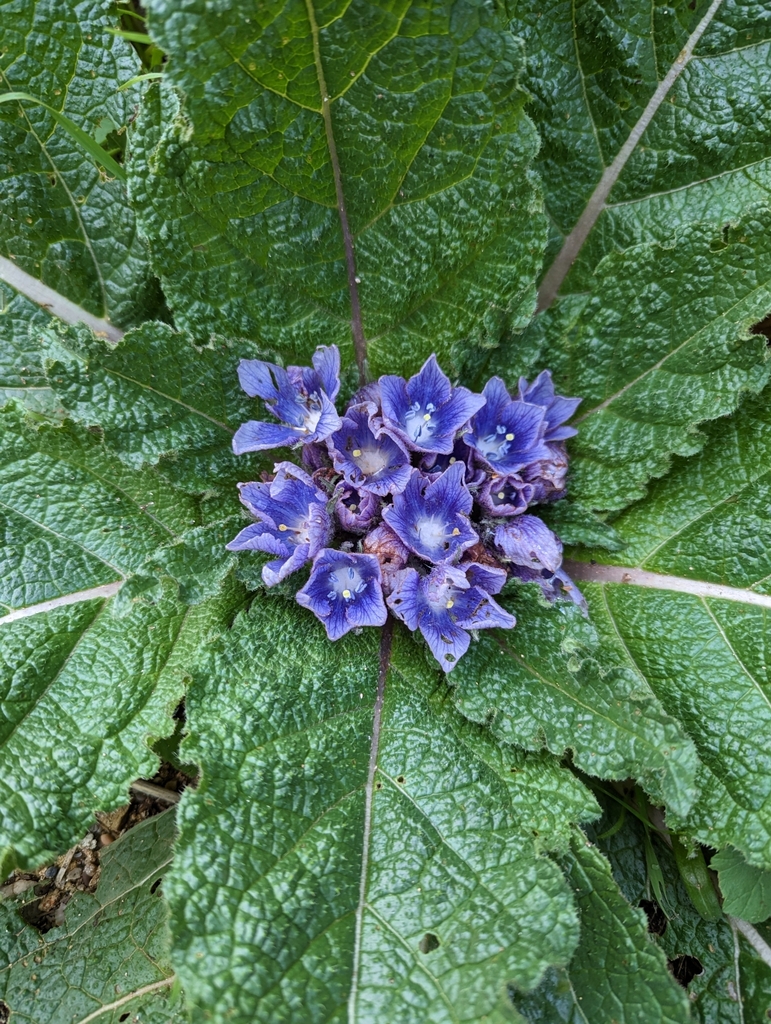
autumn mandrake
Mandragora autumnalis
Mandragora autumnalis, known as mandrake or autumn mandrake, is recognized by some sources as a separate species from Mandragora officinarum, although with different circumscriptions. Others regard it as merely part of this very variable species. Plants given the name Mandragora autumnalis consist of a rosette of leaves up to 60 cm (2 ft) across, close to the ground, with a central group of usually purplish flowers followed by yellow or orange berries. The large tap-roots as well as the leaves contain alkaloids and are toxic. They have traditional uses as herbal medicines.
From the article Mandragora autumnalis on Wikipedia (CC BY-SA), quoted section by section
Description
The boundary between the two species Mandragora autumnalis and Mandragora officinarum varies among authors, with some regarding them as the same species (see § Taxonomy below). Whatever distinction is used, plants of M. autumnalis are herbaceous perennials, with a large upright tap-root, often branched and sometimes shaped somewhat like a person. There is little or no stem, the leaves being borne in a basal rosette up to 60 cm (2 ft) across. The flowers are clustered at the centre of the rosette, each with five sepals, five petals and five stamens. Both the sepals and petals are fused at the base forming two five-lobed bell-shaped cups. The ovary has two chambers (locules) and a long style. The fruit is a fleshy berry with many seeds. For those authors who regard Mandragora autumnalis as the main species found around the Mediterranean, it has flowers varying in colour but typically violet or purple, 30–40 mm (1–2 in) long, and berries that are yellow or orange and egg-shaped, while the much less widespread Mandragora officinarum has somewhat smaller flowers, greenish-white in colour, and berries that are yellow and globe-shaped. Those who regard M. officinarum as the main species found around the Mediterranean, with M. autumnalis being found only in the Levant, use the size of the seeds as one of the distinguishing factors, those of M. …
Range & habitat
In one treatment, Mandragora autumnalis is the main species of Mandragora found all around the Mediterranean, in Tunisia, Algeria, Morocco, southern Portugal, southern Spain, southern Italy, Greece, Cyprus, Turkey, Syria, Lebanon, Israel, Palestine, and Jordan, being absent in northern Italy and a region on the coast of former Yugoslavia, where it is replaced by M. officinarum. In another treatment, Mandragora autumnalis is native only to the Levant (from Syria south to Israel and Palestine), the species found elsewhere around the Mediterranean being M. officinarum.
Wikipedia: “Distribution”
Toxicity
All species of Mandragora contain highly biologically active alkaloids, tropane alkaloids in particular. Jackson and Berry were unable to find any differences in the composition of these chemicals between Mandragora autumnalis and Mandragora officinarum (using the broader definition of M. autumnalis). Alkaloids present included hyoscyamine, hyoscine, cuscohygrine, apoatropine, 3-alpha-tigloyloxytropane, 3-alpha,6-beta-ditigloyloxytropane and belladonnine. Non-alkaloid constituents included sitosterol and beta-methylesculetin (scopoletin). The alkaloids make the plant, particularly the root and leaves, poisonous. Clinical reports of the effects of consumption of Mandragora autumnalis include severe symptoms similar to those of atropine poisoning, including blurred vision, dilation of the pupils (mydriasis), dryness of the mouth, difficulty in urinating, dizziness, headache, vomiting, blushing and a rapid heart rate (tachycardia). Hyperactivity and hallucinations also occurred in the majority of patients. Mandragora species have a long use in traditional medicine, an extract being used for its real or supposed aphrodisiac, hypnotic, emetic, purgative, sedative and pain-killing effects. Tropane alkaloids are known to be effective as analgesics and anaesthetics, and can be used to increase circulation and dilate pupils, among other effects. Continued use of M. …
Wikipedia: “Toxicity and use”
Where it lives
Recorded sightings
—
geo-referenced records in GBIF, from museums, herbaria and field observers.
Drag the globe to turn it. Dots are where records exist, not a range map; darker means more records.
In the stacks
Searching the stacks…
Every page naming Mandragora autumnalis in the Biodiversity Heritage Library →
This page is assembled live from iNaturalist, GBIF, Wikipedia, the Source Library and the Internet Archive. It is not yet part of the hand-edited codex. iNaturalist taxon 337454.