- Animals
- ›Arthropods
- ›Hexapods
- ›Insects
- ›Winged and Once-winged Insects
- ›True Bugs, Hoppers, Aphids, and allies
- ›True Hoppers
- ›Spittlebugs, Cicadas, Leafhoppers and Treehoppers
- ›Cicadas
- ›Typical Cicadas
- ›Largeclasper Cicadas
- ›Widehead Cicadas
Floury Bakers
Aleeta
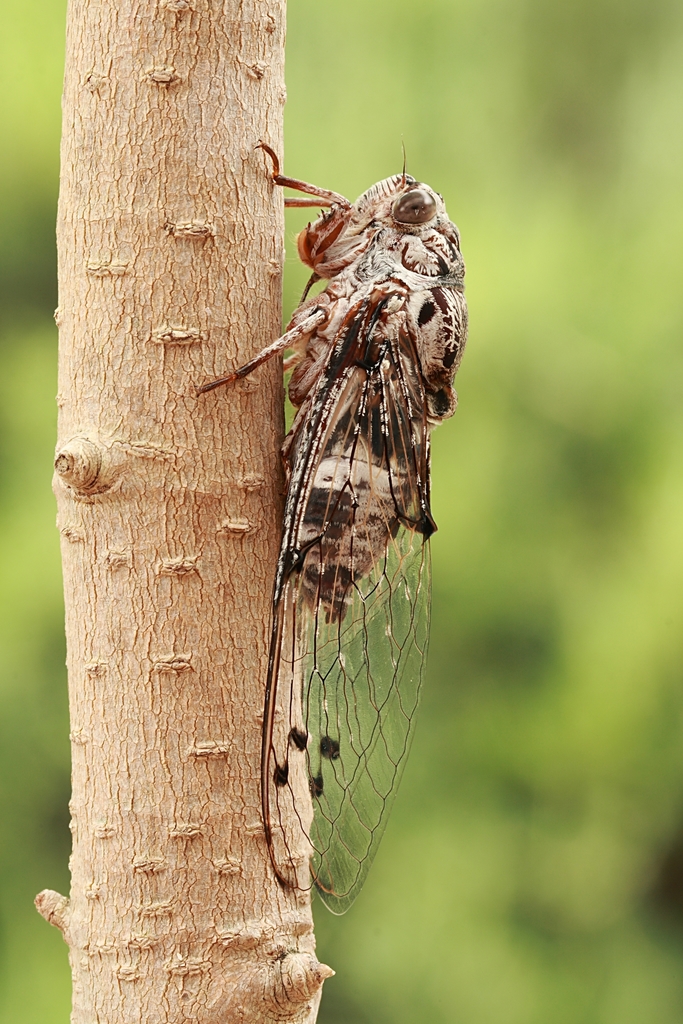
Aleeta is a monotypic genus of cicadas containing the species Aleeta curvicosta (commonly known as the floury baker or floury miller, known until 2003 as Abricta curvicosta), one of Australia's most familiar insects. Native to the continent's eastern coastline, it was described in 1834 by Ernst Friedrich Germar.
The floury baker's distinctive appearance and loud call make it popular with children. Both the common and genus name are derived from the white, flour-like filaments covering the adult body. Its body and eyes are generally brown with pale patterns including a light-coloured line along the midline of the pronotum. Its forewings have distinctive dark brown patches at the base of two of their apical cells. The female is larger than the male, although species size overall varies geographically, with larger animals associated with regions of higher rainfall. The male has distinctive genitalia and a loud and complex call generated by the frequent buckling of ribbed tymbals and amplified by abdominal air sacs.
1 branches of this genus, most-observed first
See this branch on the Wheel of Life →
Where it lives
Recorded sightings
—
geo-referenced records in GBIF, from museums, herbaria and field observers.
Drag the globe to turn it. Dots are where records exist, not a range map; darker means more records.
In the stacks
Searching the stacks…
Every page naming Aleeta in the Biodiversity Heritage Library →
This page is assembled live from iNaturalist, GBIF, Wikipedia, the Source Library and the Internet Archive. It is not yet part of the hand-edited codex. iNaturalist taxon 338900.