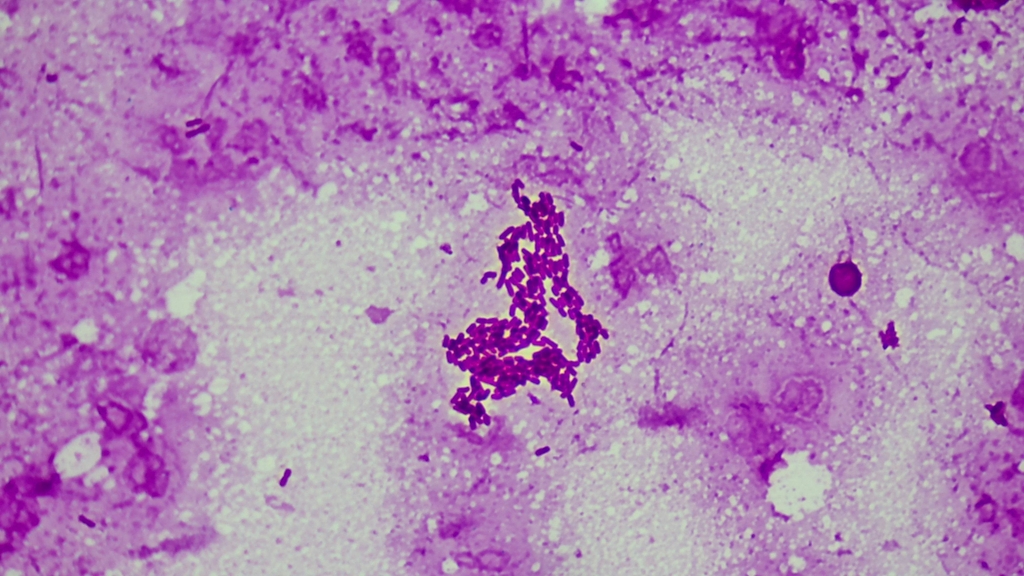
Klebsiella oxytoca
Klebsiella oxytoca is a Gram-negative, rod-shaped bacterium that is closely related to K. pneumoniae, from which it is distinguished through its production of indole. This species was first described in 1886 when it was isolated from sour milk and named Bacillus oxytocus perniciosus (from Greek oxus 'sour' + -tokos 'producing').
From the article Klebsiella oxytoca on Wikipedia (CC BY-SA), quoted section by section
Description
K. oxytoca also has slightly different growth characteristics in that it is able to grow on melezitose, but not 3-hydroxybutyrate. Klebsiella oxytoca is characterized by negative methyl red, positive VP, positive citrate, urea and TSI gas production, is AA, and negative for TSI sulfide, DNAse, growth on sulfide-indole motility medium and the phenylalanine deaminase test. It is a diazotroph, able to colonise plant hosts and fix atmospheric nitrogen into a form which the plant can use. Association of K. oxytoca with the barley rhizosphere during an entire vegetative period has been demonstrated. The bacteria adhere strongly to root hairs, and less strongly to the surface of the zone of elongation and root cap mucilage. Like other enterobacteria, it is capable of acquiring antibiotic resistance, and isolates have been shown to produce extended-spectrum beta-lactamases as well as carbapenemases.
Wikipedia: “Characteristics”
What it does
Houseflies (Musca domestica) have a mutualistic relationship with the bacterium K. oxytoca. This bacterium can live on the surface of the housefly eggs and has a deterrent effect on the fungi growing in manure, thus benefiting the fly larvae which are competing with the fungi for nutrients.
Wikipedia: “Ecology”
At the table
Klebsiella oxytoca has shown promise in industrial ethanol fuel production, and is referenced as being used to produce hydrogen in patents filed by Nanologix, Inc.
Wikipedia: “Industrial uses”
Where it lives
Recorded sightings
—
geo-referenced records in GBIF, from museums, herbaria and field observers.
Drag the globe to turn it. Dots are where records exist, not a range map; darker means more records.
In the stacks
Searching the stacks…
Every page naming Klebsiella oxytoca in the Biodiversity Heritage Library →
This page is assembled live from iNaturalist, GBIF, Wikipedia, the Source Library and the Internet Archive. It is not yet part of the hand-edited codex. iNaturalist taxon 356751.