- Animals
- ›Arthropods
- ›Hexapods
- ›Insects
- ›Winged and Once-winged Insects
- ›Butterflies and Moths
- ›Flannel, Slug Caterpillar, Leaf Skeletonizer, and Allied Moths
- ›Burnet Moths
- ›Forester Moths
- ›Procridini
- ›Jordanita
- ›Jordanita
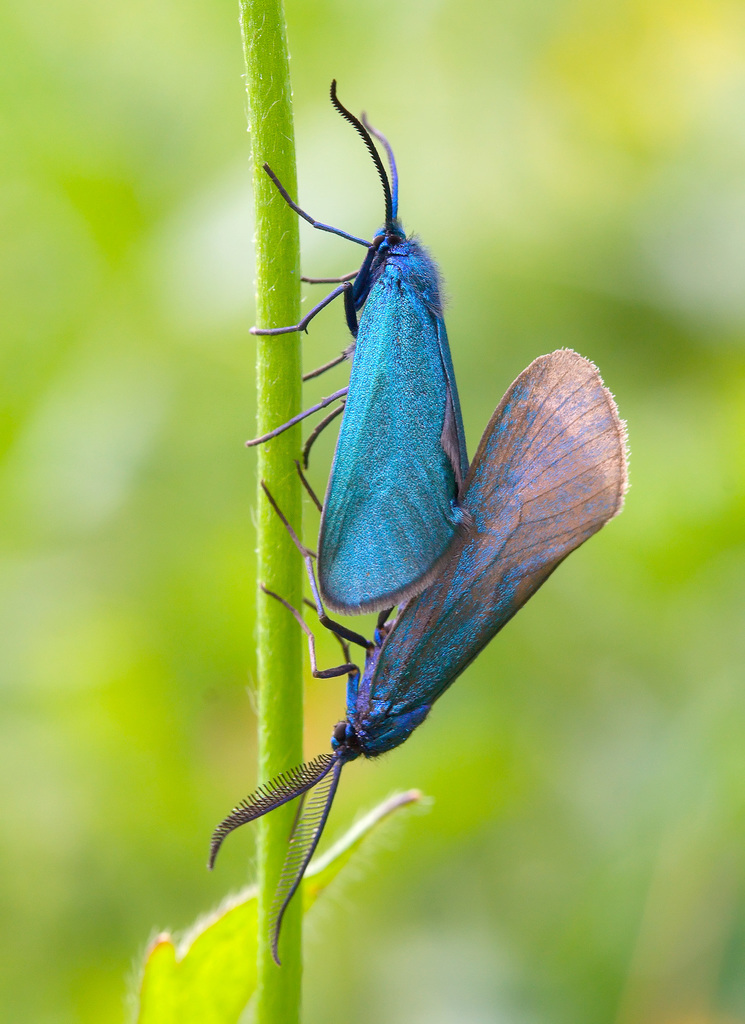
Scarce Forester
Jordanita globulariae
Jordanita globulariae, also known as the scarce forester, is a day-flying moth of the family Zygaenidae.
From the article Jordanita globulariae on Wikipedia (CC BY-SA), quoted section by section
Description
The length of the forewings is 10.5–17 mm for males and 7.7–10.1 mm for females. Like the cistus forester, the adult moth is iridescent blue green with dark legs and antennae. It is found on sunny days flying in chalk or limestone grassland.
The larvae feed on Centaurea (knapweed) species, Cirsium tuberosum (tuberous thistle) and Globularia species.
Range & habitat
It is found from the western part of the Iberian Peninsula through western, central and eastern Europe to the Ural. In the south, the range extends through the Balkan Peninsula to north-western Turkey.
Wikipedia: “Distribution”
Listen
Looking for field recordings…
Where it lives
Recorded sightings
—
geo-referenced records in GBIF, from museums, herbaria and field observers.
Drag the globe to turn it. Dots are where records exist, not a range map; darker means more records.
In the stacks
Searching the stacks…
Every page naming Jordanita globulariae in the Biodiversity Heritage Library →
This page is assembled live from iNaturalist, GBIF, Wikipedia, the Source Library and the Internet Archive. It is not yet part of the hand-edited codex. iNaturalist taxon 362859.