- Plants
- ›Vascular Plants
- ›flowering plants
- ›monocots
- ›palms, bullanocks, and allies
- ›palms
- ›Coryphoideae
- ›Phoeniceae
- ›Phoenix
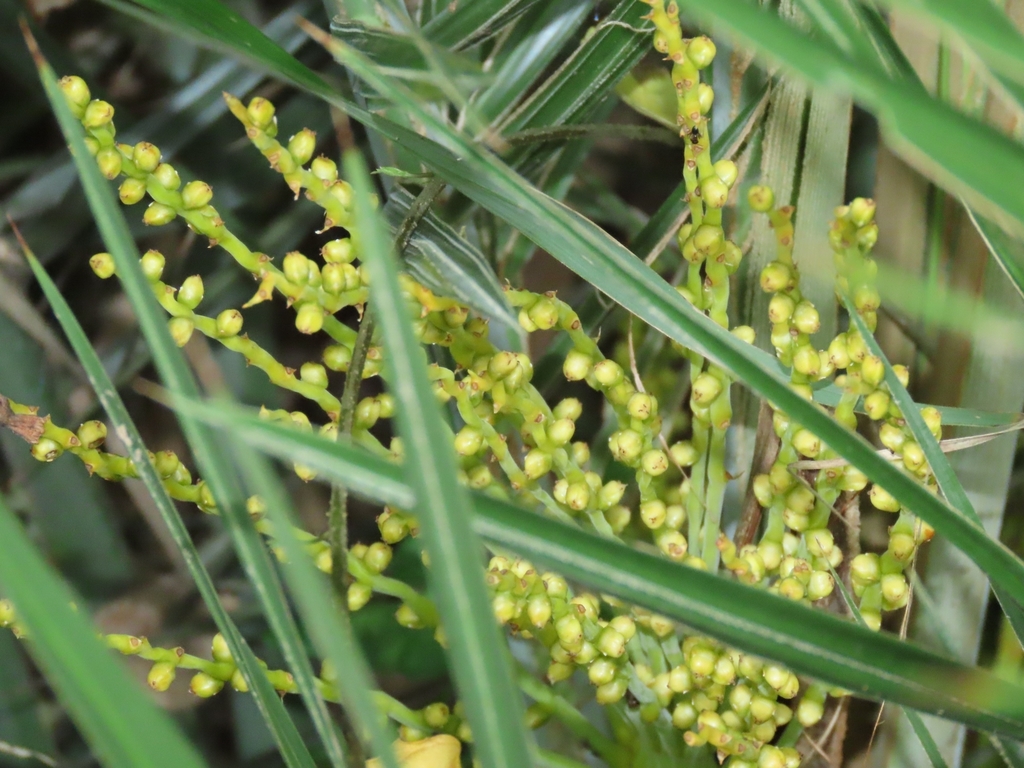
Spiny Date Palm
Phoenix loureiroi
Phoenix loureiroi (commonly known as the mountain date palm, vuyavuy palm, or voyavoy palm,) is a species of flowering plant in the palm family, indigenous to southern Asia, from the Philippines, Taiwan, India, southern Bhutan, Burma, Thailand, Cambodia, Vietnam, Pakistan, and China. It occurs in deciduous and evergreen forests and in clear terrain from sea level to 1,500 m (4,900 ft) altitude.
Phoenix loureiroi is named after João de Loureiro; it was originally written by Kunth as "loureirii", but this is error be corrected to loureiroi under the provisions of the ICBN.
From the article Phoenix loureiroi on Wikipedia (CC BY-SA), quoted section by section
Description
Phoenix loureiroi contains solitary and clustering plants with trunks from 1–4 m (3.3–13 ft) high and 25 cm (9.8 in) in width, usually covered in old leaf bases. The leaves vary to some degree but usually reach 2 m (6.6 ft) in length with leaflets wide at the base and sharply pointed apices. The leaflets emerge from the rachis at varying angles creating a stiff, plumose leaf.
The fruit is a single-seeded drupe, bluish-black when ripe, produced on erect, yellow inflorescences, usually hidden within the leaf crown. The species is noted for its variability in different habitats.
In human culture
Fibers from P. loureiroi var. loureiroi, known locally as "vuyavuy palm" (also spelled "voyavoy"), are used to make the distinctive vakul headgear and kanayi vests of the Ivatan people in the Batanes Islands of the northern Philippines.
== References ==
Wikipedia: “Cultural importance”
Where it lives
Recorded sightings
—
geo-referenced records in GBIF, from museums, herbaria and field observers.
Drag the globe to turn it. Dots are where records exist, not a range map; darker means more records.
In the stacks
Searching the stacks…
Every page naming Phoenix loureiroi in the Biodiversity Heritage Library →
This page is assembled live from iNaturalist, GBIF, Wikipedia, the Source Library and the Internet Archive. It is not yet part of the hand-edited codex. iNaturalist taxon 365730.