- Animals
- ›Arthropods
- ›Chelicerates
- ›Arachnids
- ›Mites and Ticks
- ›Parasitiformes
- ›Ticks
- ›Hardbacked Ticks
- ›Ixodes
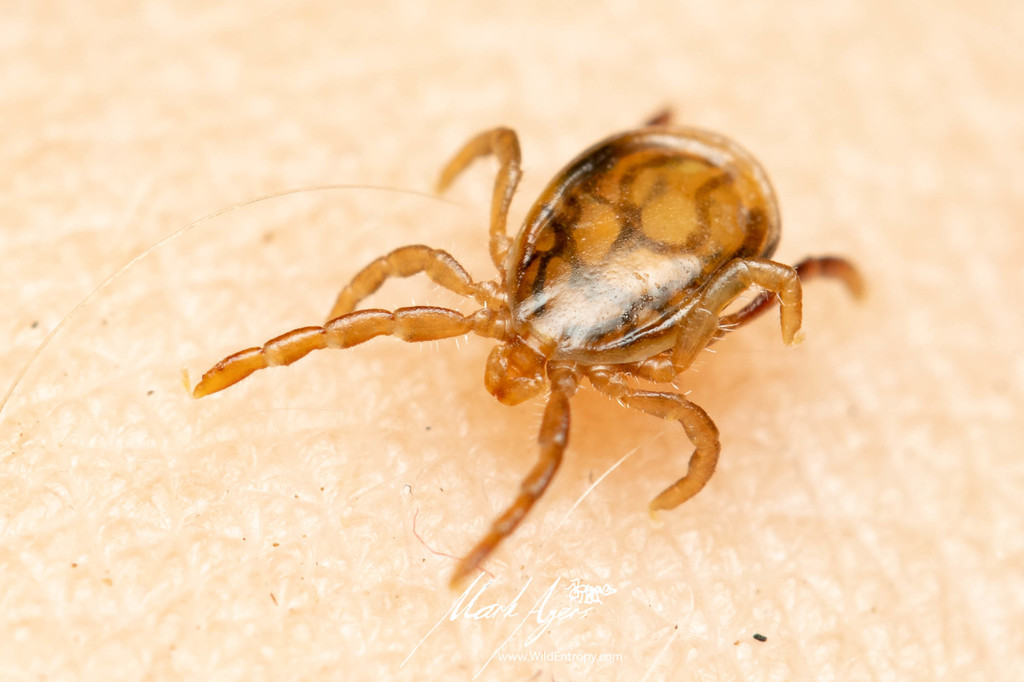
Australian Paralysis Tick
Ixodes holocyclus
Ixodes holocyclus, commonly known as the Australian paralysis tick, is one of about 75 species in the Australian tick fauna and is considered the most medically important. It can cause paralysis by injecting neurotoxins into its host. It is usually found in a 20-kilometre wide band following the eastern coastline of Australia. Within that range, Ixodes holocyclus is the tick most frequently encountered by humans and their pets. Because the same area includes Australia's most densely populated regions, bites on people, pets and livestock are relatively common.
Paralysis ticks are found in many types of habitat, particularly areas of high rainfall such as wet sclerophyll forest and temperate rainforest. The natural hosts for the paralysis tick include koalas, bandicoots, possums and kangaroos.
From the article Ixodes holocyclus on Wikipedia (CC BY-SA), quoted section by section
Range & habitat
Ixodes holocyclus is found mainly along coastal eastern Australia, from near Cooktown in far north Queensland to Lakes Entrance in Victoria. In places, it is found more than 100 km inland, particularly in areas of moist escarpments and ranges such as the Bunya Mountains of Queensland and the Lower Blue Mountains of New South Wales.
The distribution map gives only an approximation of the tick's distribution as the situation is not static. There are reports from inland Victoria, including north-eastern suburbs of Melbourne. This may reflect general movement of insects and ticks from equatorial to polar latitudes which in turn may be related to climate change. The need for humid conditions largely determines the botanical niche of this species. Low, leafy vegetation provides higher humidity levels by reducing the desiccating effects of wind and direct sunlight. This environment also suits the tick's major host, the bandicoot, as it seeks out grubs and worms in the leaf litter. Certain vegetation may be conducive to paralysis ticks. There are mixed reports about whether paralysis ticks climb trees. Some references mention ticks climbing to the tops of trees, while others report that they stay within 50 cm of the ground.
Wikipedia: “Distribution and habitat”
What it does
Ticks generally are obligate blood feeders. Active stages (larvae, nymphs and adults) of Ixodes holocyclus require blood as a source of nutrition. Adults also require the blood for sperm or egg production. The feeding process of ixodid ticks has first a slow phase for several days followed by a fast phase in the last 12–24 hours before detachment. There may be a tenfold increase in fed versus unfed weights by the end of the slow phase, but there is another tenfold increase by the end of the final fast phase. Leaving the full engorgement as late as possible reduces the chances of detection and removal by the host. The hypostome has a groove along its dorsal surface forming a food canal (also known as the preoral canal) through which blood is drawn from the host and passed on to the mouth and pharynx. During blood feeding by ixodid ticks, the liquid portion of the meal is first concentrated by removal of water and excess ions, which move across the gut epithelium and enter the tick's body cavity (hemocoele). These components are then taken up by the salivary glands, which produce a watery saliva that is injected back into the host. Blood meal digestion in ticks is similar in all species. The digestive system is histologically divided into foregut, midgut and hindgut. The foregut comprises the sucking pharynx and the oesophagus. …
Wikipedia: “Feeding process”
At the table
An association between tick bite reactions and mammalian meat allergy in humans has also been reported. The induced allergy is unusual in that the onset of the allergic reaction, which ranges from mild stomach symptoms to life-threatening anaphylaxis (skin rashes, swollen tongue and serious drop in blood pressure), can occur up to 3 to 6 hours after eating mammalian meat (typically beef, lamb or pork) and often many months after the tick bite. All mammals except humans and certain apes have a carbohydrate commonly known as alpha-gal (galactose-α-1,3-galactose) in their tissue fluids. When a tick feeds on the blood of a mammal (bandicoot, possum, cat, dog etc.) it takes alpha-gal into the tick's digestive system. When the same tick attaches to the next host (e.g., a human) it transfers the alpha-gal to the tissues of that next host. The immune system of some humans recognises alpha-gal as foreign and so produces antibodies against it. In this case the antibody produced is IgE, which is the type of antibody responsible for most allergic reactions. Thus the human is primed for a delayed allergic reaction to subsequent ingestion of mammalian meats (but not chicken or fish). Alpha-gal allergy in a human can now be recognised through a blood test. …
Wikipedia: “Food allergy”
In human culture
One of the earliest Australian references to ticks as a problem in human disease is found in the journal kept by Captain William Hovell during his 1824–1825 journey with Hamilton Hume from Lake George to Port Phillip. He remarked on "the small insect called the tick, which buries itself in the flesh, and would in the end destroy either man or beast if not removed in time". James Backhouse, a well-travelled Quaker during the early colonial period, gave the following account: "At Colongatta, in Shoal Haven...district, which, like that of Illawarra, is much more favorable for the grazing of horned cattle than for sheep. Among the enemies of the latter in these rich, coast lands, is the Wattle Tick, a hard flat insect of a dark colour, about the tenth of an inch in diameter, and nearly circular, in the body; it insinuates itself beneath the skin, and destroys, not only sheep, but sometimes foals and calves. Paralysis of the hind quarters often precedes death in these cases. Sometimes it occasions painful swellings, when forcibly removed from the human body, after having fixed its anchor-like head and appendages in the skin. …
Wikipedia: “Early scientific history”
Where it lives
Recorded sightings
—
geo-referenced records in GBIF, from museums, herbaria and field observers.
Drag the globe to turn it. Dots are where records exist, not a range map; darker means more records.
In the stacks
Searching the stacks…
Every page naming Ixodes holocyclus in the Biodiversity Heritage Library →
This page is assembled live from iNaturalist, GBIF, Wikipedia, the Source Library and the Internet Archive. It is not yet part of the hand-edited codex. iNaturalist taxon 368515.