- Animals
- ›Arthropods
- ›Hexapods
- ›Insects
- ›Winged and Once-winged Insects
- ›Butterflies and Moths
- ›Geometrid and Swallowtail Moths
- ›Geometer Moths
- ›Carpet Moths
- ›Pug Moths & Allies
- ›Pasiphila
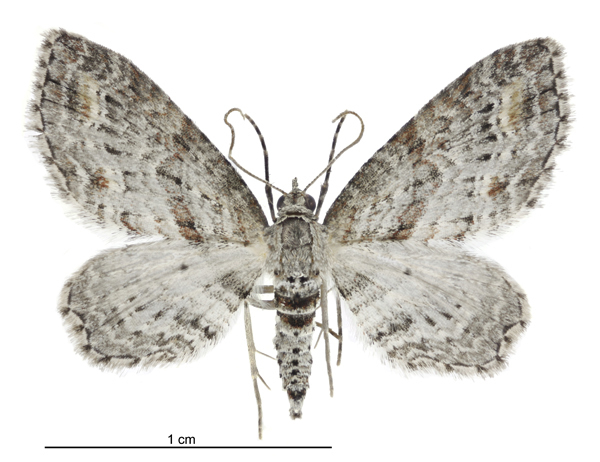
Pasiphila humilis
Pasiphila humilis is a moth of the family Geometridae. This species was first described by Alfred Philpott in 1917. It is endemic to New Zealand and is most commonly observed in the South Island. The larvae feed on the flowers of species in the genus Dracophyllum. Adults are on the wing regularly from October until January.
From the article Pasiphila humilis on Wikipedia (CC BY-SA), quoted section by section
Description
Philpott described the adults of this species as follows:
♂♀. 22-25 mm. Head, palpi, thorax, and abdomen grey sprinkled with black. Palpi in ♀ 3+1⁄2, in ♂ slightly less. Antennae in ♂ evenly ciliated, 3⁄4. Forewings rather narrow, costa hardly arched, termen bowed, strongly oblique; fuscous-grey, irrorated with black, sometimes with faint pink suffusion; numerous waved white lines, more prominent on apical half of wing; margin of the slightly darker basal portion of wing sharply and triangularly indented opposite discal spot; a black line along termen : cilia whitish-grey with fuscous median line. Hindwings, termen unevenly rounded, in ♂ deeply sinuate above middle; greyish-white with numerous incomplete waved bluish lines : cilia grey, obscurely barred with fuscous.
Range & habitat
This species is endemic to New Zealand. This species is most frequently observed in the South Island.
Wikipedia: “Distribution”
What it does
The adults of this species have been observed as being commonly on the wing from October to January.
== References ==
Wikipedia: “Behaviour”
Listen
Looking for field recordings…
Where it lives
Recorded sightings
—
geo-referenced records in GBIF, from museums, herbaria and field observers.
Drag the globe to turn it. Dots are where records exist, not a range map; darker means more records.
In the stacks
Searching the stacks…
Every page naming Pasiphila humilis in the Biodiversity Heritage Library →
This page is assembled live from iNaturalist, GBIF, Wikipedia, the Source Library and the Internet Archive. It is not yet part of the hand-edited codex. iNaturalist taxon 394651.