- Animals
- ›Arthropods
- ›Chelicerates
- ›Arachnids
- ›Mites and Ticks
- ›Acariformes
- ›Sarcoptiformes
- ›Beetle Mites
- ›Desmonomata
- ›Brachypylina
- ›Ameronothroidea
- ›Podacaridae
- ›Alaskozetes
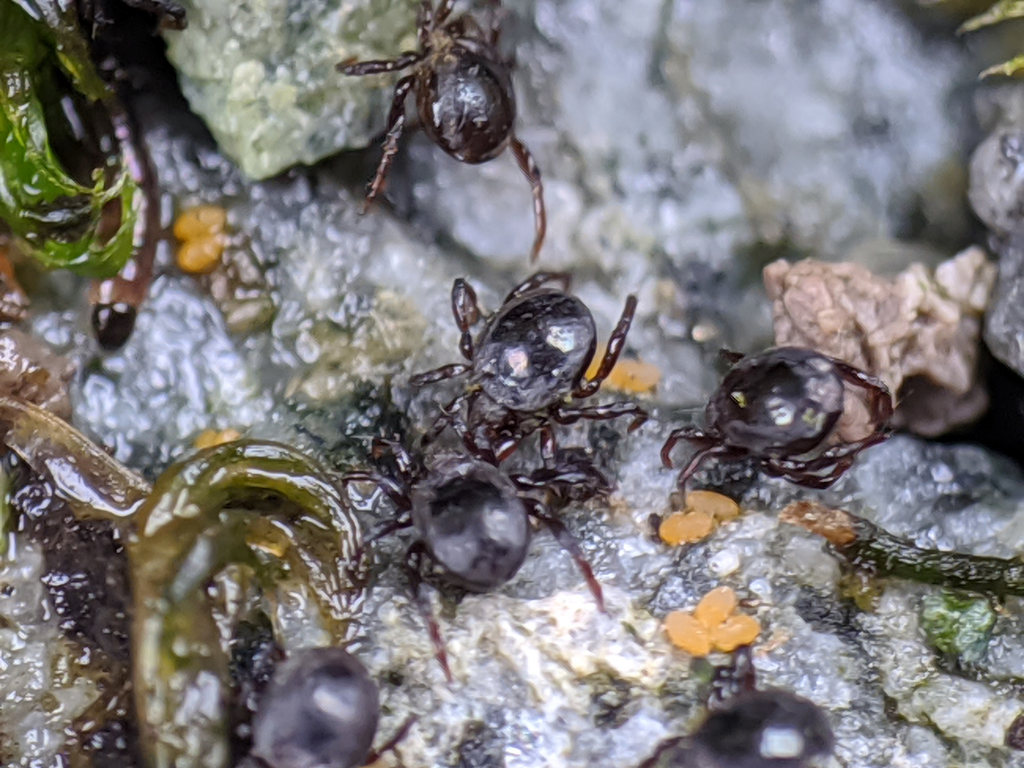
Alaskozetes antarcticus
Alaskozetes antarcticus is a species of non-parasitic mite, known for its ability to survive in subzero temperatures.
This animal's name derives from its habitat: Alasko, meaning "from Alaska", and antarcticus, in connection with frigid conditions in which the mite lives. Scientists are unclear as to how Alaskozetes antarcticus has been able to adapt to an environment so different from those of other arthropods. Whereas most arthropod species inhabit hot, moist environments, A. antarcticus survives in freezing conditions with almost no humidity.
From the article Alaskozetes antarcticus on Wikipedia (CC BY-SA), quoted section by section
What it does
Alaskozetes antarcticus eats moss, algae and fungi. These mites are not parasitic and do not suck blood. They are harmless to humans and large organisms.
== References ==
Wikipedia: “Diet”
Where it lives
Recorded sightings
—
geo-referenced records in GBIF, from museums, herbaria and field observers.
Drag the globe to turn it. Dots are where records exist, not a range map; darker means more records.
In the stacks
Searching the stacks…
Every page naming Alaskozetes antarcticus in the Biodiversity Heritage Library →
This page is assembled live from iNaturalist, GBIF, Wikipedia, the Source Library and the Internet Archive. It is not yet part of the hand-edited codex. iNaturalist taxon 408337.