- Animals
- ›Arthropods
- ›Hexapods
- ›Insects
- ›Winged and Once-winged Insects
- ›Ants, Bees, Wasps, and Sawflies
- ›Narrow-waisted Wasps, Ants, and Bees
- ›Ants, Bees, and Stinging Wasps
- ›Formicoidea
- ›Ants
- ›Ponerine Ants
- ›Typical Ponerine Ants

Megaponera
Megaponera analis is the sole species of the ant genus Megaponera. They are a strictly termite-eating (termitophagous) ponerine ant species widely distributed in Sub-Saharan Africa and most commonly known for their column-like raiding formation when attacking termite feeding sites. Their sophisticated raiding behaviour gave them the common name Matabele ant after the Matabele tribe, fierce warriors who overwhelmed various other tribes during the 1800s. With some individuals reaching up to 25 millimetres (0.98 in) in length, M. analis is one of many of the world's largest ants.
In 2014, the specific name analis, in Latin "anus-related", chosen by Latreille, replaced foetens "stinking", given by Johan Christian Fabricius in 1793, because Guillaume-Antoine Olivier had given the same name Formica foetens to another species in 1792. Both names allude to the fact that the mandibular gland of this ant releases dimethyl disulfide and dimethyl trisulfide, which smell like human feces.
1 branches of this genus, most-observed first
See this branch on the Wheel of Life →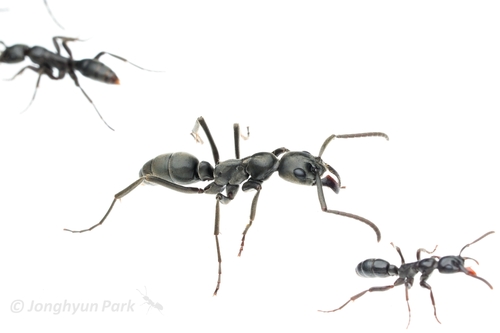
Where it lives
Recorded sightings
—
geo-referenced records in GBIF, from museums, herbaria and field observers.
Drag the globe to turn it. Dots are where records exist, not a range map; darker means more records.
In the stacks
Searching the stacks…
Every page naming Megaponera in the Biodiversity Heritage Library →
This page is assembled live from iNaturalist, GBIF, Wikipedia, the Source Library and the Internet Archive. It is not yet part of the hand-edited codex. iNaturalist taxon 426189.