- Animals
- ›Arthropods
- ›Hexapods
- ›Insects
- ›Winged and Once-winged Insects
- ›Butterflies and Moths
- ›Butterflies
- ›Brush-footed Butterflies
- ›Satyrs, Morphos, and Allies
- ›Dirini
- ›Aeropetes
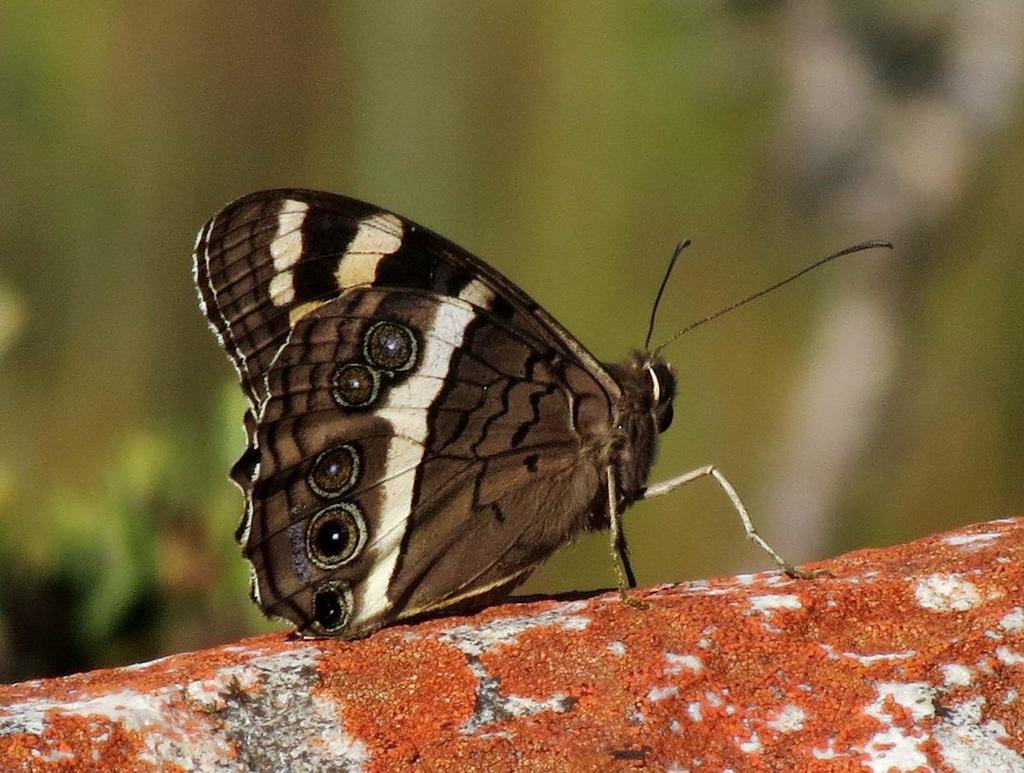
Table Mountain Beauty
Aeropetes tulbaghia
Aeropetes is a monotypic butterfly genus in the family Nymphalidae. Its only species, Aeropetes tulbaghia, is commonly known as the Table Mountain beauty or mountain pride. It is native to southern Africa, where it occurs in South Africa, Lesotho, Eswatini and Zimbabwe.
From the article Aeropetes on Wikipedia (CC BY-SA), quoted section by section
Description
The sexes are similar, but males are on average smaller. The wingspan is 70–78 mm for males and 75–90 mm for females.
Range & habitat
Aeropetes is commonly found in mountainous, rock-strewn hillsides and gullies. It has a tendency to settle on the shady side of rocks and of overhung stream banks.
Wikipedia: “Habitat and habits”
In human culture
Linnaeus chose the specific name to commemorate Ryk Tulbagh, from whom he received batches of Cape specimens, collected by Tulbagh's gardener, J. A. Auge. Billberg established the genus in 1820, Aero- (from ἀήρ, aēr) meaning "air", "atmosphere" or (in earlier Greek) "mist", and -petes (from πέτης, pétēs) meaning "one who flies" or "flyer".
Wikipedia: “Etymology”
Listen
Looking for field recordings…
Where it lives
Recorded sightings
—
geo-referenced records in GBIF, from museums, herbaria and field observers.
Drag the globe to turn it. Dots are where records exist, not a range map; darker means more records.
In the stacks
Searching the stacks…
Every page naming Aeropetes tulbaghia in the Biodiversity Heritage Library →
This page is assembled live from iNaturalist, GBIF, Wikipedia, the Source Library and the Internet Archive. It is not yet part of the hand-edited codex. iNaturalist taxon 430059.