- Animals
- ›Arthropods
- ›Hexapods
- ›Insects
- ›Winged and Once-winged Insects
- ›Butterflies and Moths
- ›Plume Moths and Allies
- ›Plume Moths
- ›Pterophorinae
- ›Oxyptilini
- ›Crombrugghia
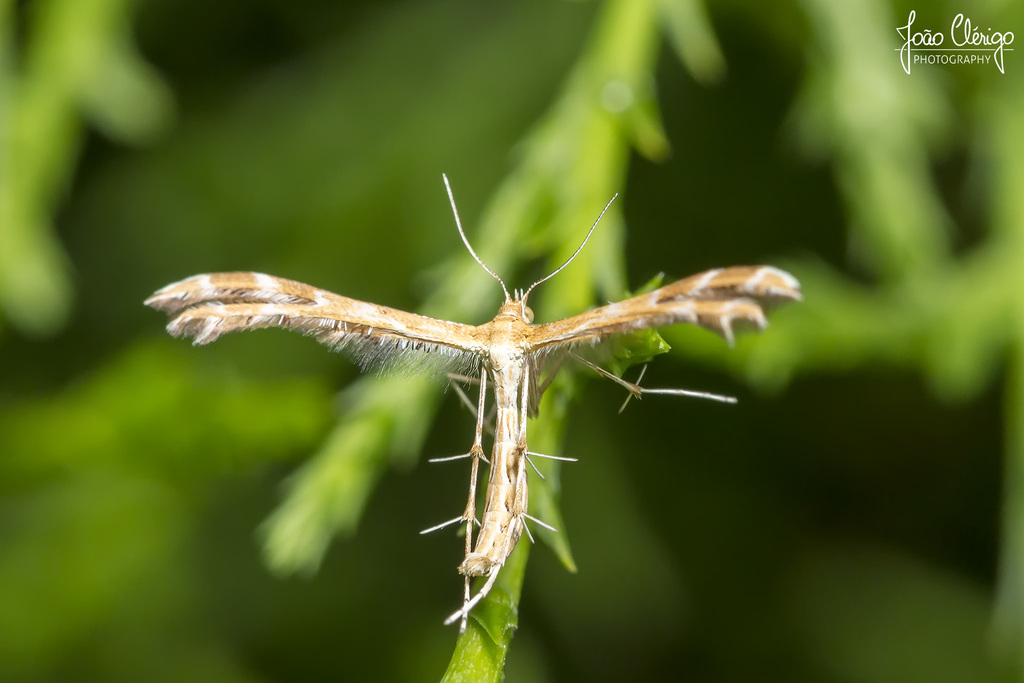
Crombrugghia laetus
Crombrugghia laetus, also known as the scarce light plume, is a moth of the family Pterophoridae, found in southern Europe, North Africa, the Canary Islands, Asia Minor and Iraq. It was first described by the German entomologist, Philipp Christoph Zeller in 1847.
From the article Crombrugghia laetus on Wikipedia (CC BY-SA), quoted section by section
Description
The forewings are light brownish-ochreous, more or less suffused with fuscous with two obscure whitish bars on the segments. The cilia have a few black scales. The costal and dorsal have whitish bars. The hindwings are dark grey. The dorsal scale-tooth at 2/3 is small.
The wingspan is 14–23 millimetres (0.55–0.91 in). The larvae feed on the flowers of Andryala species including common Andryala (Andryala integrifolia), Andryala pinnatifida and Hieracium tomentosum.
== References ==
Listen
Looking for field recordings…
Where it lives
Recorded sightings
—
geo-referenced records in GBIF, from museums, herbaria and field observers.
Drag the globe to turn it. Dots are where records exist, not a range map; darker means more records.
In the stacks
Searching the stacks…
Every page naming Crombrugghia laetus in the Biodiversity Heritage Library →
This page is assembled live from iNaturalist, GBIF, Wikipedia, the Source Library and the Internet Archive. It is not yet part of the hand-edited codex. iNaturalist taxon 466695.