- Animals
- ›Arthropods
- ›Hexapods
- ›Insects
- ›Winged and Once-winged Insects
- ›Butterflies and Moths
- ›Hawk, Sphinx, Silk, Emperor, and Allied Moths

Sphinx Moths
Sphingidae
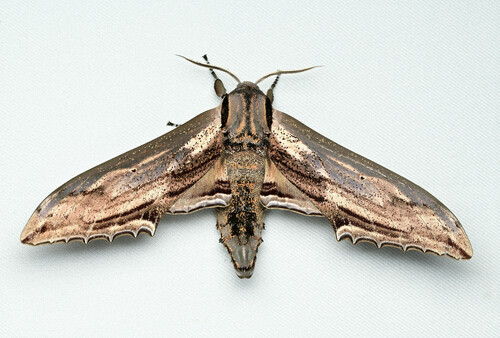
The Sphingidae are a family of moths commonly called sphinx moths, also colloquially known as hawk moths; many of their caterpillars are known as hornworms. The family includes about 1,450 species. It is best represented in the tropics, but species are found in every region. They are moderate to large in size and are distinguished among moths for their agile and sustained flying ability, similar enough to that of hummingbirds as to be reliably mistaken for them. Their narrow wings and streamlined abdomens are adaptations for rapid flight. The family was named by French zoologist Pierre André Latreille in 1802.
Some hawk moths, such as the hummingbird hawk-moth and the white-lined sphinx, hover in midair while they feed on nectar from flowers, so are sometimes mistaken for hummingbirds. This hovering capability is only known to have evolved four times in nectar feeders: in hummingbirds, certain bats, hoverflies, and these sphingids (an example of convergent evolution). Sphingids have been studied for their flying ability, especially their ability to move rapidly from side to side while hovering, called "swing-hovering" or "side-slipping". This is thought to have evolved to deal with ambush predators that lie in wait in flowers.


Where it lives
Recorded sightings
—
geo-referenced records in GBIF, from museums, herbaria and field observers.
Drag the globe to turn it. Dots are where records exist, not a range map; darker means more records.
In the stacks
Searching the stacks…
Every page naming Sphingidae in the Biodiversity Heritage Library →
This page is assembled live from iNaturalist, GBIF, Wikipedia, the Source Library and the Internet Archive. It is not yet part of the hand-edited codex. iNaturalist taxon 47213.