 NL·0671
Herbarium of the Nature Library
- Name
- Oncorhynchus mykiss
- Family
- Salmonidae
- Native to
- Pacific drainages from Alaska to north-west Mexico and the Kamchatka Peninsula; introduced to over 80 countries
- Habitat
- Cold rivers, Mountain streams, Lakes, Coastal ocean (steelhead)
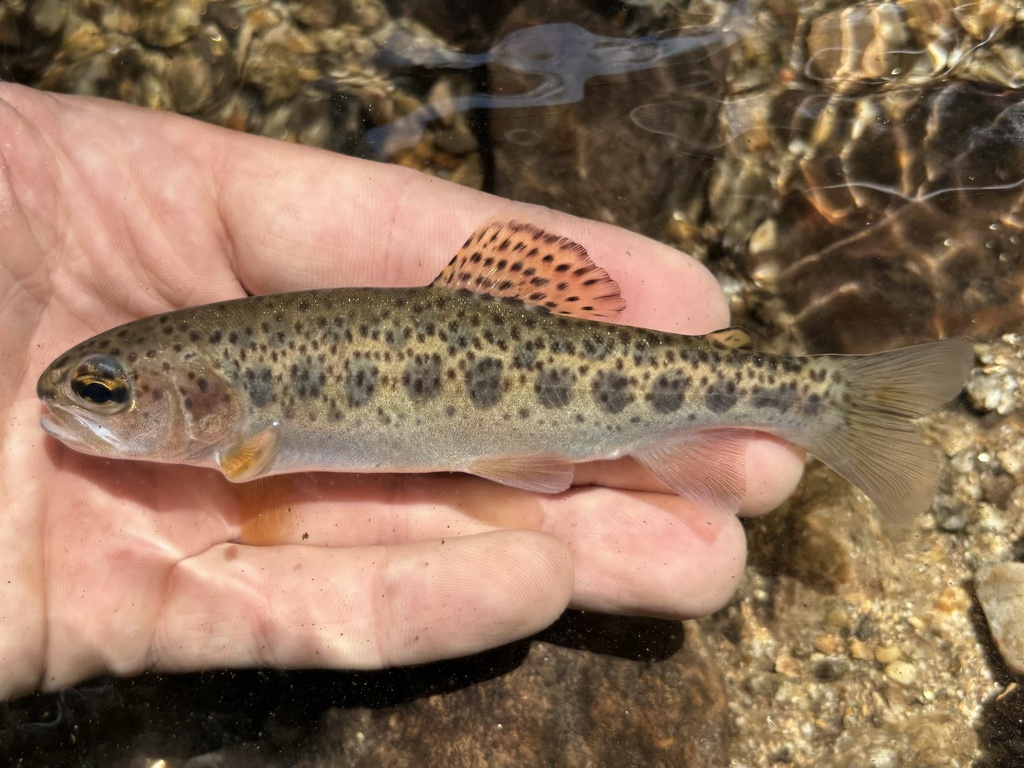
Rainbow trout (steelhead)
Oncorhynchus mykiss
Also calledMikizha микижа (Russian, Kamchatka) · Truta-arco-íris (Portuguese) · Trucha arcoíris (Spanish) · Nijimasu ニジマス (Japanese) · Steelhead (sea-run form)
A Pacific salmonid that comes in two lives: a stream trout that stays in fresh water all its life, and the sea-going steelhead that returns from the ocean to spawn. It is one of the most widely farmed and stocked fish on Earth.
The rainbow trout is a species of trout native to cold-water tributaries of the Pacific Ocean in North America and Asia. The steelhead is an anadromous (sea-run) form of the coastal rainbow trout (O. m. irideus) or Columbia River redband trout (O. m. gairdneri) that usually returns to freshwater to spawn after living two to three years in the ocean. Wikipedia
What it can do
- iSteelhead migrate to sea and back, and unlike most Pacific salmon can survive spawning and return to spawn again
- iiLeaps waterfalls and rapids on spawning migrations
- iiiFeeds on drifting insects by holding station in current, rising to the surface at the right moment
In the field
Field marks
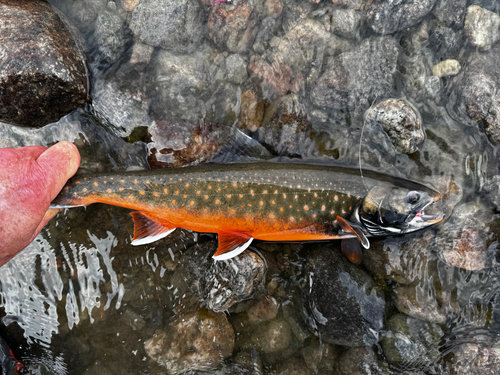
- aPinkish-red to magenta band along each flank, brightest in spawning males
- bMany small black spots over the back, dorsal fin and the whole tail
- cSilvery to olive-green back with no red or pale halo spots
- dSmall adipose fin; mouth ends below or just behind the eye
- Not to be confused with
- Brown trout has larger black and red spots with pale halos and few spots on the tail. Cutthroat trout has a red-orange slash under the lower jaw. Fresh-run steelhead are bright silver and can be confused with coho salmon, which have spots only on the upper tail lobe and white gums.
- Where to see it
- The McCloud River, California (source of the original hatchery strains); Kamchatka rivers; the Skeena and Dean rivers, British Columbia (steelhead); trout streams of Kashmir, Chile, Patagonia and New Zealand where introduced
- When
- Resident trout year-round; spawns roughly February–June; steelhead runs enter rivers in summer or winter depending on the stock
Life & habits
- Diet
- Carnivore: aquatic and terrestrial insects, crustaceans, fish eggs and small fish; steelhead eat squid and fish at sea
- Habitat
- Cool, clear, well-oxygenated streams, rivers and lakes; steelhead in the North Pacific
- Size
- Stream fish 25–50 cm; steelhead and lake fish to over 1 m and 20 kg
- Lifespan
- Usually 4–6 years; up to 11
Females dig gravel nests (redds) with their tails in spring, and dominant males fight for position beside them.
Where it lives
Recorded sightings
—
geo-referenced records in GBIF, from museums, herbaria and field observers.
Native range
Pacific drainages from Alaska to north-west Mexico and the Kamchatka Peninsula; introduced to over 80 countries
Drag the globe to turn it. Dots are where records exist, not a range map; darker means more records.
In the stacks
Searching the stacks…
Every page naming Oncorhynchus mykiss in the Biodiversity Heritage Library →
Marginalia
Hatchery eggs from California's McCloud River were shipped around the world from the 1870s, and descendants of that stock now live on six continents. The steelhead is the state fish of Washington.
Curiosity
Rainbow trout and steelhead are the same species. Steelhead parents can produce stream-resident offspring, and resident parents can produce sea-run ones.
Kinship
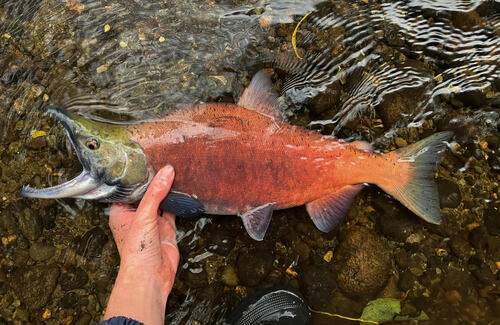

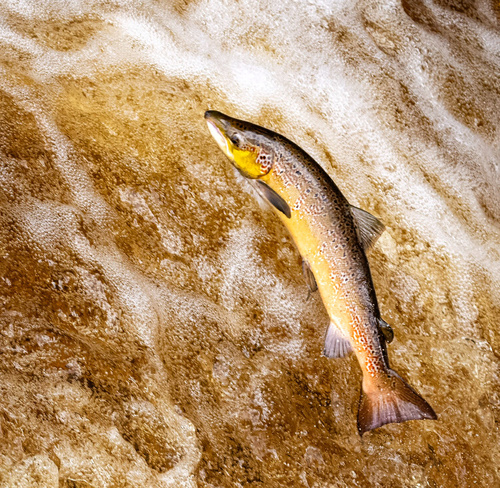
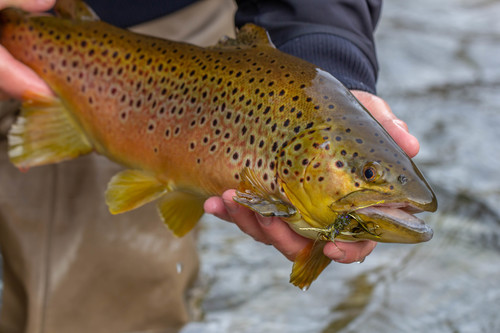

Fact-checked: 1 correction made to this sheet. Photographs: iNaturalist contributors under the licences shown. Records: GBIF.org. Historical plates: Source Library (CC BY-SA 4.0; originals public domain). Summary text: Nature Library editors and Wikipedia (CC BY-SA). Medicinal and edibility notes are historical and educational, not advice. iNaturalist taxon 47516.