- Animals
- ›Arthropods
- ›Hexapods
- ›Insects
- ›Winged and Once-winged Insects
- ›Butterflies and Moths
- ›Geometrid and Swallowtail Moths
- ›Geometer Moths
- ›Ennominae
- ›Boarmiini
- ›Lycia
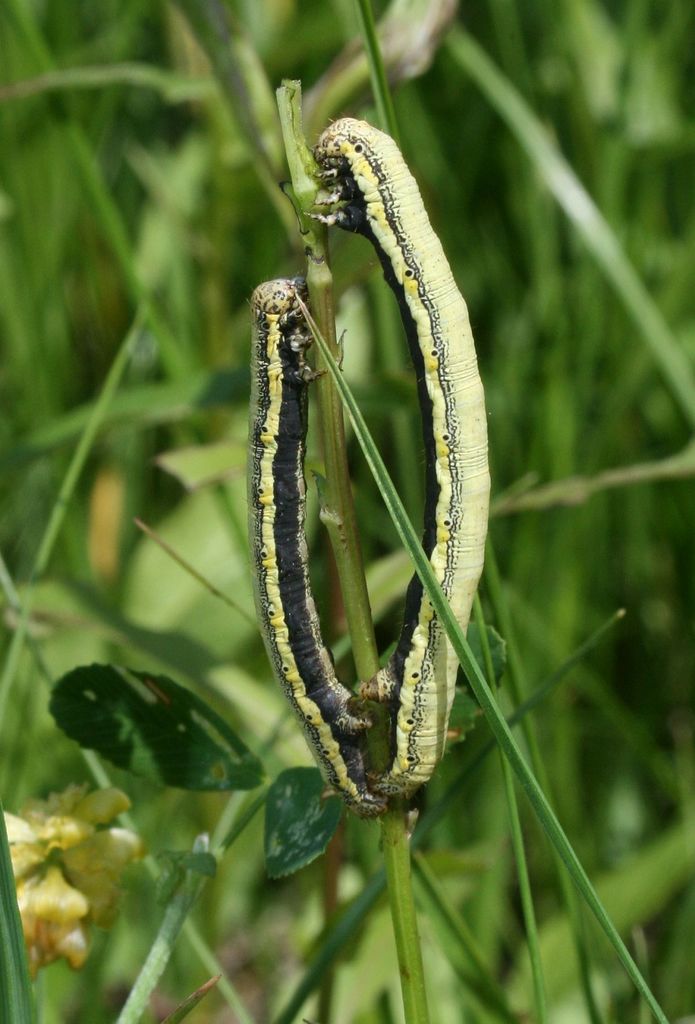
Belted Beauty Moth
Lycia zonaria
Lycia zonaria, the belted beauty, is a moth of the family Geometridae. The species was first described by Michael Denis and Ignaz Schiffermüller in 1775 and it is found in most of Europe.
From the article Lycia zonaria on Wikipedia (CC BY-SA), quoted section by section
Description
The wingspan is 27–30 mm. Females are wingless. Males are variable, but always easy to recognize. Characteristic are the dark veins and broad dark distal area, bounded proximally and traversed by sharply white lines. The female is distinguished by its yellowish abdominal belts. The rudimentary white wings are common to the genus.
Range & habitat
Lycia zonaria is found from central Europe, east to the Russian Urals. The populations in England and Wales are ssp. britannica, those from the Urals are ssp. rossica . The nominate subspecies is found in the south west of Spain and France, but is missing in the Mediterranean. The northern occurrence ranges to Denmark and southern Sweden.
Wikipedia: “Distribution”
Listen
Looking for field recordings…
Where it lives
Recorded sightings
—
geo-referenced records in GBIF, from museums, herbaria and field observers.
Drag the globe to turn it. Dots are where records exist, not a range map; darker means more records.
In the stacks
Searching the stacks…
Every page naming Lycia zonaria in the Biodiversity Heritage Library →
This page is assembled live from iNaturalist, GBIF, Wikipedia, the Source Library and the Internet Archive. It is not yet part of the hand-edited codex. iNaturalist taxon 483352.