- Animals
- ›Arthropods
- ›Hexapods
- ›Insects
- ›Winged and Once-winged Insects
- ›Butterflies and Moths
- ›Geometrid and Swallowtail Moths
- ›Geometer Moths
- ›Ennominae
- ›Gnophini
- ›Aspitates
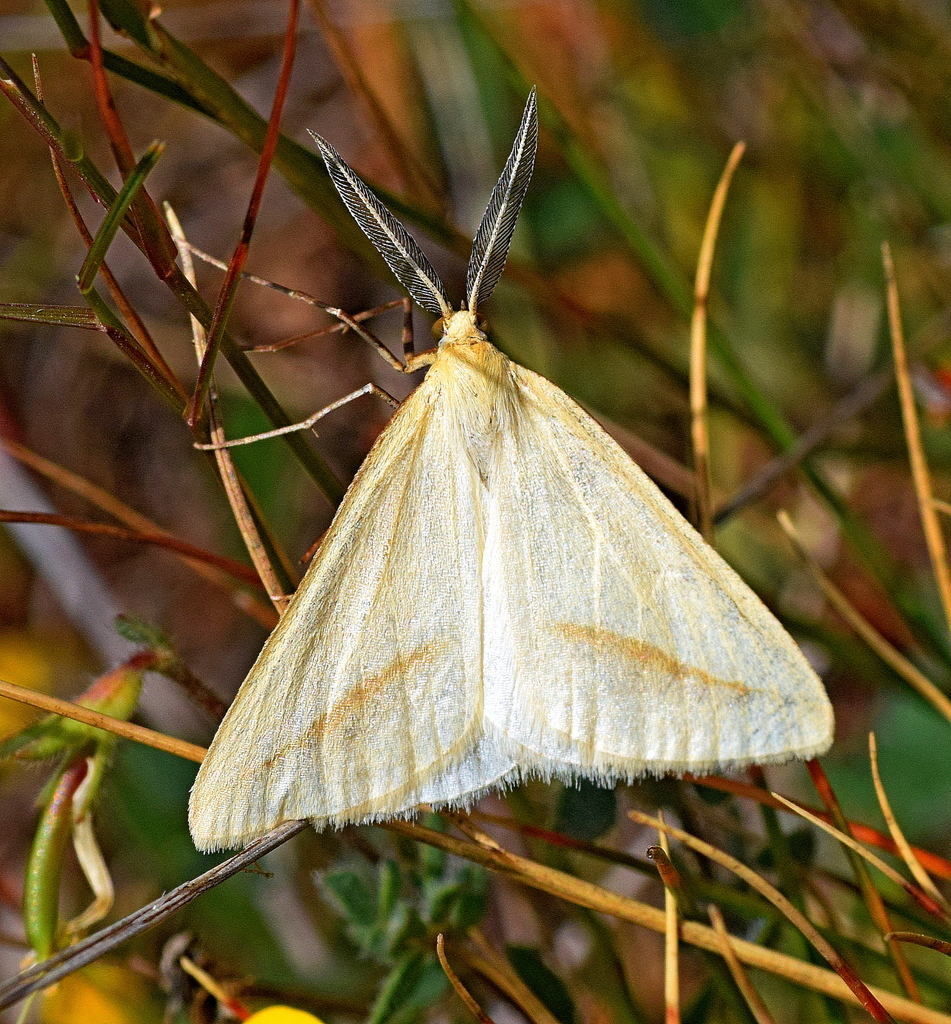
Straw Belle
Aspitates gilvaria
Aspitates gilvaria, the straw belle, is a moth of the family Geometridae. The species was first described by Michael Denis and Ignaz Schiffermüller in 1775. It is found from Europe to the eastern part of the Palearctic realm. The main habitats are warm slopes, heathlands, fields and abandoned quarries. In the mountains, the species rises to heights of 1000 meters. Adults are on wing from July to August.
From the article Aspitates gilvaria on Wikipedia (CC BY-SA), quoted section by section
Description
The wingspan is 25–30 mm. The graduated buff coloured forewing has a red or brown diagonal slash from the wing tip to the inside edge. The hindwings are white with a faint diagonal grey streak and a dot on the upper surface. The male has combed antennae. The female is more mottled than the male and has less combed antennae. The egg initially has a light green colour, which changes from reddish yellow to grey just before the caterpillars hatch. The pole and egg base are orange. The surface is covered with about 50 longitudinal ribs. The micropyle rosette is ten to eleven-leaves and surrounded by a large-mesh network. The larva is ochreous grey, with a blackish, ochreous-edged dorsal line and various other fine darker and paler longitudinal lines.
What it does
The larvae feed on various herbaceous plants, including Potentilla, Thymus, Andromeda polifolia and possibly Empetrum nigrum, Rubus chamaemorus and Vaccinium uliginosum.
Wikipedia: “Diet”
Listen
Looking for field recordings…
Where it lives
Recorded sightings
—
geo-referenced records in GBIF, from museums, herbaria and field observers.
Drag the globe to turn it. Dots are where records exist, not a range map; darker means more records.
In the stacks
Searching the stacks…
Every page naming Aspitates gilvaria in the Biodiversity Heritage Library →
This page is assembled live from iNaturalist, GBIF, Wikipedia, the Source Library and the Internet Archive. It is not yet part of the hand-edited codex. iNaturalist taxon 483366.