- Animals
- ›Arthropods
- ›Hexapods
- ›Insects
- ›Winged and Once-winged Insects
- ›Butterflies and Moths
- ›Geometrid and Swallowtail Moths
- ›Geometer Moths
- ›Ennominae
- ›Gnophini
- ›Dyscia
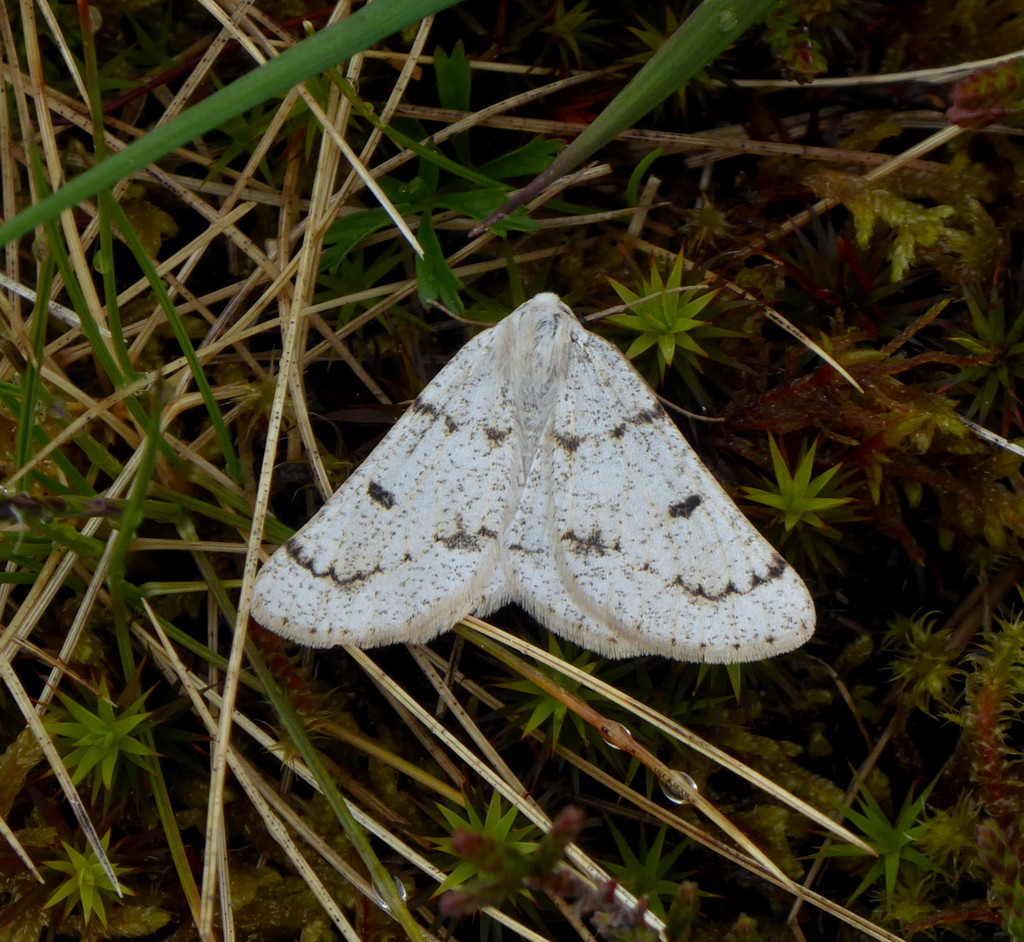
Grey Scalloped Bar
Dyscia fagaria
Dyscia fagaria, the grey scalloped bar, is a moth of the family Geometridae. The species was first described by Carl Peter Thunberg in 1784 and it can be found in Europe.
The wingspan is 31–40 mm (1.2–1.6 inches), the females are a bit smaller. The colour of the wings varies from whitish to brown. The outer cross line on the front wings consists of dark points (often connected) and is well developed. The interior cross line is similar to the outer, but only weakly implied in some specimens. The discal stain stands out clearly. The dark outer cross line of the forewings continues in attenuated form on the hindwings. There are fine black dots on the margins of all wings. Ab. alvarensis Wahlgren is rather a light form and weakly marked, the lines only distinct at the margins; ab.favillacearia Hbn. is cinereous, not densely irrorated, the lines somewhat broken into vein-dots, that of the hindwing almost or quite obsolete; ab. fleischmatini Rbl. is almost unicolorous black-grey; ab.psoficaria Ev. is a dark, densely irrorated form from the Ural, Transcaucasia and Transcaspia; ab.albidaria Stgr. is almost white, with little irroration, markings strong. The larva is dungy brown, with a whitish dorsal stripe and some grey markings on the sides.
Listen
Looking for field recordings…
Where it lives
Recorded sightings
—
geo-referenced records in GBIF, from museums, herbaria and field observers.
Drag the globe to turn it. Dots are where records exist, not a range map; darker means more records.
In the stacks
Searching the stacks…
Every page naming Dyscia fagaria in the Biodiversity Heritage Library →
This page is assembled live from iNaturalist, GBIF, Wikipedia, the Source Library and the Internet Archive. It is not yet part of the hand-edited codex. iNaturalist taxon 483367.