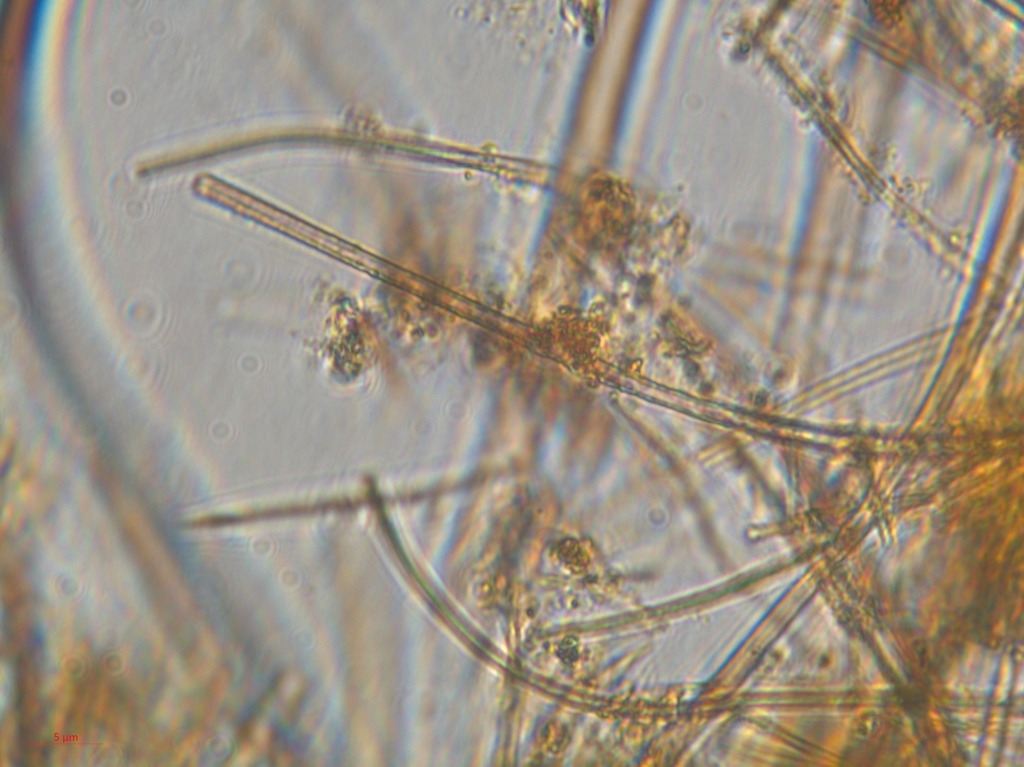
Leptothrix ochracea
Leptothrix ochracea is a neutrophilic aerobic rod-shaped, Gram-negative bacterium that can oxidize iron. This bacterium is commonly found in iron-rich freshwater streams, wetlands, ponds, and the rhizosphere. L. ochracea is typically identified by the thick, orange, fluffy mats it forms out of iron biominerals, including ferrihydrite, goethite, and lepidocrocite. It frequently coexists with another iron-oxidizing bacterial species, Gallionella ferruginea, with G. ferruginea dominating iron mats in the spring and L. ochracea making up the majority of iron mats during the rest of the year.
From the article Leptothrix ochracea on Wikipedia (CC BY-SA), quoted section by section
Description
L. ochracea is a Gram-negative, rod-shaped bacterium that occurs in cell chains in sheaths, among many empty sheaths. The sheaths, believed to prevent iron accumulation in the cells, are made of iron oxyhydroxide minerals. The sheaths are typically thin and 1-2 microns wide with a rough surface. The mineral structures may protect the bacteria from predation and act as a holdfasts or anchor points, allowing the bacteria to attach to a surface. Another consideration is that the excretion of the minerals may allow the bacteria to break up complex organic compounds as a food source.
Wikipedia: “Morphology and sheath function”
Where it lives
Recorded sightings
—
geo-referenced records in GBIF, from museums, herbaria and field observers.
Drag the globe to turn it. Dots are where records exist, not a range map; darker means more records.
In the stacks
Searching the stacks…
Every page naming Leptothrix ochracea in the Biodiversity Heritage Library →
This page is assembled live from iNaturalist, GBIF, Wikipedia, the Source Library and the Internet Archive. It is not yet part of the hand-edited codex. iNaturalist taxon 488641.