- Animals
- ›Arthropods
- ›Hexapods
- ›Insects
- ›Winged and Once-winged Insects
- ›Butterflies and Moths
- ›Pyralid and Crambid Snout Moths
- ›Crambid Snout Moths
- ›Pyraustinae
- ›Pyraustini
- ›Pyrausta
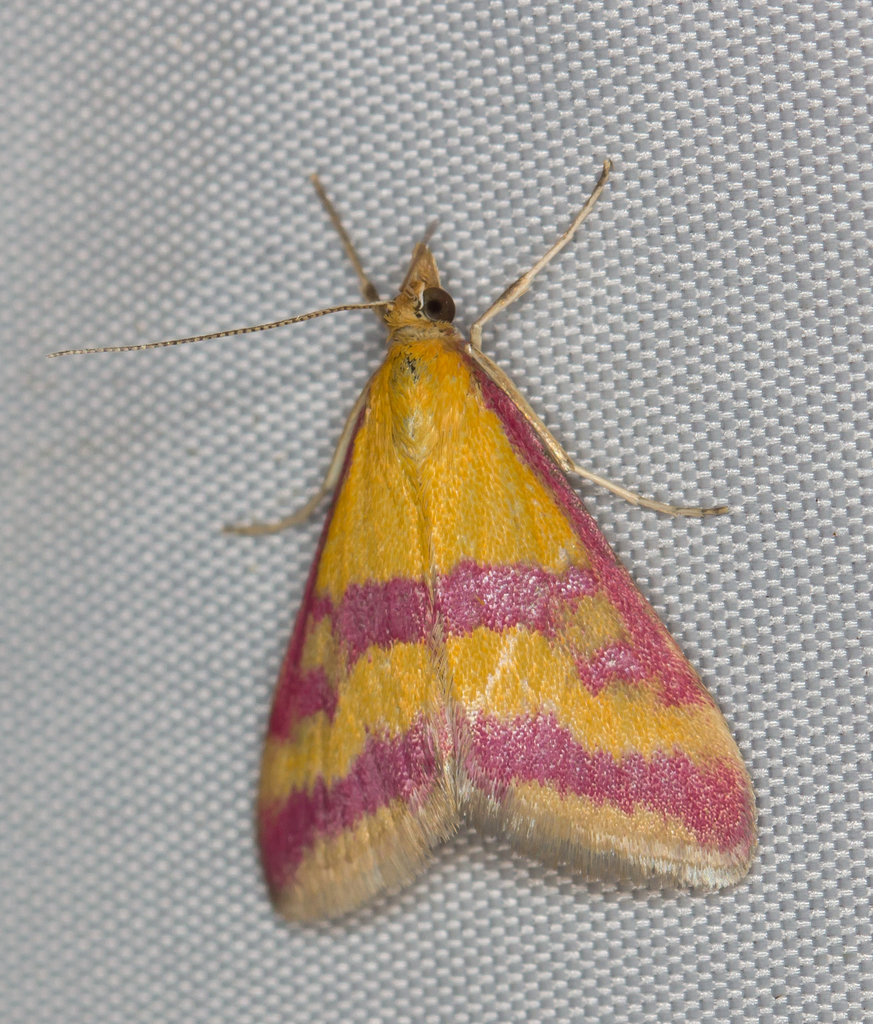
Scarce Crimson and Gold
Pyrausta sanguinalis
Pyrausta sanguinalis, the scarce crimson and gold, is a moth of the family Crambidae. The species was first described by Carl Linnaeus in his 1767 12th edition of Systema Naturae.
The wingspan is 14–18 mm. The forewings are brownish ochreous, basal and dorsal areas deep yellow, disc yellow mixed; markings purple-crimson; a streak along costa to 3/4; a fascia before middle; an oblong discal spot, connected above with costal streak, and sometimes beneath with preceding fascia; a subterminal fascia. Hindwings in male light grey, darker terminally, in female grey; termen crimson in middle. The larva is greenish-grey, reddish tinged; subdorsal and spiracular lines whitish; head brown.
Listen
Looking for field recordings…
Where it lives
Recorded sightings
—
geo-referenced records in GBIF, from museums, herbaria and field observers.
Drag the globe to turn it. Dots are where records exist, not a range map; darker means more records.
In the stacks
Searching the stacks…
Every page naming Pyrausta sanguinalis in the Biodiversity Heritage Library →
This page is assembled live from iNaturalist, GBIF, Wikipedia, the Source Library and the Internet Archive. It is not yet part of the hand-edited codex. iNaturalist taxon 501166.