- Plants
- ›Vascular Plants
- ›flowering plants
- ›monocots
- ›Agaves, Orchids, Irises, and Allies
- ›Orchids
- ›Lower Epidendroid Orchids
- ›Neottieae
- ›Limodorinae
- ›Epipactis
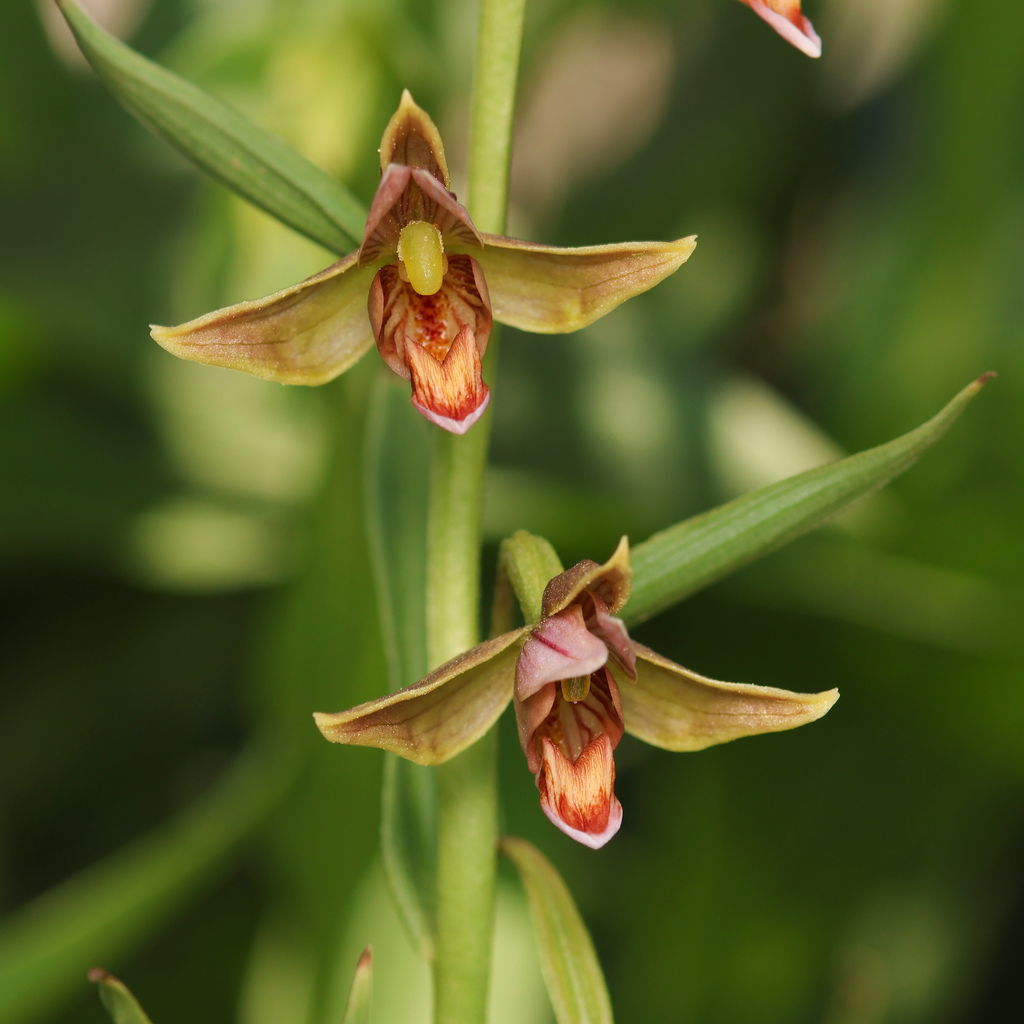
Stream Orchid
Epipactis gigantea
Epipactis gigantea is a species of orchid known by the common names stream orchid and giant helleborine and chatterbox. This wildflower is native to western North America from British Columbia to central Mexico. This is one of the most abundant orchids of the Pacific coast of North America.
From the article Epipactis gigantea on Wikipedia (CC BY-SA), quoted section by section
Description
Epipactis gigantea is an erect perennial reaching anywhere from 30 centimeters to one meter in height. Its stems have prominently-veined, wide or narrow lance-shaped leaves 5 to 15 centimeters long and inflorescences of two or three showy orchids near the top. Each flower has three straight sepals which are light brownish or greenish with darker veining, each one to two centimeters long. The two top petals are similar in shape and reddish-brown with purple veins. The lowest petal is cup-shaped with a pointed, tongue-like protuberance and is brighter red-brown and more starkly veined, often with areas of yellow. The fruit is a hanging capsule 2 or 3 centimeters long which contains thousands of tiny seeds. This plant grows in wet areas in a variety of habitats, including riverbanks, hot springs, and meadows at elevations less than 2,600 feet. Unlike some of its relatives, this species is an autotroph. A distinctive race with burgundy colored foliage is known from The Cedars in Sonoma County California, an area of serpentine rock, and it is called forma rubrifolia (P M Brown).
How it is grown
Epipactis gigantea is cultivated in the specialty horticulture trade and available as a non-wild collected propagated ornamental plant. A maroon-leaved (forma rubrifolia) cultivar is also grown, called 'Serpentine Night'.
Wikipedia: “Cultivation”
Where it lives
Recorded sightings
—
geo-referenced records in GBIF, from museums, herbaria and field observers.
Drag the globe to turn it. Dots are where records exist, not a range map; darker means more records.
In the stacks
Searching the stacks…
Every page naming Epipactis gigantea in the Biodiversity Heritage Library →
This page is assembled live from iNaturalist, GBIF, Wikipedia, the Source Library and the Internet Archive. It is not yet part of the hand-edited codex. iNaturalist taxon 50715.