- Animals
- ›Arthropods
- ›Hexapods
- ›Insects
- ›Winged and Once-winged Insects
- ›Butterflies and Moths
- ›Geometrid and Swallowtail Moths
- ›Geometer Moths
- ›Epidesmiinae
- ›Dichromodes
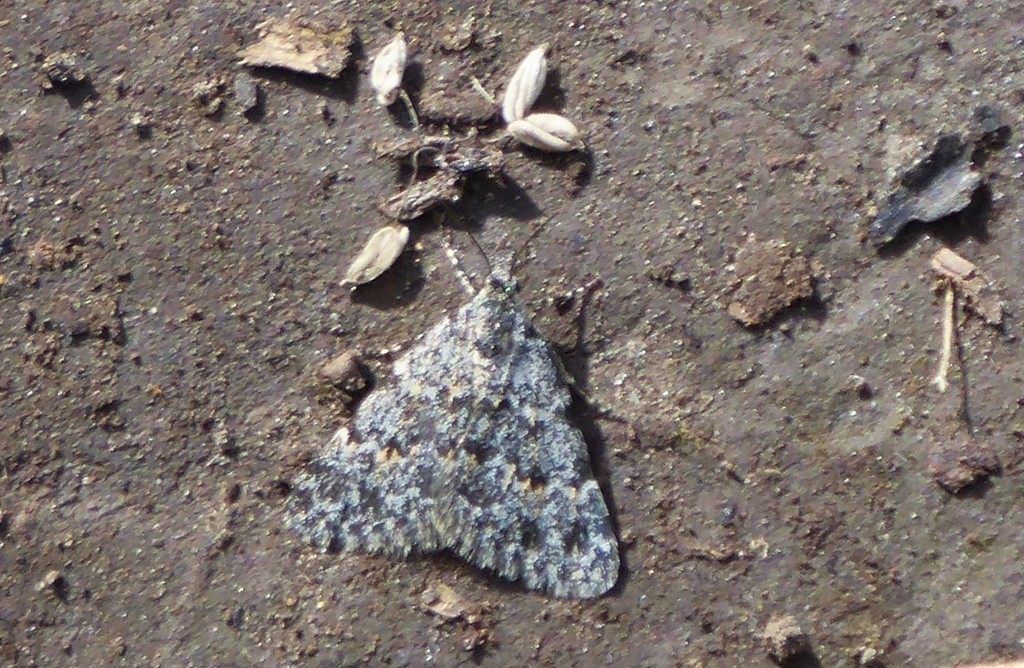
rock face moth
Dichromodes cynica
Dichromodes cynica (also known as the rock face moth) is a moth of the family Geometridae. It was first described by Edward Meyrick in 1911. D. cynica is endemic to New Zealand and is found only around Christchurch and Banks Peninsular. The larvae of D. cynica are cryptic in appearance and feed on lichens growing on dry sunny rock faces. Adults are on the wing from September to February. D. cynica are active during the day and are rapid fliers.
From the article Dichromodes cynica on Wikipedia (CC BY-SA), quoted section by section
Description
The larvae of this species are cryptic, camouflaging themselves against their host species of lichens. Hudson described the larvae as follows:
The length of the larva was 1⁄2 inches. Blackish-grey, glacous-grey on sides; large dorsal spots on segments 6 to 9, small dorsal spots on segments 10 to 12, light grey. Body surface covered with minute tubercles and narrow transverse folds. Meyrick described this species as follows:
♂. 17mm. Head, palpi, thorax, and abdomen blackish-grey, slightly whitish-sprinkled, palpi 3 ½. Antennal pectinations 6. Forewings triangular, costa faintly sinuate, apex rounded-obtuse, termen obliquely rounded; dark grey sprinkled with black and grey-whitish, veins partially suffused with yellow-ochreous irroration; lines obscurely indicated by whitish irroration, irregular, first somewhat sinuate, indented below middle, edged posteriorly with black irroration becoming broad towards costa, second slightly prominent near costa and dorsum, and with a moderate bidentate prominence in middle, edged anteriorly with black irroration also becoming broad towards costa, subterminal hardly traceable; a small blackish transverse discal mark before second line: cilia dark grey, slightly sprinkled with black and whitish. …
Range & habitat
It is endemic to New Zealand. This species is found only around Christchurch and the Banks Peninsular. As well as the type locality, this species has also been observed at Mount Grey.
Wikipedia: “Distribution”
What it does
The larvae of D. cynica feed on lichens growing on dry sunny rock faces. The adults of this species are on the wing from September to February. This species is active during the day and flies rapidly.
== References ==
Wikipedia: “Behaviour”
Listen
Looking for field recordings…
Where it lives
Recorded sightings
—
geo-referenced records in GBIF, from museums, herbaria and field observers.
Drag the globe to turn it. Dots are where records exist, not a range map; darker means more records.
In the stacks
Searching the stacks…
Every page naming Dichromodes cynica in the Biodiversity Heritage Library →
This page is assembled live from iNaturalist, GBIF, Wikipedia, the Source Library and the Internet Archive. It is not yet part of the hand-edited codex. iNaturalist taxon 514756.