- Animals
- ›Arthropods
- ›Hexapods
- ›Insects
- ›Winged and Once-winged Insects
- ›Butterflies and Moths
- ›Butterflies
- ›Skippers
- ›Grass Skippers
- ›Hesperiini
- ›branded grass skippers
- ›Atalopedes
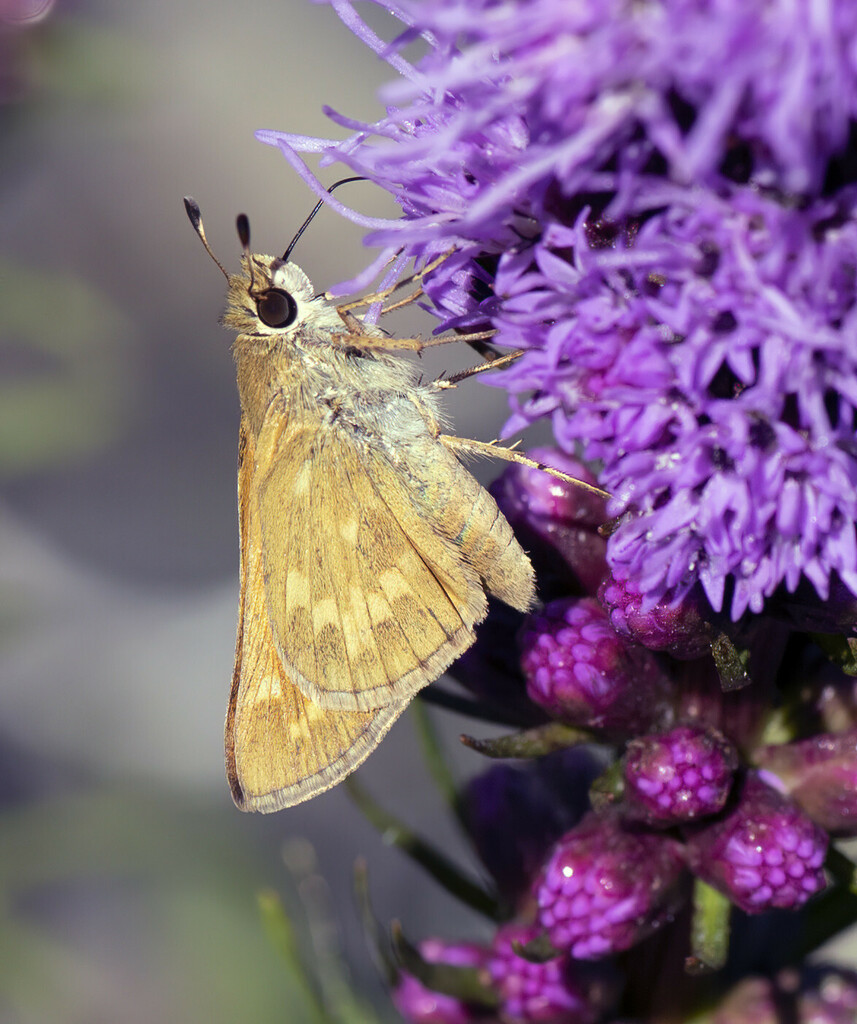
Field Skipper
Atalopedes campestris
Atalopedes campestris (commonly known as the sachem or field skipper) is a small grass skipper butterfly. It has a wingspan of 35–41 mm (1+3⁄8–1+5⁄8 in). Male is orange, edged with brown, and has a large brown-black stigma. Female is darker with lighter markings in the center of the wing.
From the article Atalopedes campestris on Wikipedia (CC BY-SA), quoted section by section
Description
The sachem's wingspan is 35–41 mm (1+3⁄8–1+5⁄8 in). The sexes are dissimilar but both have elongated wings. The uppersides of the male forewing are orange bordered with brown and have a large four sided black stigma. The color of the uppersides of the female wings are dark brown with golden spots in the center but are highly variable, light to very dark. The uppersides of the female forewing have a black median spot and several semi-transparent spots. Females can always be identified by the square white transparent spot at the end of the forewing cell. Underside of wings on both sexes are variable but the female hindwing is brown with light colored four-sided spots. The sachem is often mistaken for other skipper butterflies in the genus Hesperia. In 2022, the population in the eastern part of the continent was designated a separate species, A. huron, the huron sachem.
Range & habitat
Atalopedes campestris can be found in open, disturbed areas such as roadsides, lawns, pastures, parks, oil fields, and landfills. It had been observed that the sachem expanded its range northward rapidly during the beginning of the 21st century. A study by Crozier shows that this expansion is due to the winter warming trend of climate change rather than evolution of cold tolerance for this species.
Wikipedia: “Distribution and habitat”
Listen
Looking for field recordings…
Where it lives
Recorded sightings
—
geo-referenced records in GBIF, from museums, herbaria and field observers.
Drag the globe to turn it. Dots are where records exist, not a range map; darker means more records.
In the stacks
Searching the stacks…
Every page naming Atalopedes campestris in the Biodiversity Heritage Library →
This page is assembled live from iNaturalist, GBIF, Wikipedia, the Source Library and the Internet Archive. It is not yet part of the hand-edited codex. iNaturalist taxon 52075.