- Animals
- ›Arthropods
- ›Hexapods
- ›Insects
- ›Winged and Once-winged Insects
- ›Stick Insects
- ›Verophasmatodea
- ›Anareolatae
- ›Common Walking Stick Insects
- ›Diapheromerinae
- ›Diapheromerini
- ›Megaphasma
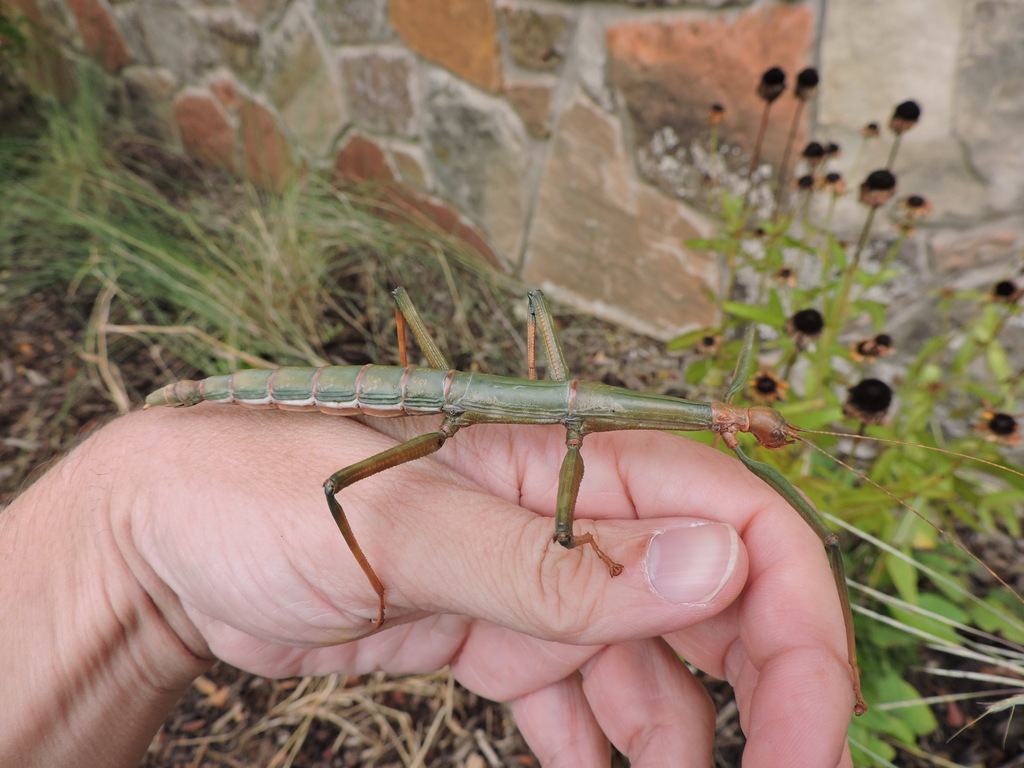
Giant Walkingstick
Megaphasma denticrus
Megaphasma denticrus, the giant walkingstick, is a species of phasmid or stick insect in the family Diapheromeridae. They inhabit a range spanning wooded areas of Texas, Oklahoma, and parts of Mexico.
From the article Megaphasma denticrus on Wikipedia (CC BY-SA), quoted section by section
Description
It is the largest insect in North America, growing up to 7 inches in length. Giant walkingsticks exhibit sexual dimorphism, with females generally being significantly larger than males. Giant walkingsticks have spines on their middle and hind legs; males have only a single, larger spine on each hind leg. Giant walkingsticks vary in color from shades of green to brown. Males also tend to be more brightly colored than females.
Range & habitat
The giant walkingstick can be found as far east as Indiana, Alabama, and Kentucky; north to Wisconsin; west to New Mexico; and south to Mexico. However, they can be found most commonly in wooded areas of Texas, Oklahoma, and parts of Mexico.
Wikipedia: “Distribution”
What it does
Giant walkingsticks' preferred habitat and diet includes grass, grapevines, oak trees, elms, and mesquites.. The insects eat the foliage of these plants, and use camouflage to blend into the woody parts of their habitat.. Some evidence from captive rearing suggests that dietary preferences of this species changes as the insects develop, with younger nymphs preferring plants found in understory growth and adults preferring food plants which grow taller. Unusually large groups of this species were observed in June 1981 and June 2000 in Texas, though an exact cause of these groupings has not been determined.
Wikipedia: “Ecology”
Listen
Looking for field recordings…
Where it lives
Recorded sightings
—
geo-referenced records in GBIF, from museums, herbaria and field observers.
Drag the globe to turn it. Dots are where records exist, not a range map; darker means more records.
In the stacks
Searching the stacks…
Every page naming Megaphasma denticrus in the Biodiversity Heritage Library →
This page is assembled live from iNaturalist, GBIF, Wikipedia, the Source Library and the Internet Archive. It is not yet part of the hand-edited codex. iNaturalist taxon 52766.