 NL·0741
Herbarium of the Nature Library
- Name
- Chelonoidis niger
- Family
- Testudinidae
- Native to
- Galápagos Islands, Ecuador (Isabela, Santa Cruz, San Cristóbal, Española, Pinzón, Santiago and others)
- Habitat
- Tropical dry forest, Arid scrub, Montane cloud forest
Galápagos giant tortoises
Chelonoidis niger
Also calledGalápago (Spanish) · Tortue géante des Galápagos (French) · Jiālāpàgēsī xiàngguī 加拉帕戈斯象龟 (Chinese)
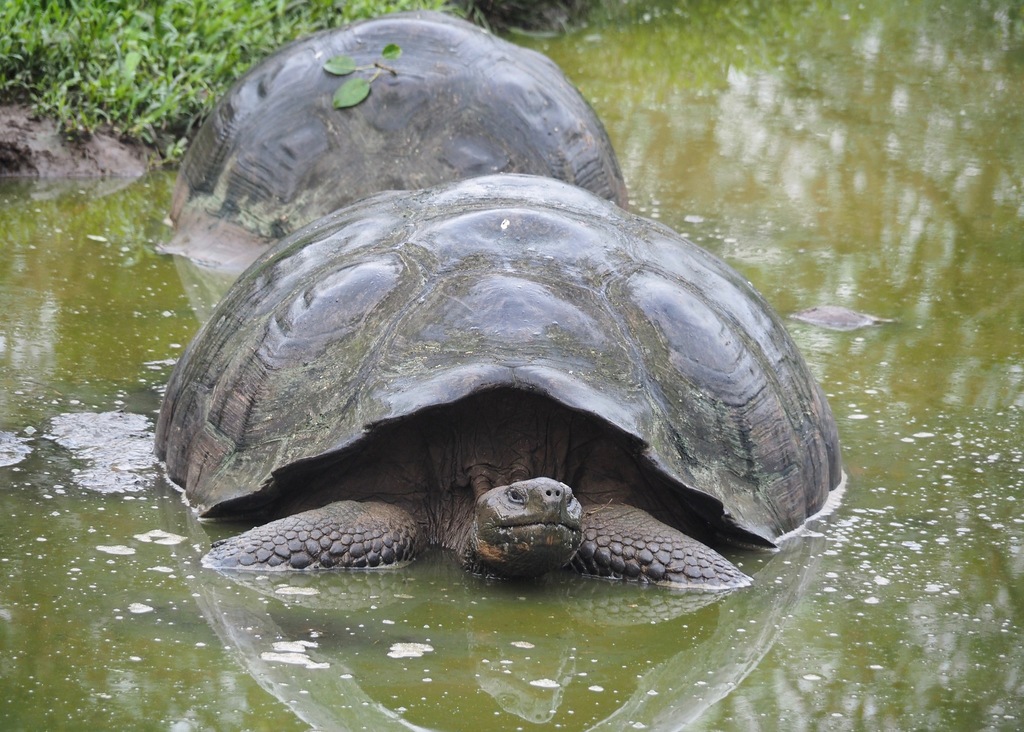
The largest living tortoise, gave the Galápagos Islands their name. Different islands have different forms, with domed shells in wet highlands and raised 'saddleback' shells on dry islands, which helped shape Darwin's thinking. The IUCN assesses each island species separately, from Vulnerable to Critically Endangered; strictly, the name Chelonoidis niger now belongs to the Floreana tortoise, which is extinct.
The Galápagos tortoise, also called the Galápagos giant tortoise, is a very large species of tortoise in the genus Chelonoidis. The species comprises 15 subspecies. It is the largest living species of tortoise, and can weigh up to 417 kg (919 lb). They are also the largest extant terrestrial cold-blooded animals (ectotherms). Wikipedia
What it can do
- iLives well over 100 years
- iiSurvives up to a year without food or water by storing water and fat
- iiiSaddleback forms raise their necks high to reach cactus pads
- ivSpreads seeds and tramples paths, shaping Galápagos plant communities
In the field
Field marks
- aHuge dark grey tortoise
- bShell domed or saddle-backed depending on island
- cLong neck and heavy, elephant-like legs
- dWallows in pools in the highlands
- Voice
- Males make loud, rhythmic groans during mating
- Not to be confused with
- The different islands' tortoises are now treated as several species; shell shape and island tell them apart.
- Where to see it
- El Chato and Rancho Primicias reserves on Santa Cruz island; the Charles Darwin Research Station
- When
- Resident
Listen
Looking for field recordings…
Life & habits
- Diet
- Herbivore: grasses, leaves, cactus pads, fruit and lichens
- Habitat
- Dry lowlands to humid highlands of volcanic islands
- Size
- Up to ~1.5 m shell length and over 400 kg
- Lifespan
- 100+ years
Tortoises migrate seasonally between lowlands and highlands, wearing paths used for centuries. Small finches hop in front of them, and tortoises stretch up their necks so the birds can pick off ticks.
Where it lives
Recorded sightings
—
geo-referenced records in GBIF, from museums, herbaria and field observers.
Native range
Galápagos Islands, Ecuador (Isabela, Santa Cruz, San Cristóbal, Española, Pinzón, Santiago and others)
Drag the globe to turn it. Dots are where records exist, not a range map; darker means more records.
In the stacks
Searching the stacks…
Every page naming Chelonoidis niger in the Biodiversity Heritage Library →
Marginalia
Spanish sailors named the islands for the galápago, an old word for tortoise. In 1835 the vice-governor told Darwin he could tell which island a tortoise came from by its shell; whalers took more than 100,000 tortoises (some estimates say 200,000) as live food for their voyages.
Curiosity
IUCN assesses each island form separately, from Vulnerable to Critically Endangered; the Floreana and Pinta forms were wiped out, and Pinta's last tortoise, Lonesome George, died in 2012.
Kinship



Fact-checked: 1 correction made to this sheet. Photographs: iNaturalist contributors under the licences shown. Records: GBIF.org. Historical plates: Source Library (CC BY-SA 4.0; originals public domain). Summary text: Nature Library editors and Wikipedia (CC BY-SA). Medicinal and edibility notes are historical and educational, not advice. iNaturalist taxon 539452.