- Animals
- ›Molluscs
- ›Cephalopods
- ›Octopuses, Squids, and Cuttlefishes
- ›Octopuses and Vampire Squids
- ›Octopuses
- ›Incirrate Octopuses
- ›Typical Octopuses, Giant Octopuses, and Allies
- ›Typical Octopuses
- ›Amphioctopus
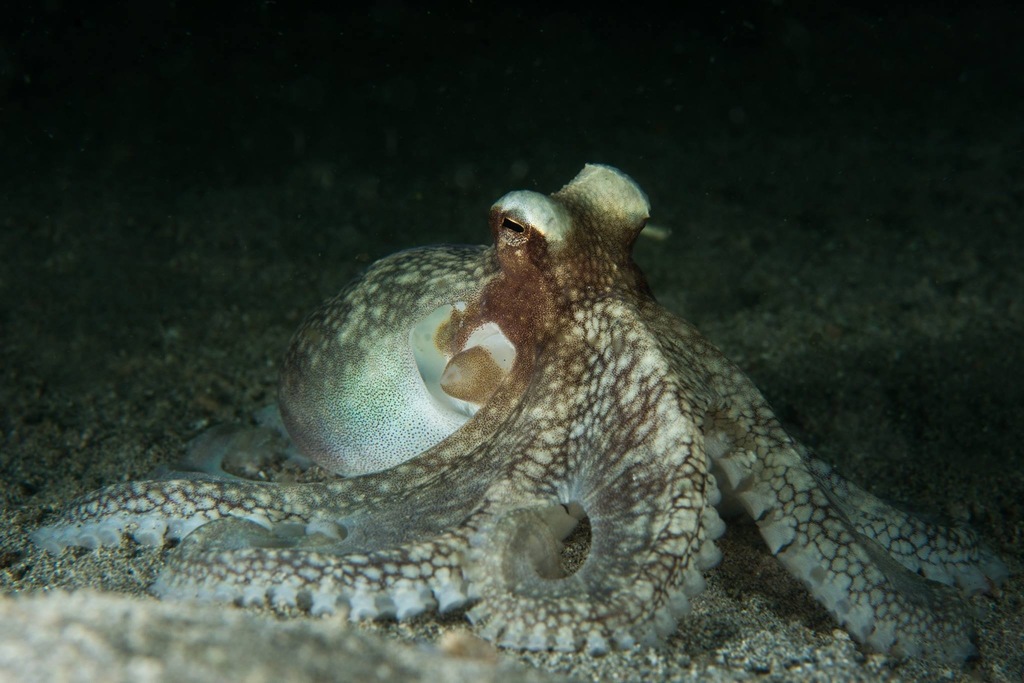
Marbled Octopus
Amphioctopus aegina
Amphioctopus aegina, commonly referred to as the marbled octopus or the sandbird octopus, is a bottom dwelling species residing in the coastal zone of the Indo-West Pacific. Planktonic hatchlings and eggs are laid by females predominantly during the months of January and October, however they have been known to reproduce year-round.
From the article Amphioctopus aegina on Wikipedia (CC BY-SA), quoted section by section
Description
These cephalopods are moderately sized and have a mantle (visceral hump) approximately 4–10 centimetres (1.6–3.9 in) in length.They typically display a white stripe down the midline of the mantle, and another horizontal stripe between the eyes. Their arms are twice the length of their head with the lateral arms being the longest, and the males possess a hectocotylized third right arm. Each arm has two rows of suckers, and has the capability of regeneration in cases of loss or damage.
Range & habitat
Amphioctopus aegina is widely distributed. It is found throughout the Indian Ocean and the Northwest Pacific waters, stretching from China to India. It is bottom dwelling, and resides in muddy substrates within coastal waters.
Wikipedia: “Distribution”
What it does
The sandbird octopus consumes a carnivorous diet of smaller fish species, shrimp, and crabs. They hunt in sub-tidal areas among soft substrates.
Wikipedia: “Diet”
Where it lives
Recorded sightings
—
geo-referenced records in GBIF, from museums, herbaria and field observers.
Drag the globe to turn it. Dots are where records exist, not a range map; darker means more records.
In the stacks
Searching the stacks…
Every page naming Amphioctopus aegina in the Biodiversity Heritage Library →
This page is assembled live from iNaturalist, GBIF, Wikipedia, the Source Library and the Internet Archive. It is not yet part of the hand-edited codex. iNaturalist taxon 543266.