- Animals
- ›Chordates
- ›Vertebrates
- ›Ray-finned Fishes
- ›Spiny-rayed fishes
- ›Blennies, Damselfishes and Allies
- ›Damselfishes
- ›Typical Damselfishes and Anemonefishes

Anemonefishes
Amphiprion
Clownfish or anemonefishes (genus Amphiprion) are saltwater fish found in the warm and tropical waters of the Pacific Ocean. They mainly inhabit coral reefs and have a distinctive colouration typically consisting of white vertical bars on a red, orange, yellow, brown or black background. Clownfish developed a symbiotic and mutually beneficial relationship with sea anemones, on which they rely for shelter and protection from predators. In turn, clownfish protect the anemone from anemone-eating fish, as well as clean and fan them, and attract beneficial microorganisms with their waste.
Clownfish are omnivorous and mostly feed on plankton. They live in groups consisting of a breeding female and male, along with some non-breeding individuals. Clownfish have a size-based dominance hierarchy with the breeding female ranking at the top, followed by the breeding male and then the largest non-breeder and so on. When the female disappears, the breeding male changes sex and takes her place while the others move up the hierarchy. During reproduction, the female deposits eggs on a rock near their anemone, and the male fertilises them. After hatching, clownfish disperse into the open ocean as larvae, eventually settling on the bottom and searching for an anemone host as juveniles.
30 branches of this genus, most-observed first · about 32 known species
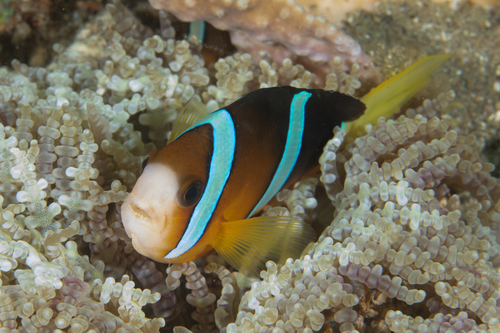
Clark's Anemonefish
speciesAmphiprion clarkii

Amphiprion percula
complexAmphiprion percula
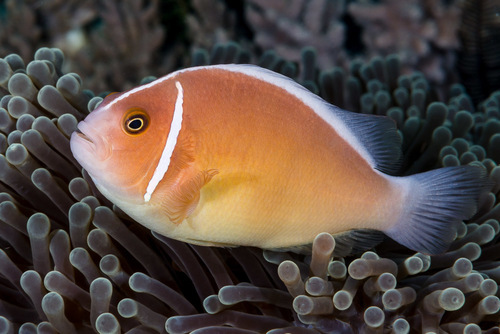
Pink Skunk Anemonefish
speciesAmphiprion perideraion
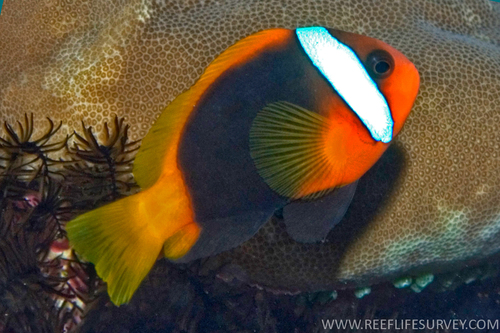
Blackback Anemonefish
speciesAmphiprion melanopus
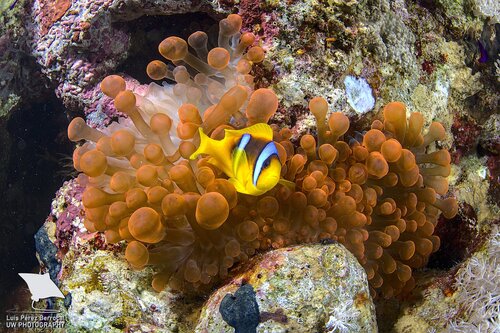
Red Sea Anemonefish
speciesAmphiprion bicinctus
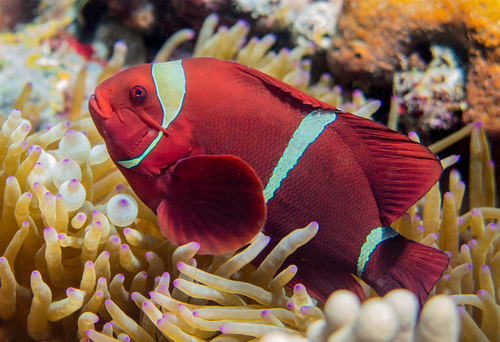
Spine-cheek Clownfish
speciesAmphiprion biaculeatus
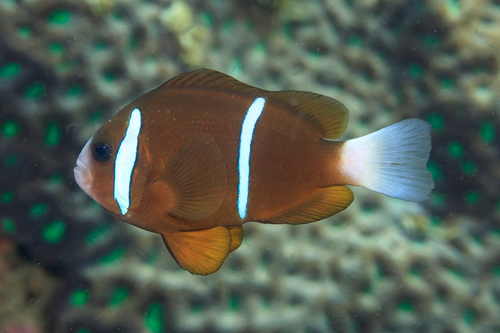
Barrier Reef Anemonefish
speciesAmphiprion akindynos
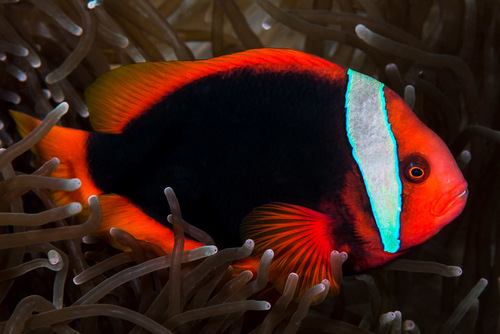
Tomato Clownfish
speciesAmphiprion frenatus
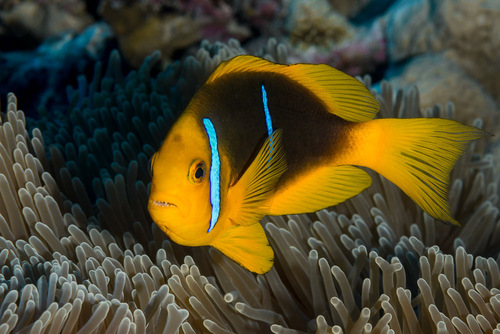
Pacific Orangefin Anemonefishes
complexAmphiprion chrysopterus
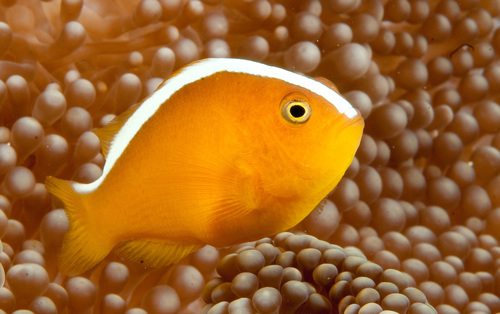
Orange Skunk Anemonefish
speciesAmphiprion sandaracinos
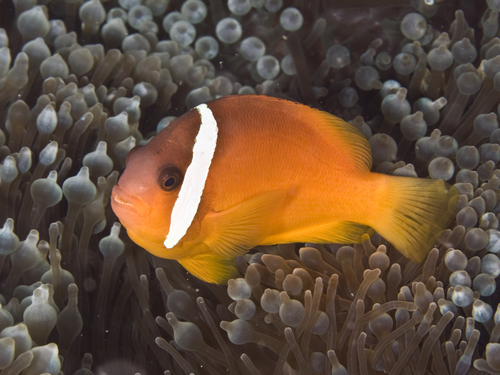
Fiji Tomato Anemonefish
speciesAmphiprion barberi
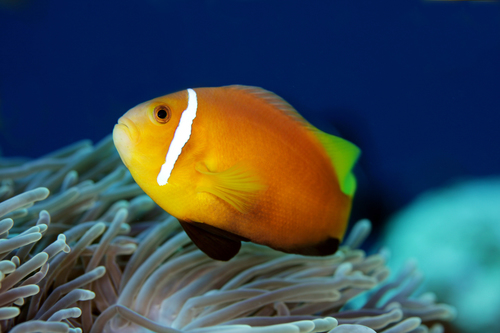
Blackfin Anemonefish
speciesAmphiprion nigripes

Skunk Anemonefish
speciesAmphiprion akallopisos
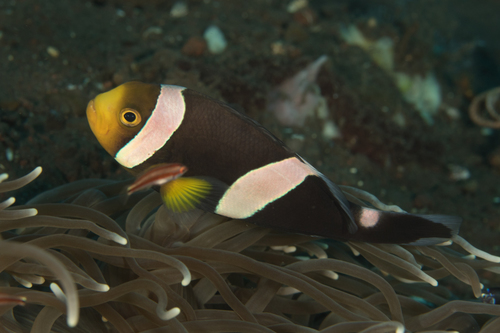
Saddleback Anemonefish
speciesAmphiprion polymnus
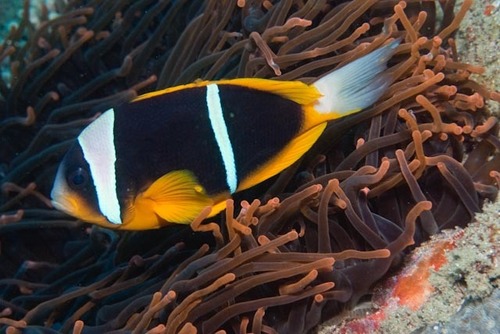
Allard's Anemonefish
speciesAmphiprion allardi

Northern Saddleback Anemonefish
speciesAmphiprion annamensis
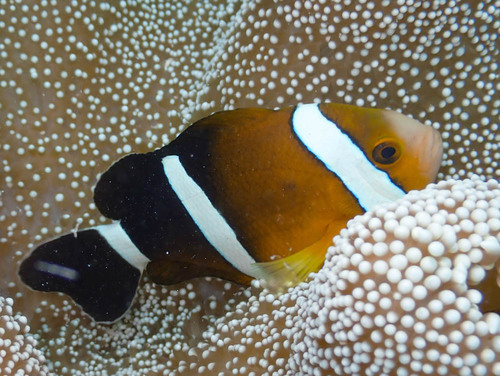
Three-band Anemonefish
speciesAmphiprion tricinctus
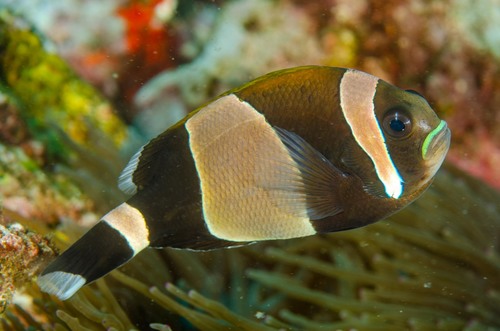
Wideband Anemonefish
speciesAmphiprion latezonatus
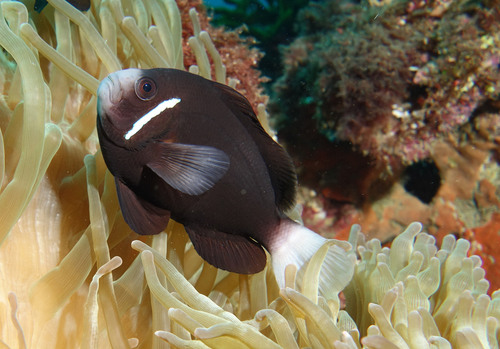
McCulloch's Anemonefish
speciesAmphiprion mccullochi

Madagascar Anemonefish
speciesAmphiprion latifasciatus
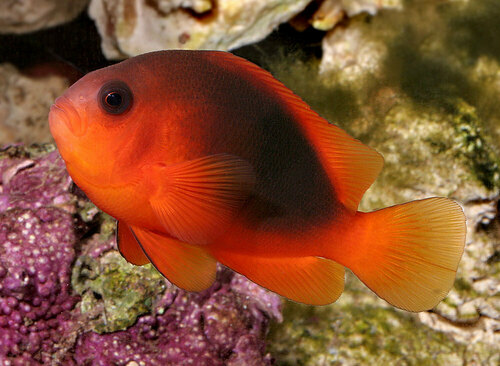
Red Saddleback Anemonefish
speciesAmphiprion ephippium

Australian Anemonefish
speciesAmphiprion rubrocinctus

Mauritian Anemonefish
speciesAmphiprion chrysogaster

White-bonnet Anemonefish
speciesAmphiprion leucokranos
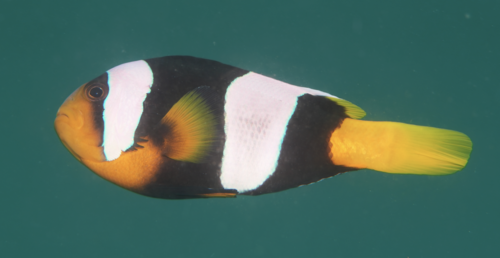
Sebae Anemonefish
speciesAmphiprion sebae

Seychelles Anemonefish
speciesAmphiprion fuscocaudatus

Oman Anemonefish
speciesAmphiprion omanensis

Pacific Anemonefish
speciesAmphiprion pacificus
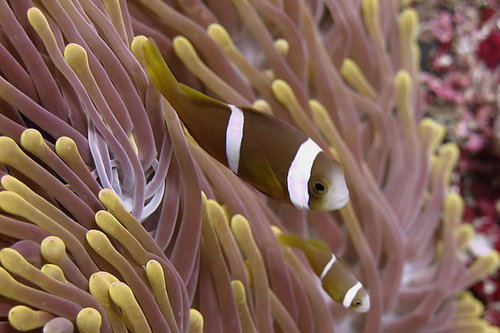
Chagos Anemonefish
speciesAmphiprion chagosensis

Thielle's Anemonefish
speciesAmphiprion thiellei
Where it lives
Recorded sightings
—
geo-referenced records in GBIF, from museums, herbaria and field observers.
Drag the globe to turn it. Dots are where records exist, not a range map; darker means more records.
In the stacks
Searching the stacks…
Every page naming Amphiprion in the Biodiversity Heritage Library →
This page is assembled live from iNaturalist, GBIF, Wikipedia, the Source Library and the Internet Archive. It is not yet part of the hand-edited codex. iNaturalist taxon 57742.