- Animals
- ›Arthropods
- ›Hexapods
- ›Insects
- ›Winged and Once-winged Insects
- ›Butterflies and Moths
- ›Butterflies
- ›American Moth-Butterflies
- ›Macrosoma
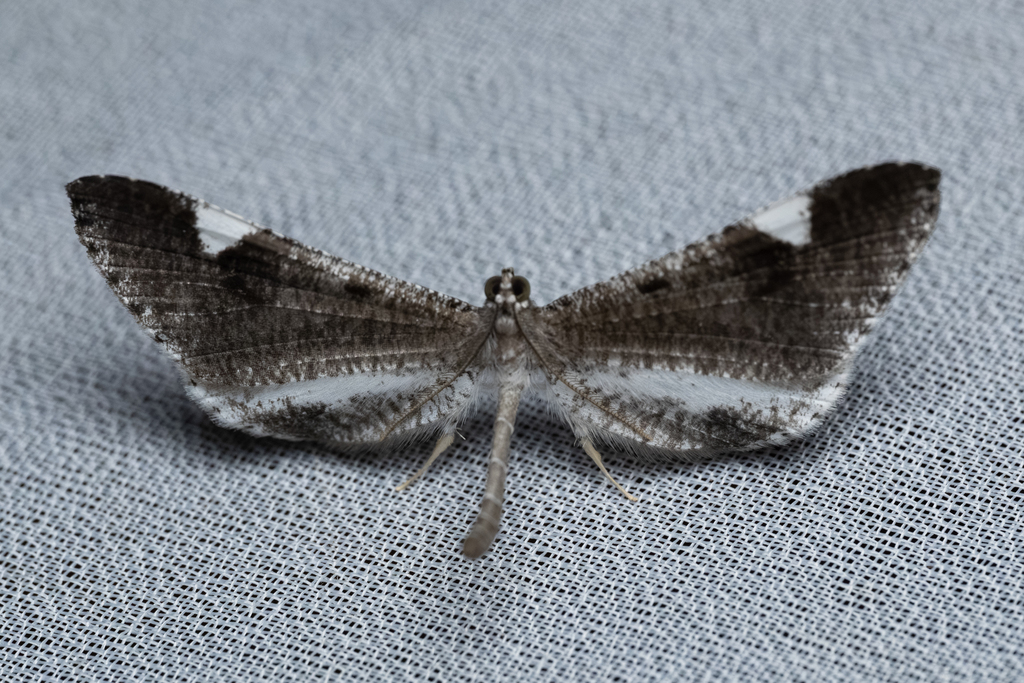
Macrosoma heliconiaria
Macrosoma heliconiaria is moth-like butterfly described by Achille Guenée in 1857. It belongs to the family Hedylidae. Originally it belonged to the genus Hedyle. Malcolm J. Scoble combined it with Macrosoma in 1986. The species displays characteristics of both moths and butterflies and is believed to be the closest living ancestor to modern butterflies. Adaptions to avoid bat predation have given the species ultrasonic hearing and night vision through superposition optics.
From the article Macrosoma heliconiaria on Wikipedia (CC BY-SA), quoted section by section
Range & habitat
The species is recorded widely across the tropical South America: Colombia, Venezuela, French Guiana, across Brazil to Belém at the mouth of the Amazon; south to the mid-west of Peru.
Wikipedia: “Distribution”
Listen
Looking for field recordings…
Where it lives
Recorded sightings
—
geo-referenced records in GBIF, from museums, herbaria and field observers.
Drag the globe to turn it. Dots are where records exist, not a range map; darker means more records.
In the stacks
Searching the stacks…
Every page naming Macrosoma heliconiaria in the Biodiversity Heritage Library →
This page is assembled live from iNaturalist, GBIF, Wikipedia, the Source Library and the Internet Archive. It is not yet part of the hand-edited codex. iNaturalist taxon 577561.