- Plants
- ›Vascular Plants
- ›flowering plants
- ›Dicots
- ›Nances, Willows, and Allies
- ›Spurge Family
- ›Crotonoideae
- ›Crotoneae
- ›Croton
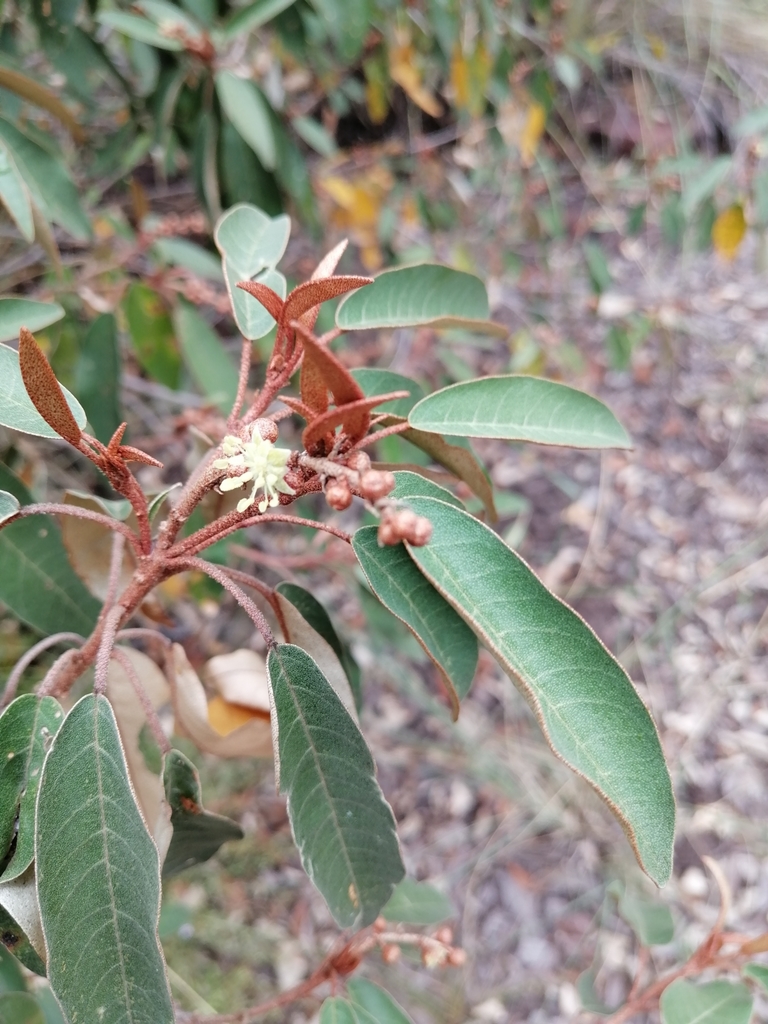
Lavender Feverberry
Croton gratissimus
Croton gratissimus (commonly known as lavender croton or lavender fever berry), is a tropical African shrub or small tree with corky bark, growing to 8 m and belonging to the family of Euphorbiaceae or spurges. Young twigs are slender and angular and covered in silver and rust-coloured scales.
The species occurs in Ethiopia, South Sudan, Sudan, Kenya, Uganda, Ivory Coast, Burkina Faso, the Gambia, Ghana, Guinea, Nigeria, Angola, Malawi, Mozambique, Zambia, Zimbabwe and the northern parts of South Africa. It is often found in rocky terrain.
From the article Croton gratissimus on Wikipedia (CC BY-SA), quoted section by section
Description
The crushed, slender-petioled leaves are pleasingly and distinctively fragrant with an aromatic oil reminiscent of sweet flag. The leaves are strikingly silver on the under surface and dotted with brown glands. The inflorescence is a yellow-flowered raceme up to 10 cm long and borne terminally. Rust-coloured flower buds, which are present throughout winter, open after the first rains. The fruit is a 3-lobed capsule, about 10 mm in diameter and densely scaly. The tree's bark yields the toxalbumin crotin and the diterpene crotonin.
At the table
The Bantu and Bushmen use extracts from the bark of this species for a host of medicinal purposes. It is traditionally used as a febrifuge, styptic, cathartic, and a remedy for dropsy, indigestion, pleurisy, uterine disorders, rheumatism and intercostal neuralgia. Leaves are used as perfume; contains aromatic oils; sporadically browsed by elephants and kudu.
Wikipedia: “Uses”
Where it lives
Recorded sightings
—
geo-referenced records in GBIF, from museums, herbaria and field observers.
Drag the globe to turn it. Dots are where records exist, not a range map; darker means more records.
In the stacks
Searching the stacks…
Every page naming Croton gratissimus in the Biodiversity Heritage Library →
This page is assembled live from iNaturalist, GBIF, Wikipedia, the Source Library and the Internet Archive. It is not yet part of the hand-edited codex. iNaturalist taxon 583075.