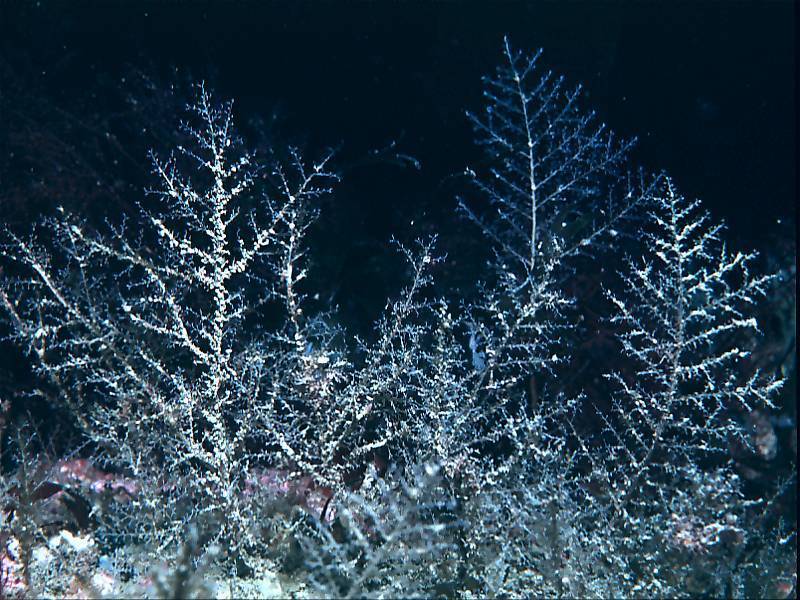
Haleciidae
Haleciidae is a family of hydrozoans. Their hydroid colonies emerge from a creeping hydrorhiza and usually form upright branching colonies, although some species' colonies are stolonal. Their gonophores are typically sporosacs, growing singly or bunched into a glomulus. They remain attached to the hydroids or break off to be passively drifted away; in a few, the gonophores are naked.
Some enigmatic actively swimming medusae have been tentatively placed in this family as a kind of "wastebin taxon". Should their associated hydroids turn out to belong elsewhere, they are to be moved to that family and genus. The relationships of this fairly small but distinctive radiation to other families of Leptothecata are not well understood at present. However, the family Lovenellidae, often turn out to contain the hydroid stage of medusae formerly placed in the family Haleciidae.
2 branches of this family, most-observed first
See this branch on the Wheel of Life →
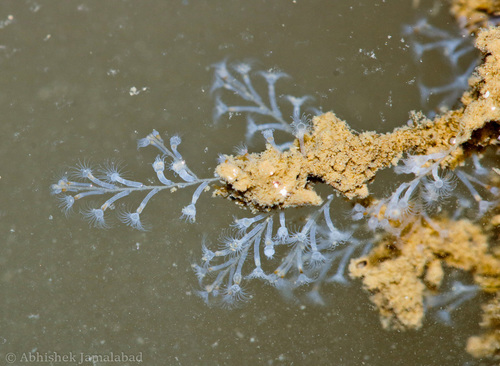
Where it lives
Recorded sightings
—
geo-referenced records in GBIF, from museums, herbaria and field observers.
Drag the globe to turn it. Dots are where records exist, not a range map; darker means more records.
In the stacks
Searching the stacks…
Every page naming Haleciidae in the Biodiversity Heritage Library →
This page is assembled live from iNaturalist, GBIF, Wikipedia, the Source Library and the Internet Archive. It is not yet part of the hand-edited codex. iNaturalist taxon 60660.