- Animals
- ›Arthropods
- ›Hexapods
- ›Insects
- ›Winged and Once-winged Insects
- ›Ants, Bees, Wasps, and Sawflies
- ›Narrow-waisted Wasps, Ants, and Bees
- ›Ants, Bees, and Stinging Wasps
- ›Bees and Apoid Wasps
- ›Bees
- ›Sweat Bees
- ›Sweat and Furrow bees
- ›Halictini
- ›Halictina
- ›Halictus
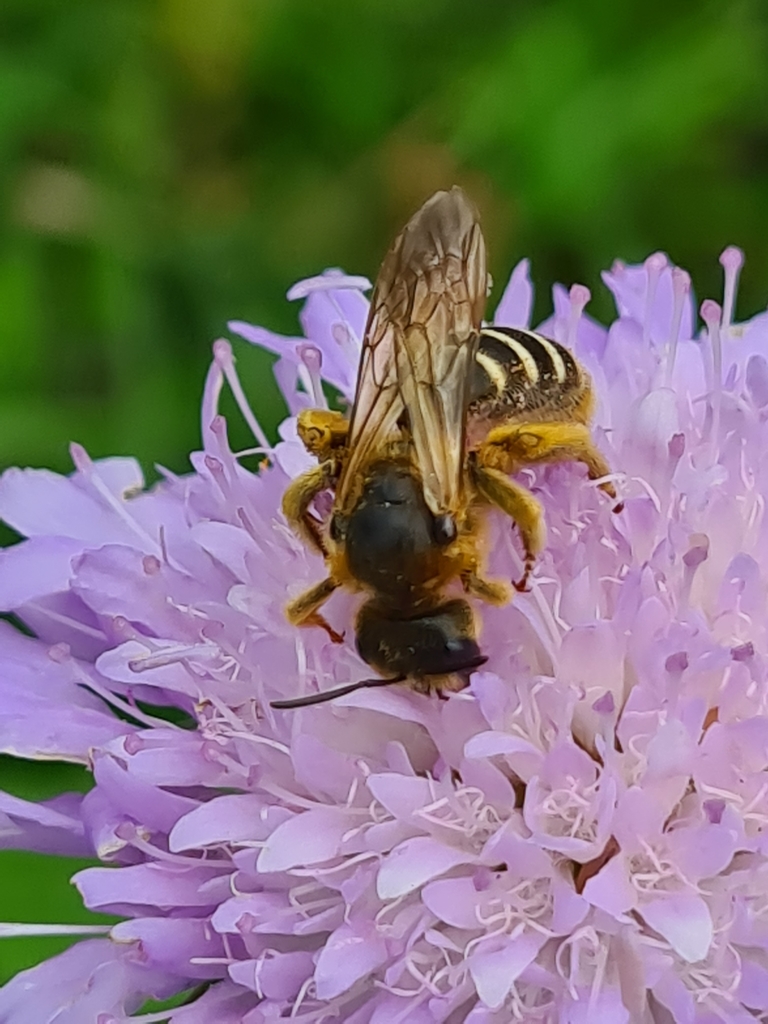
Halictus
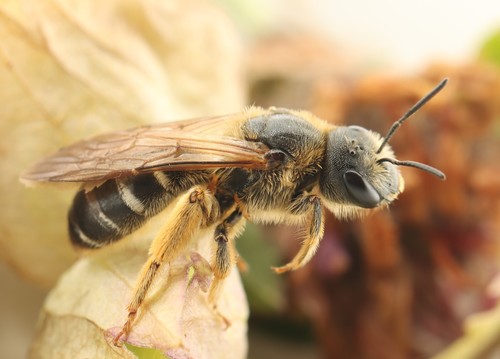
The genus Halictus is a large assemblage of bee species in the family Halictidae. The genus is divided into 15 subgenera, some of dubious monophyly, containing over 200 species, primarily in the Northern Hemisphere (a few species occur in South America, Asia and Africa). Most species are black or dark brown, sometimes metallic greenish-tinted, with apical whitish abdominal bands on the terga (the related genus Lasioglossum, which is otherwise often similar in appearance, has the abdominal hair bands located basally, not apically).
Many species in the genus are eusocial, with colony sizes ranging from very small (two to four bees) to large (>200). Nests are typically burrows in the soil, with several ovoid "cells" in which pollen mixed with nectar is provided as food for the developing larvae; a single egg is laid on a pollen mass, and the cell is sealed. In a few species, the cells are arranged in clusters resembling a honeycomb, but constructed of soil rather than beeswax. Like most ground-nesting bees, the brood cells are lined internally with a waterproofing secretion.


Where it lives
Recorded sightings
—
geo-referenced records in GBIF, from museums, herbaria and field observers.
Drag the globe to turn it. Dots are where records exist, not a range map; darker means more records.
In the stacks
Searching the stacks…
Every page naming Halictus in the Biodiversity Heritage Library →
This page is assembled live from iNaturalist, GBIF, Wikipedia, the Source Library and the Internet Archive. It is not yet part of the hand-edited codex. iNaturalist taxon 606640.