- Animals
- ›Arthropods
- ›Chelicerates
- ›Arachnids
- ›Spiders
- ›Typical Spiders
- ›Entelegyne Spiders
- ›Thomisoidea Spiders
- ›Crab Spiders
- ›Thomisinae
- ›Misumenini
- ›Misumenoides
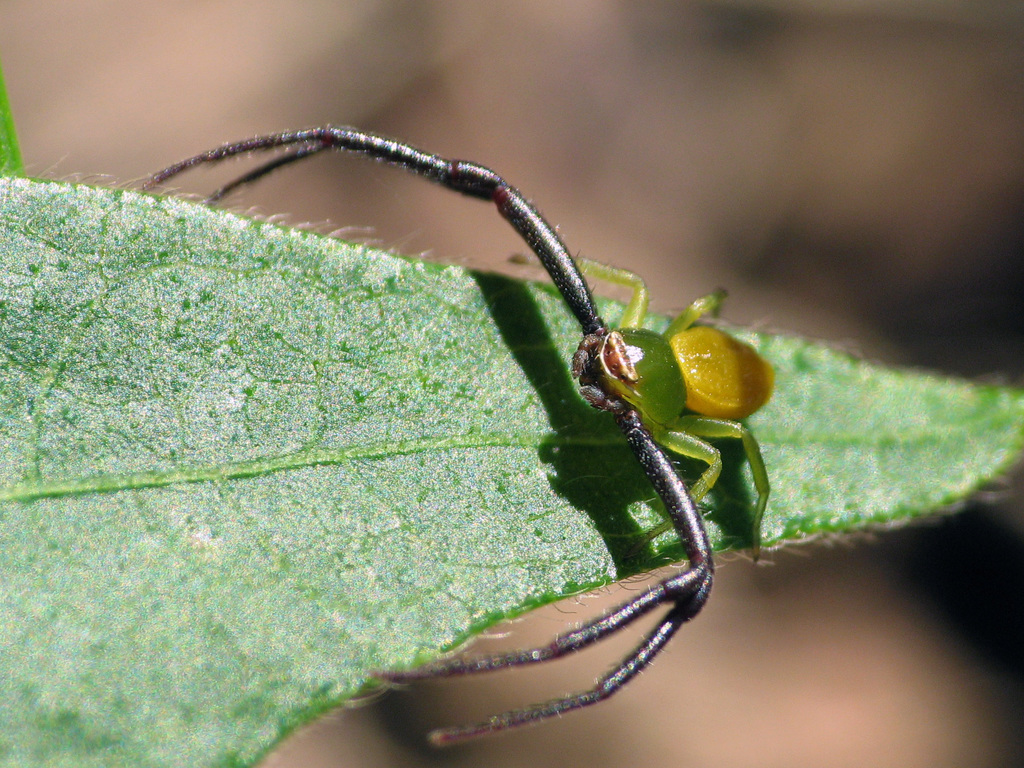
White-banded Crab Spider
Misumenoides formosipes
Misumenoides formosipes is a species of crab spiders (Thomisidae), belonging to the genus Misumenoides ("crab" or "flower" spiders). The species' unofficial common name is white banded crab spider, which refers to a white line that runs through the plane of their eyes. This species is a sit-and-wait predator that captures pollinators as they visit the inflorescences on which the spider sits. The spider has strong front legs which are used to seize prey. The female spider is much larger than the male. The pattern of markings on females is variable and the overall color of the body can change between white and yellow dependent on the color of their surroundings. The color pattern for males, which does not change in their lifetime, differs from females in that the four front legs of males are darker and the abdomen is gold. The spider can be found throughout the United States and Colombia (Copacabana- Antioquia)
. Males search for sedentary females within a heterogeneous habitat and guard them until they are sexually mature to reproduce.
From the article Misumenoides formosipes on Wikipedia (CC BY-SA), quoted section by section
What it does
Female M. formosipes hunt by waiting on inflorescences and capturing pollinators that visit the flower. Male M. formosipes are nectarivores and get a majority of their nutrients from consuming nectar from Daucus carota, commonly known as Queen Anne's Lace. Since the male M. formosipes are significantly smaller than the females, they are able to benefit from the low amounts of sucrose found in nectar.
Wikipedia: “Hunting and diet”
Where it lives
Recorded sightings
—
geo-referenced records in GBIF, from museums, herbaria and field observers.
Drag the globe to turn it. Dots are where records exist, not a range map; darker means more records.
In the stacks
Searching the stacks…
Every page naming Misumenoides formosipes in the Biodiversity Heritage Library →
This page is assembled live from iNaturalist, GBIF, Wikipedia, the Source Library and the Internet Archive. It is not yet part of the hand-edited codex. iNaturalist taxon 62035.