- Animals
- ›Arthropods
- ›Chelicerates
- ›Arachnids
- ›Spiders
- ›Mygalomorphs
- ›Avicularioidea
- ›Tarantulas
- ›Southern Baboon Spiders
- ›Harpactira
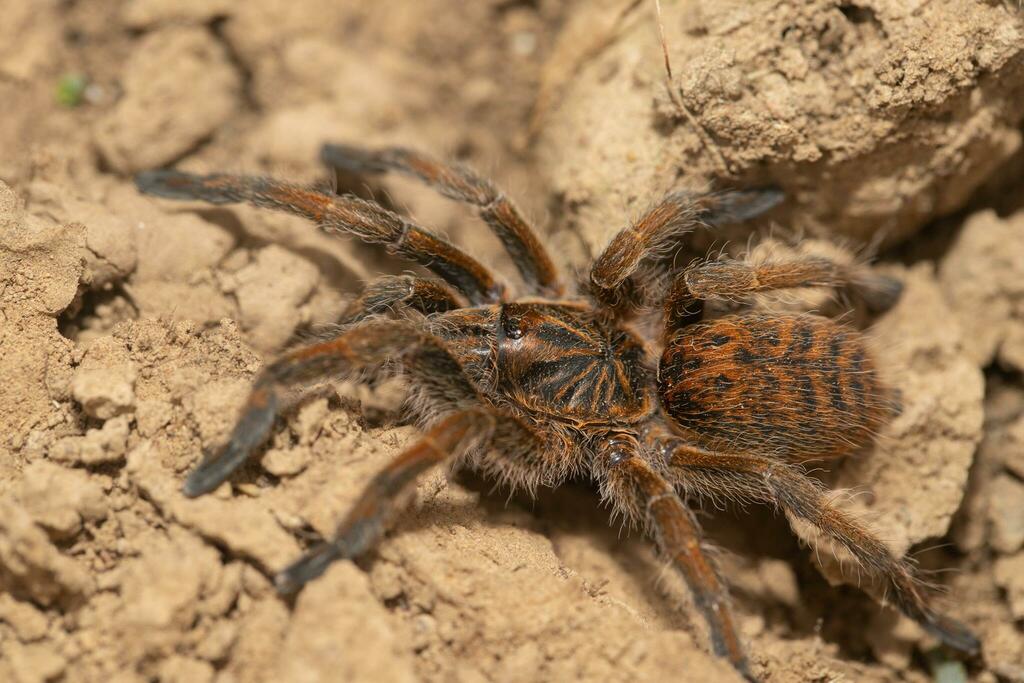
Amber Baboon Spider
Harpactira cafreriana
Harpactira cafreriana otherwise known as the Cape copper baboon or amber baboon tarantula spider was first described by Charles Athanase Walckenaer in 1837. It is found in South Africa, being terrestrial or semi-fossorial in nature.
From the article Harpactira cafreriana on Wikipedia (CC BY-SA), quoted section by section
Range & habitat
This section will be based on Bontebok National Park, as it's close to the type locality of this species. This Black wattle area has a temperate climate, with an average of 377mm of yearly rainfall. The average temperature is 20°C with animals such as Cape Fox, Bontebok and Aardwolf. With plants such as Breede River Yellowwood, Black Wattle and Sweet Thorn, making it a pretty diverse area.
Wikipedia: “Habitat”
What it does
They are terrestrial tarantulas, sometimes showing semi-fossorial behavior, they web quite a lot and are usually visible. They are surprisingly calm considering they are part of the Harpactirinae subfamily, though when scared they are fast and will run away instead of being defensive.
Wikipedia: “Behavior”
Where it lives
Recorded sightings
—
geo-referenced records in GBIF, from museums, herbaria and field observers.
Drag the globe to turn it. Dots are where records exist, not a range map; darker means more records.
In the stacks
Searching the stacks…
Every page naming Harpactira cafreriana in the Biodiversity Heritage Library →
This page is assembled live from iNaturalist, GBIF, Wikipedia, the Source Library and the Internet Archive. It is not yet part of the hand-edited codex. iNaturalist taxon 635374.