- Animals
- ›Arthropods
- ›Hexapods
- ›Insects
- ›Winged and Once-winged Insects
- ›Ants, Bees, Wasps, and Sawflies
- ›Narrow-waisted Wasps, Ants, and Bees
- ›Ants, Bees, and Stinging Wasps
- ›Formicoidea
- ›Ants
- ›Myrmicine Ants
- ›Solenopsidini
- ›Monomorium
- ›Monomorium carbonarium
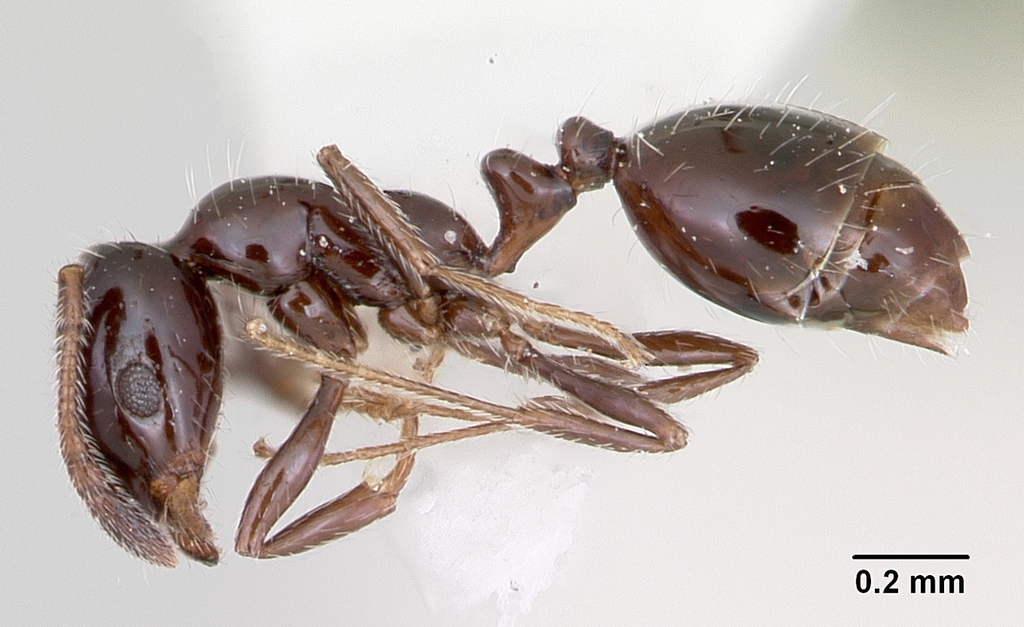
Monomorium ergatogyna
Monomorium ergatogyna is a species of myrmicine ant. This ant is a shiny black color and contains only a single worker caste, making them a monomorphic species. It is also polygynous, meaning a colony contains multiple fertile queens living together. They are native to California, Nevada, and Utah, and are usually found in cities or on the coast (in California also being found on islands near the coast). When compared to other Monomorium species, they are found to have the longest living queens and can live up 2 years in captivity. M. ergatogyna is often mistaken for Monomorium carbonarium as they are similar in appearance. Argentine ants (Linepithema humile) have been discovered to be actively pushing this species out of its original territory.
Some speculation as to the difference between the island species and the coastal mainland species in California has been brought up. A few argue that the mainland species are not actually "true" ergatogyna but a different species or subspecies, they point to the size difference of island queens and mainland queens. Another point is that mainland species appear to be allopatric, but more evidence must be brought forward to prove this point.
Listen
Looking for field recordings…
Where it lives
Recorded sightings
—
geo-referenced records in GBIF, from museums, herbaria and field observers.
Drag the globe to turn it. Dots are where records exist, not a range map; darker means more records.
In the stacks
Searching the stacks…
Every page naming Monomorium ergatogyna in the Biodiversity Heritage Library →
This page is assembled live from iNaturalist, GBIF, Wikipedia, the Source Library and the Internet Archive. It is not yet part of the hand-edited codex. iNaturalist taxon 69098.