- Plants
- ›Vascular Plants
- ›flowering plants
- ›Dicots
- ›nightshades, bindweeds, gooseweeds, and allies
- ›nightshade family
- ›nightshades and allies
- ›peppers and lycianthes
- ›Capsicum
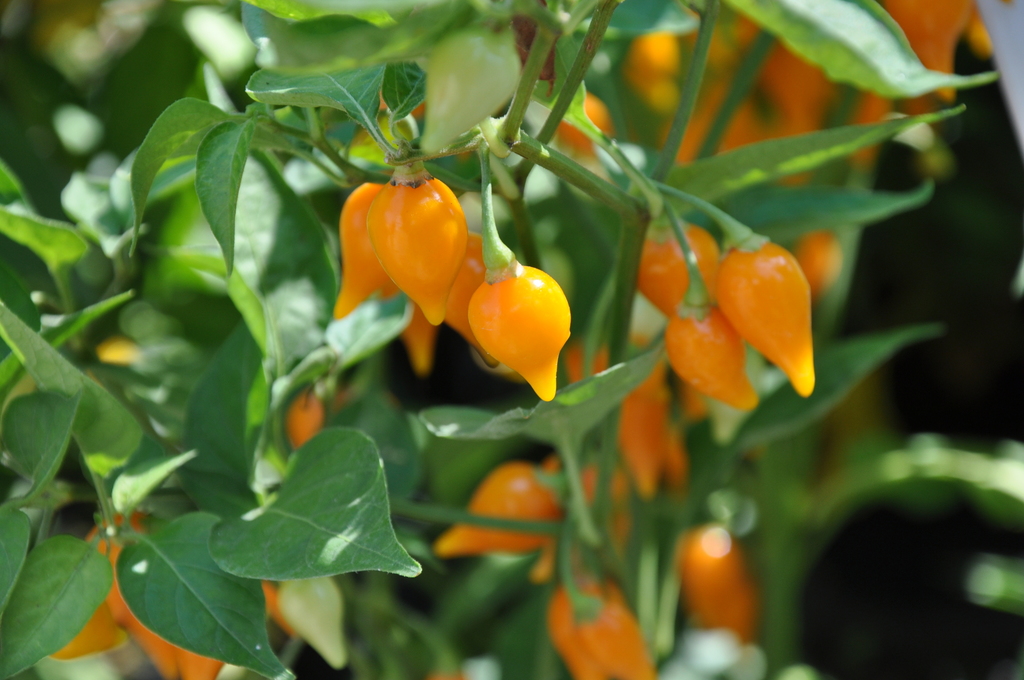
aji pepper
Capsicum chinense
Capsicum chinense, commonly known as a "habanero-type pepper", is a species of chili pepper native to the Americas. C. chinense varieties are well known for their unique flavors and, in many cases, exceptional heat. The hottest peppers in the world are members of this species, with a Scoville heat unit score of 2.69 million measured in the C. chinense cultivar Pepper X in 2023.
Some taxonomists consider C. chinense to be within the species C. annuum, and they are a member of the C. annuum complex; however, C. chinense and C. annuum pepper plants can sometimes be distinguished by the number of flowers or fruit per node – two to five for C. chinense and one for C. annuum – though this method is not always accurate. The two species can also hybridize and generate inter-specific hybrids. C. frutescens may be the ancestor to the C. chinense species.
From the article Capsicum chinense on Wikipedia (CC BY-SA), quoted section by section
Range & habitat
The origin of C. chinense is not an easy matter to settle. However, several reports by McLeod, Pickersgill, and Eshbaugh put its center of origin in the tropical northern Amazon, ranging from Southern Brazil to Bolivia (Eshbaugh, W.H.1993. History and Exploitation of a serendipitous new crop discovery. p. 132-139. In: J. Janick and J.E. Simon (eds), New Crops. Wiley, New York). Later on, it migrated to the Caribbean basin and Cuba originating the term Habanero, meaning from Habana (Havana, Cuba), where several peppers of this species were exported out from this port. (Despite the name, habaneros and other spicy-hot ingredients are rarely ever used in traditional Cuban cooking.) In warm climates such as these, it is a perennial and can last for several years, but in cooler climates, C. chinense does not usually survive the winter. It will readily germinate from the previous year's seed in the following growing season, however.
Wikipedia: “Distribution”
At the table
C. chinense and its varieties have been used for millennia in Yucatán and Caribbean-style cooking to add a significant amount of heat to their traditional food. They are mainly used in stews and sauces, as well as marinades for meats and chicken. American food at times also uses some of these chiles. For example, habaneros (a group of C. chinense varieties) are commonly used in hot sauces and extra-spicy salsas, due to the popularity of Tex-Mex and Mexican cuisines in American culture.
Wikipedia: “Culinary use”
How it is grown
Seeds of C. chinense have been found in cave dwellings in Central America that indicate the natives have been consuming peppers since 7,000 B.C. In Eastern Mexico, dry pepper fruits and seeds have been recovered from 9,000 years old burials in Tamaulipas and Tehuacán, further indicating their use since 7,000 B.C. Domestication might have taken place 10,000 to 12,000 years ago in Central–East Mexico. C. chinense peppers have been cultivated for thousands of years in their native regions, but have only been available in areas outside of the Americas for about 400–500 years following the Columbian Exchange. Selection in the new environments have led to the rise of new varieties that are bred and farmed in Asia and Africa. C. chinense are also popular with many gardeners for their bright colors (ornamental value) and for their fruit.
Wikipedia: “Domestication, cultivation and agriculture”
Where it lives
Recorded sightings
—
geo-referenced records in GBIF, from museums, herbaria and field observers.
Drag the globe to turn it. Dots are where records exist, not a range map; darker means more records.
In the stacks
Searching the stacks…
Every page naming Capsicum chinense in the Biodiversity Heritage Library →
This page is assembled live from iNaturalist, GBIF, Wikipedia, the Source Library and the Internet Archive. It is not yet part of the hand-edited codex. iNaturalist taxon 69135.