- Animals
- ›Molluscs
- ›Cephalopods
- ›Octopuses, Squids, and Cuttlefishes
- ›Octopuses and Vampire Squids
- ›Octopuses
- ›Incirrate Octopuses
- ›Typical Octopuses, Giant Octopuses, and Allies
- ›Typical Octopuses
- ›Octopus
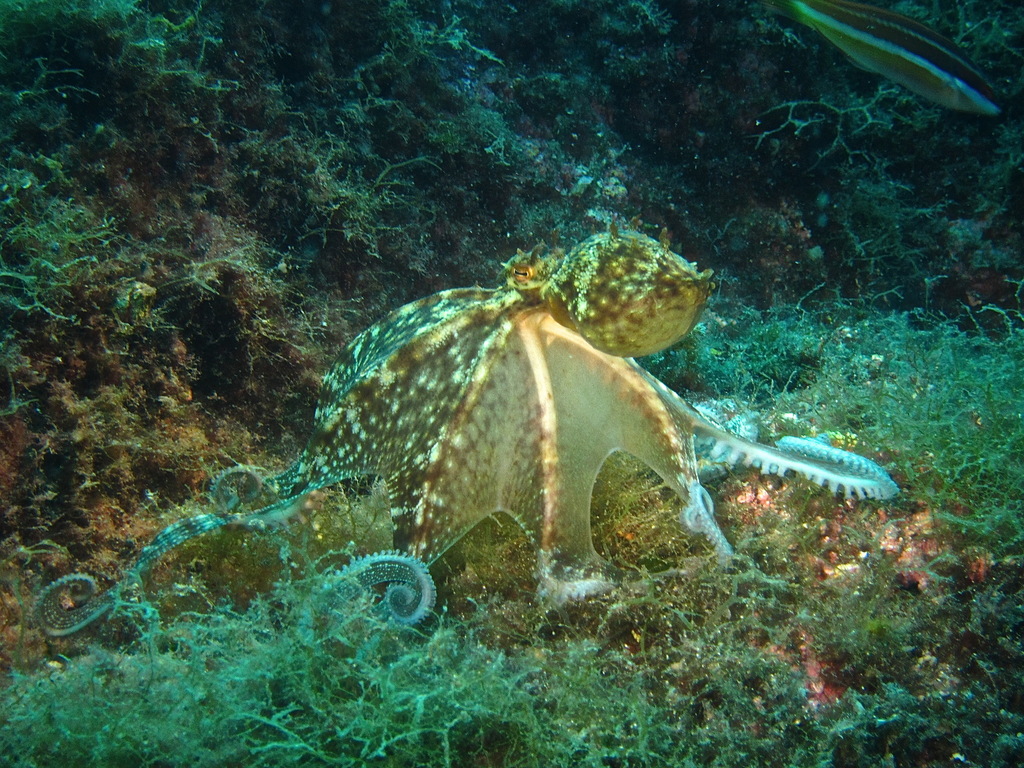
Spider Octopus
Octopus salutii
Octopus salutii or the spider octopus is a species of cephalopods in the family Octopodidae. It ranges from 4.0 to 13.0 cm ML in males and 3.5 to 16.5 cm ML in females. Octopus salutii are found at depths ranging from 100 to 700m however, they are most abundant at depths of 250 to 500m.
From the article Octopus salutii on Wikipedia (CC BY-SA), quoted section by section
Description
The Biology of Octopus salutii is poorly known. This is because the species has no value to the market and is difficult to catch for research purposes. To identify the maturity of the species there are 3 stages to clear; immature (ovaries are white, small), maturing (ovaries are yellowish with granular structures), and mature (ovaries full of eggs).
Wikipedia: “Anatomy”
Range & habitat
Geographical location: North Atlantic from southern Spain to Morocco, and Mediterranean Sea.
== References ==
Wikipedia: “Distribution”
What it does
Octopus salutii are marine benthic organisms that can be found in the Mediterranean Sea and Northeast Atlantic, from southern Spain to Morocco. Western Mediterranean sea salutii inhabit the lower continental shelf and the upper slope. Found between the depths of 250 to 500m. Western Mediterranean Sea juveniles inhabit inaccessible areas to avoid trawlers and use the shelfs as reproductive grounds. This species has little to no interest to the market because of its poor consistency of the mantle. Predators - Grampus griseus, in the family Delphinidae. Prey - Western Mediterranean Sea species stomach content included 33 different prey belonging to 3 major taxonomic groups. 87% being crustaceans, 25% being fish and 10% being cephalopods.
Wikipedia: “Behavior and Life History”
Where it lives
Recorded sightings
—
geo-referenced records in GBIF, from museums, herbaria and field observers.
Drag the globe to turn it. Dots are where records exist, not a range map; darker means more records.
In the stacks
Searching the stacks…
Every page naming Octopus salutii in the Biodiversity Heritage Library →
This page is assembled live from iNaturalist, GBIF, Wikipedia, the Source Library and the Internet Archive. It is not yet part of the hand-edited codex. iNaturalist taxon 699887.