 NL·0601
Herbarium of the Nature Library
- Name
- Euperipatoides rowelli
- Family
- Peripatopsidae
- Native to
- South-eastern Australia, notably the cool forests of south-eastern New South Wales (e.g. Tallaganda State Forest)
- Habitat
- Temperate eucalypt forest, Rotting logs
Rowell's velvet worm
Euperipatoides rowelli
Also calledVelvet worm (English) · Stummelfüßer (German) · Onychophore (French)
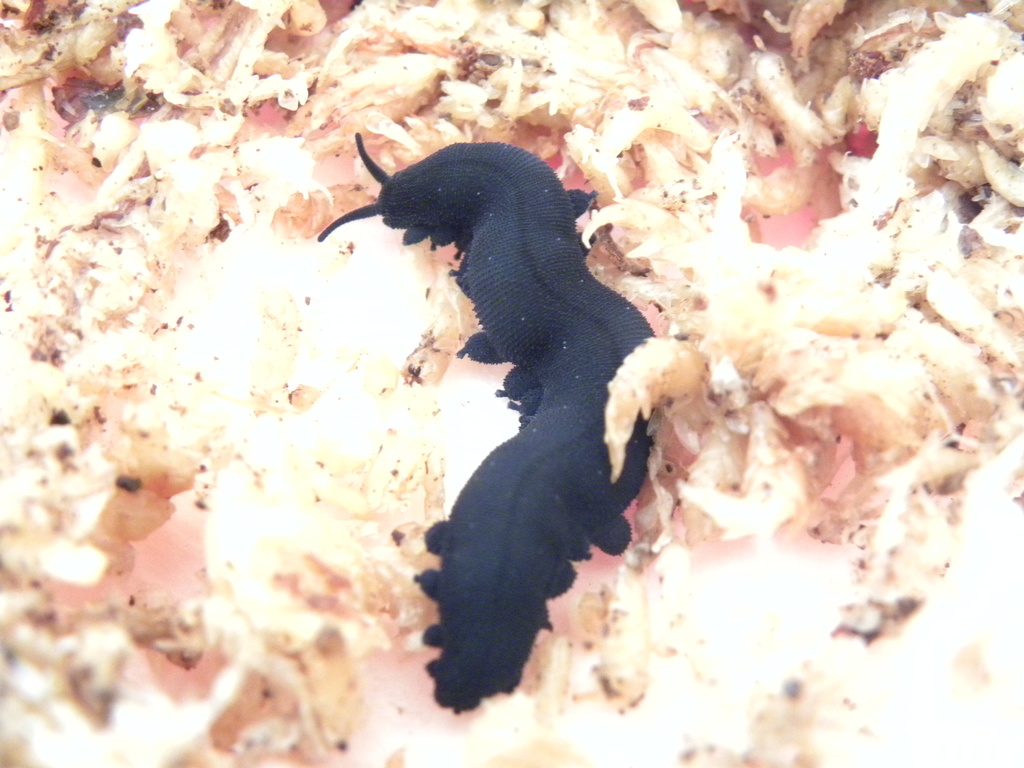
A soft, velvety creature with stubby legs that hunts by squirting nets of sticky slime. It belongs to the Onychophora, an ancient group related to arthropods whose body plan resembles fossils from the Cambrian seas more than 500 million years ago.
Euperipatoides rowelli is an ovoviviparous species of velvet worm of the Peripatopsidae family. It is found in New South Wales and the Australian Capital Territory. Wikipedia
What it can do
- iSquirts sticky, protein-based slime from glands beside the mouth, entangling prey several centimetres away
- iiEats its own slime after a hunt to recycle the protein
- iiiLives in social groups led by a dominant female that feeds first
- ivGives birth to live young
In the field
Field marks
- aSoft, cylindrical body covered in tiny velvety papillae
- bFifteen pairs of stubby, unjointed legs ending in small claws
- cOne pair of ringed antennae
- dDark blue-grey to brown with fine patterning
- Not to be confused with
- Can be mistaken for a caterpillar or slug, but caterpillars have jointed true legs and slugs have none. Many other Australian velvet worm species differ in leg number, colour and range.
- Where to see it
- Rotting logs in wet forest of south-eastern NSW; rarely seen in the open except on damp nights.
- When
- Most active in cool, damp weather
Life & habits
- Diet
- Crickets, spiders, woodlice and other small invertebrates
- Habitat
- Inside moist rotting logs in cool forest
- Size
- About 3–6 cm (females); males smaller
Group members cooperate to subdue large prey; individuals recognise and are aggressive towards velvet worms from other groups.
Where it lives
Recorded sightings
—
geo-referenced records in GBIF, from museums, herbaria and field observers.
Native range
South-eastern Australia, notably the cool forests of south-eastern New South Wales (e.g. Tallaganda State Forest)
Drag the globe to turn it. Dots are where records exist, not a range map; darker means more records.
In the stacks
Searching the stacks…
Every page naming Euperipatoides rowelli in the Biodiversity Heritage Library →
Marginalia
The first velvet worm known to science was described from St Vincent in 1826 by Lansdown Guilding, who thought it was a kind of slug.
Curiosity
Velvet worm slime turns from liquid into strong fibres as it is stretched, and can be dissolved and re-spun, which has inspired research into recyclable materials.
Kinship




Fact-checked: 1 correction made to this sheet. Photographs: iNaturalist contributors under the licences shown. Records: GBIF.org. Historical plates: Source Library (CC BY-SA 4.0; originals public domain). Summary text: Nature Library editors and Wikipedia (CC BY-SA). Medicinal and edibility notes are historical and educational, not advice. iNaturalist taxon 735563.