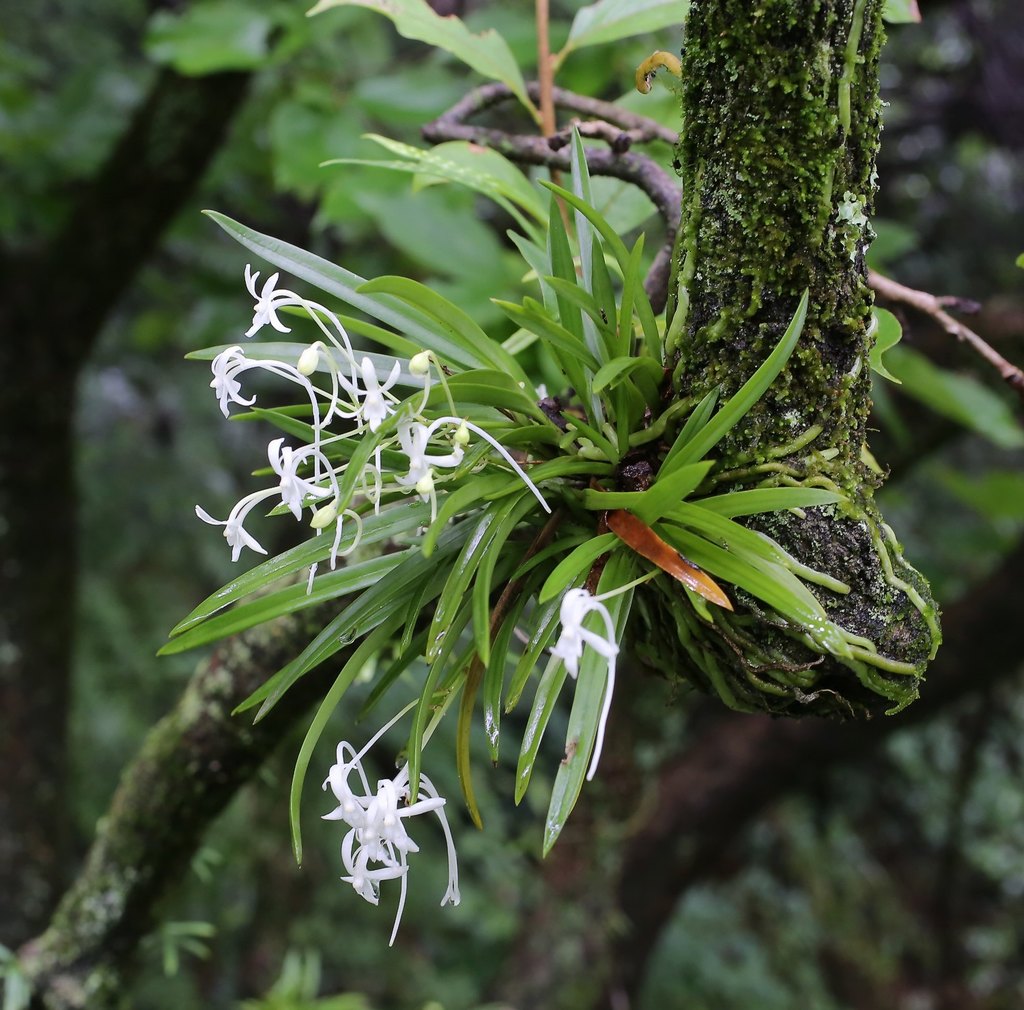
Higher Epidendroid Orchids
Vandoideae
Epidendroideae is a subfamily of plants in the orchid family, Orchidaceae. Epidendroideae is larger than all the other orchid subfamilies together, comprising more than 15,000 species in 576 genera. Most epidendroid orchids are tropical epiphytes, typically with pseudobulbs. There are, however, some terrestrials such as Epipactis and even a few myco-heterotrophs, which are parasitic upon mycorrhizal fungi.
They typically contain the remaining orchids with a single, fertile anther ( = monandrous), which is also fully incumbent ( = strongly convex) to suberect (= ascending towards the edges). The anther form arises from column elongation or, as in the vandoids, from early anther bending. The incumbent anther forms a right angle with the column axis or is pointed backward in many genera. Most have hard pollinia, i.e. a mass of waxy pollen or of coherent pollen grains. The pollinia are with caudicle and viscidium or without. The stigma are entire or three-lobed; a beak is present. The apical part of the middle stigma lobe forms a stipe ( = pollinium stalk). The ovary is unilocular. The leaves are distichous or spiraling, growing on thickened stems.
2 branches of this subfamily, most-observed first
See this branch on the Wheel of Life →

Where it lives
Recorded sightings
—
geo-referenced records in GBIF, from museums, herbaria and field observers.
Drag the globe to turn it. Dots are where records exist, not a range map; darker means more records.
In the stacks
Searching the stacks…
Every page naming Vandoideae in the Biodiversity Heritage Library →
This page is assembled live from iNaturalist, GBIF, Wikipedia, the Source Library and the Internet Archive. It is not yet part of the hand-edited codex. iNaturalist taxon 738347.