- Animals
- ›Arthropods
- ›Hexapods
- ›Insects
- ›Winged and Once-winged Insects
- ›Stick Insects
- ›Verophasmatodea
- ›Areolatae
- ›Bacilloidea
- ›Heteropterygidae
- ›Dataminae
- ›Datamini
- ›Orestes
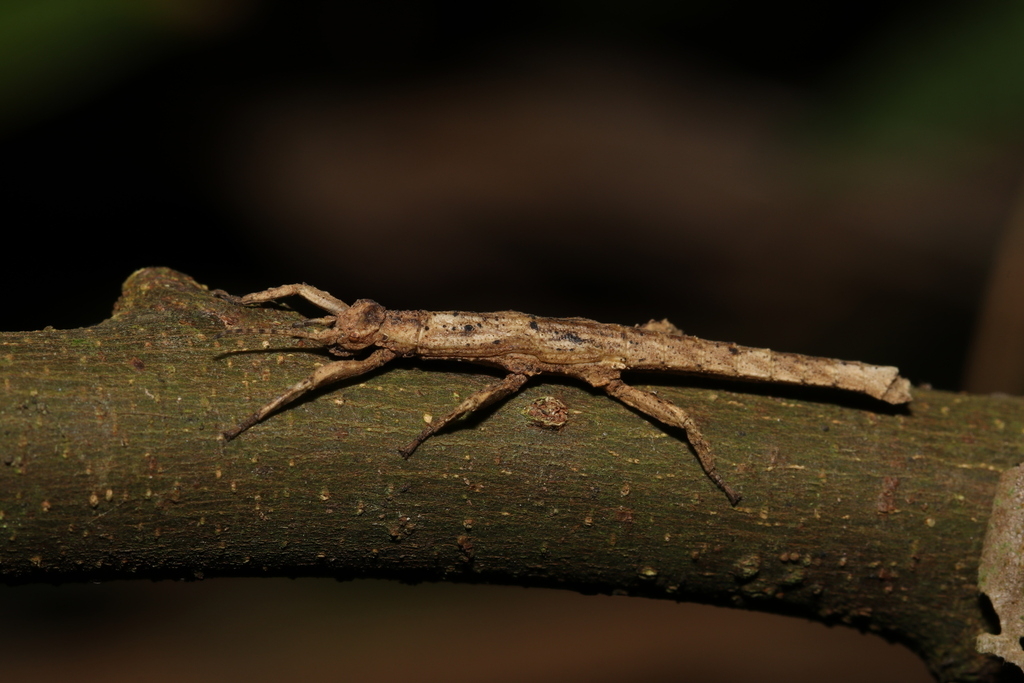
Orestes shirakii
Orestes shirakii is a species of stick insects native to Taiwan.
From the article Orestes shirakii on Wikipedia (CC BY-SA), quoted section by section
Description
Only the females of Orestes shirakii are known so far. These are very slim and can reach a length of 50 millimetres (2.0 in). They can be easily distinguished from Orestes guangxiensis by their size. The elongated mesonotum of Orestes shirakii is three times as long as the pronotum. That of Orestes guangxiensis is only 2.5 times as long as the pronotum. The third to fifth tergite of the abdomen in Orestes shirakii lack the posterior lateral tubercles and the shortened posterior edge of the eighth sternite (subgenital plate). The mesonotum is slightly expanded to the rear, the metanotum is rectangular. In the similar Orestes japonicus the mesonotum is parallel and the metanotum is square.
Wikipedia: “Characteristics”
Range & habitat
Large parts of Taiwan are named as the range of the species, where it occurs at altitudes below 1,000 metres (3,300 ft). The females begin to lay one to three eggs a week in or on moist soil about six weeks after molting to imago. These take four to six months to hatch. The newly hatched nymphs only begin to eat after about two weeks and take up to 15 months until they are adult. When touched, both adults and nymphs play dead.
Wikipedia: “Distribution area and reproduction”
Listen
Looking for field recordings…
Where it lives
Recorded sightings
—
geo-referenced records in GBIF, from museums, herbaria and field observers.
Drag the globe to turn it. Dots are where records exist, not a range map; darker means more records.
In the stacks
Searching the stacks…
Every page naming Orestes shirakii in the Biodiversity Heritage Library →
This page is assembled live from iNaturalist, GBIF, Wikipedia, the Source Library and the Internet Archive. It is not yet part of the hand-edited codex. iNaturalist taxon 748004.