 NL·0040
Herbarium of the Nature Library
- Name
- Commiphora myrrha
- Family
- Burseraceae
- Native to
- Somalia, Ethiopia, Djibouti and northern Kenya, and the southern Arabian Peninsula (Yemen, Oman, Saudi Arabia)
- Habitat
- Arid thorn scrub, Semi-desert, Rocky hillsides
Myrrh
Commiphora myrrha
Also calledMurr مر (Arabic, 'bitter') · Mur makki (Unani) · Bola / Hirabol (Sanskrit/Hindi) · Mòyào 没药 (Chinese) · Mor מור (Hebrew)
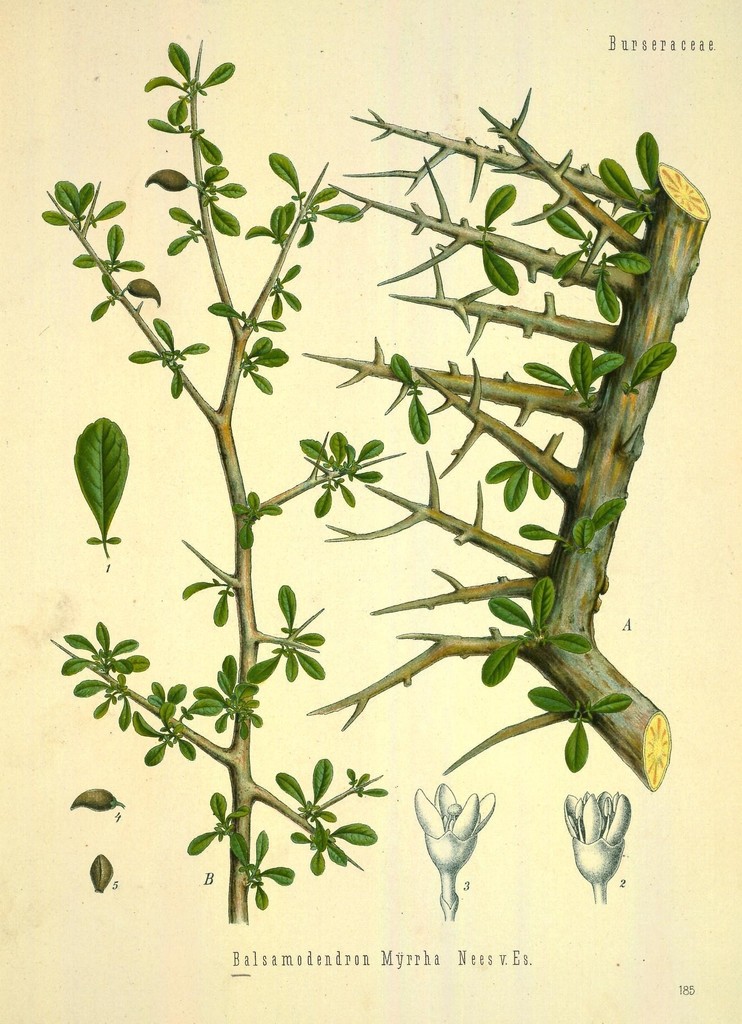
A small, thorny, gnarled desert tree of the Horn of Africa and Arabia whose bitter, aromatic resin was worth its weight in gold in antiquity. It was burned in temples, used in embalming and brought as a gift to the infant Jesus.
Commiphora myrrha, called myrrh, Somali myrrh, herabol myrrh, common myrrh, is a tree in the family Burseraceae. It is one of the primary trees used in the production of myrrh, a resin made from dried tree sap. The Commiphora myrrha tree is indigenous to Somalia, in the Somali regions of Ethiopia and Kenya, Djibouti, Eritrea and parts of the Arabian Peninsula. Wikipedia
What it can do
- iBleeds a reddish oleo-gum-resin when wounded that seals the cut and deters insects and microbes
- iiFuranosesquiterpenes in the resin have measurable antimicrobial and pain-relieving activity
- iiiThrives in thin, stony soil on very little rain, leafing only briefly after rains
At the table
Resin is used medicinally in small amounts, as incense and as a flavouring, not as food.
In the medicine cabinet
| Tradition | Use |
|---|---|
| Arabian & Somali traditional medicine | Resin for wounds, stomach complaints and mouth ulcers, and burned to fumigate homes |
| Unani | Mur makki for wounds, chest complaints, menstrual problems and as a mouthwash |
| Traditional Chinese Medicine | Moyao to invigorate blood and relieve pain from trauma and swelling, often with frankincense (ruxiang) |
| European / modern phytotherapy | Tincture for mouth and gum inflammation; EMA traditional-use monograph |
Weight of evidence
Traditional. Long historical use; little or no modern clinical evidence.
Active compounds
furanoeudesma-1,3-diene, curzerene, lindestrene, commiphoric acids, gum polysaccharides
Fruit & seed
Fruit
Drupe
Ripens: After rains
Small, ovoid, pointed drupe about 7 mm long.
Seed
~5 mm
Single seed within a hard stone
- Dispersal
- Birds and gravity
- Germination
- Slow and low; cuttings are more reliable
How to grow it
Hardiness (USDA zones)
USDA 10–12. Survives winters down to about -1 °C.
- Light
- Full sun
- Water
- Very low
- Soil
- Stony, sandy, sharply drained, often alkaline
- Propagation
- Large cuttings or seed
- To harvest
- Resin from mature trees (several years old)
- Climates
- Arid, Tropical dry
- 1Root thick cuttings in dry, gritty mix in hot weather
- 2Keep almost dry, especially when leafless
- 3Protect from frost
- 4Traditionally, resin is tapped by making small cuts in the bark and collecting the hardened tears weeks later
Can it grow where you are?
Where it lives
Recorded sightings
—
geo-referenced records in GBIF, from museums, herbaria and field observers.
Native range
Somalia, Ethiopia, Djibouti and northern Kenya, and the southern Arabian Peninsula (Yemen, Oman, Saudi Arabia)
Drag the globe to turn it. Dots are where records exist, not a range map; darker means more records.
In the old herbals & bestiaries
Woodcuts and engravings matched from the Source Library’s scanned books by name. Plates marked “relative” show a close kin rather than this exact species. Click a plate to read the page it came from, with translation.

Illustrated Herbal Primer
Chen Jiamo (陳嘉謨) · 1628 · p.215

Ortus sanitatis
1491 · p.273

Garden of Health (Hortus Sanitatis)
Jacob Meydenbach · 1491 · p.222

The Great Herbary with all the figures of the herbs
1532 · p.217

Stirpium adversaria nova
Matthias de Lobel · 1571 · p.452

Collected Illustrations of the Three Realms: Plants and Trees
王圻, 王思義 · 1609 · p.70

The Pagan World and the Origin of its Gods
Herold, Johann · 1554 · p.673
In the stacks
Searching the stacks…
Every page naming Commiphora myrrha in the Biodiversity Heritage Library →
Marginalia
Around 1470 BCE Queen Hatshepsut sent an expedition to the Land of Punt that brought back live myrrh and incense trees, as shown in reliefs at Deir el-Bahari. The Gospel of Matthew (2:11) names myrrh among the Magi's gifts.
Curiosity
Hatshepsut's Punt expedition is often called the first recorded attempt to transplant living trees from one country to another.
Kinship





Photographs: iNaturalist contributors under the licences shown. Records: GBIF.org. Historical plates: Source Library (CC BY-SA 4.0; originals public domain). Summary text: Nature Library editors and Wikipedia (CC BY-SA). Medicinal and edibility notes are historical and educational, not advice. iNaturalist taxon 789240.